
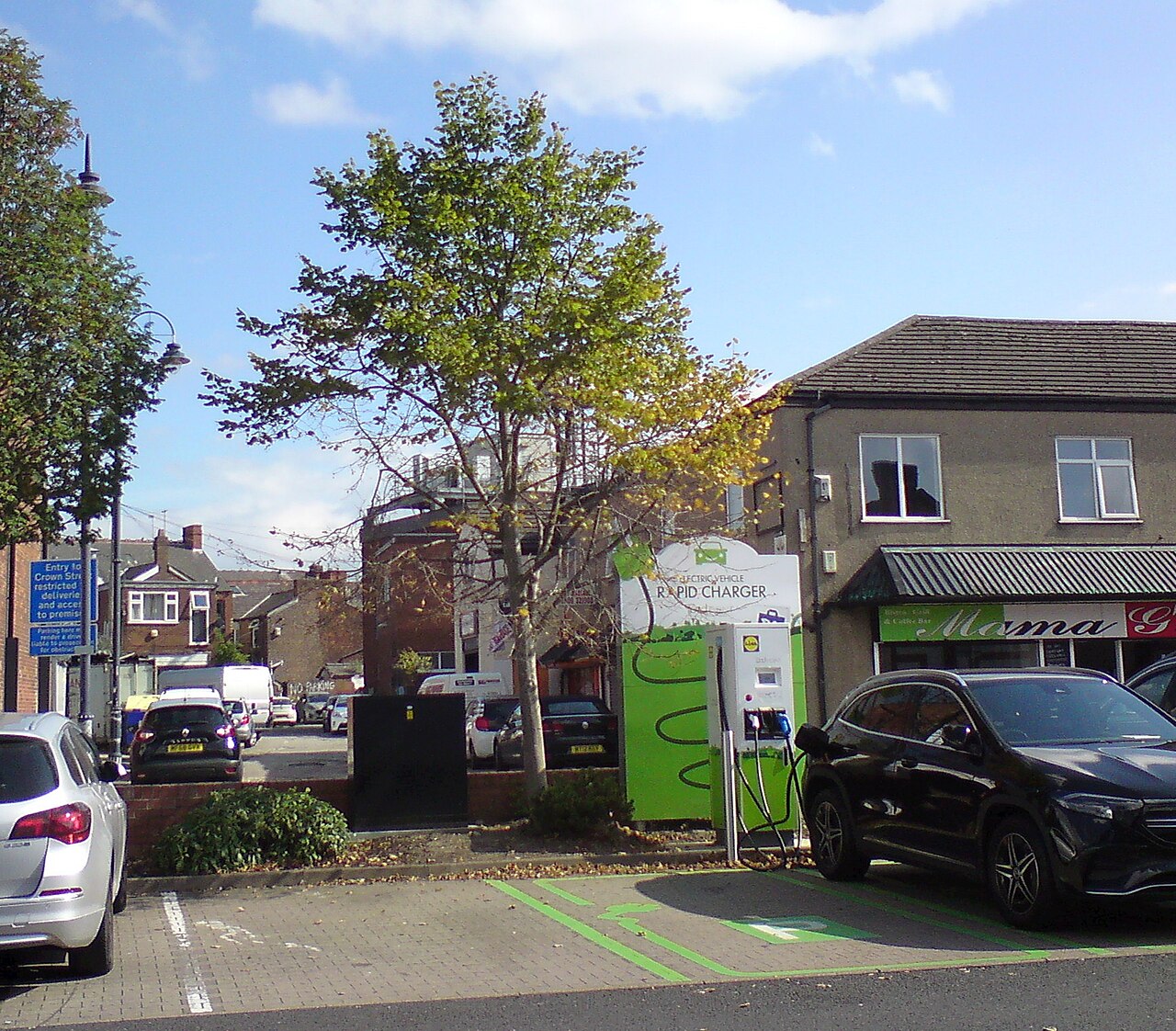
A new impact assessment says the fixed grid charges paid by a typical UK rapid charger have gone up more than sevenfold in five years and will rise again in 2027. If they do, it argues, some sites may have to charge drivers more than GBP 1 per kWh. The report, called Reverse the Charge, was published on November 11, 2026. It was produced by The Fast Charge newsletter together with charging operator Zest, according to WhichEV.
Read the report for what it is. It is a forecast, and it was written by a charge point operator and an industry newsletter that are campaigning for a rule change. WhichEV notes that the price warning is a forecast rather than an announcement of new tariffs by charging networks. Auto Express says it has approached the Government and Ofgem for comment.
Below is what the report claims, where the figures come from, and what the policy process looks like right now.
What are the headline numbers?
The assessment models a "standard" rapid charger and the fixed grid charge it pays each week. According to WhichEV, the modelled charger has two 100 kW connectors on a 232 kVA connection, and the figure includes distribution and transmission charges alongside fixed policy and supplier costs. The fixed charge is a standing charge that is incurred whether or not anyone plugs in. The report's figures, as published by WhichEV and Auto Express:
- 2021: GBP 61.47 a week
- 2026: GBP 440.13 a week, an increase of 616% over 2021
- 2027 (projected): GBP 541.73 a week, or GBP 77.39 a day (WhichEV reports the daily figure as built on tariffs published for 2027, including initial transmission figures)
The projected step from 2026 to 2027 is about GBP 101.60 a week, a rise of roughly 23%. That is ChargerFeed's arithmetic from the report's figures.
For the whole sector, the report estimates that UK rapid-charging operators will pay GBP 336 million in grid charges in 2026 and GBP 413 million in 2027. WhichEV reports that this GBP 77 million increase assumes no expansion of the charging network. In other words, the extra cost comes from higher charges on today's sites, not from new chargers being built.
How does that become GBP 1 per kWh?
Fixed costs bite hardest when a charger sells little energy, because the same weekly charge is split across fewer kilowatt-hours. The impact assessment suggests that the cost per kWh at a rapid charger dispensing only 3,000 kWh per month could rise to GBP 1.03 by 2027, according to Auto Express. Auto Express adds that this figure does not include 20% VAT or operating costs, which Zest says can range from 6 to 10p per kWh depending on location.
For comparison, Auto Express cites Zapmap data putting the average price at a rapid charger (output above 100 kW) at 79p per kWh, which WhichEV also cites as the report's 2026 average. Auto Express says that equals GBP 33.18 for a 10-80% charge of a 60 kWh car, which is about 42 kWh of energy. At GBP 1.03 per kWh, the same charge would cost GBP 43.26, per Auto Express.
Here is a rough sense of scale, again using ChargerFeed's own arithmetic and not the report's method. Spread over a 3,000 kWh month, the projected 2027 fixed charge of GBP 541.73 a week comes to roughly 78p per kWh in grid standing charges alone. The 2026 figure works out to roughly 64p per kWh. The report's full cost model may count things differently, and these numbers apply only to a site used as lightly as the one modelled. Busier sites spread the same fixed charge over more energy.
Where did the charges come from?
WhichEV reports that the assessment traces the problem to a 2019 Ofgem decision that, it says, has allowed businesses to be charged according to their potential electricity demand rather than actual consumption since 2022. Auto Express describes the rule as Ofgem's Targeted Charging Review, under which operators pay standing charges based on each chargepoint's maximum capacity rather than actual usage. The campaign's website, reversethecharge.co.uk, says it obtained Ofgem briefings under Freedom of Information requests. It says those briefings show the regulator told HM Treasury about a year ago that grid charges were creating an "unproductive cycle" for rapid chargers, and set out rule changes that could address it. That description comes from the campaign. ChargerFeed has not seen the underlying FOI documents.
Auto Express's coverage includes comments from Zest chief executive Robin Heap and from Jarrod Birch, head of policy at the trade body ChargeUK.
What is government doing?
Three separate strands are in play, and they are at different stages.
Published: the Cost of Public EV Charging Review. On 28 October 2026, the government published the independent Cost of Public Electric Vehicle Charging Review. It was led by Philip New on behalf of the Department for Transport, the Department for Energy Security and Net Zero, and HM Treasury. According to GOV.UK, the review examines the cost of public EV charging and the factors that influence the prices drivers pay, and identifies actions that could help reduce costs. It draws on evidence from industry, consumer groups, local government and other stakeholders. It is a 36-page document. ChargerFeed has read the landing page but not the recommendations in the PDF, so this article does not describe them.
Announced, but not for rapid chargers: Budget 2026 support. WhichEV reports, citing the report, that the GBP 100 million announced in Budget 2026 is restricted to local, lower-powered chargers. Auto Express likewise describes it as support for low-speed local chargers. On the sources available, it does not cover the rapid sites that the assessment models.
Proposed, not decided: DCP 420 and DCP 454. Per the assessment as reported by WhichEV, these two industry proposals could reduce grid charges for EV charging. They have spent three years in industry working groups and have yet to reach Ofgem for a decision.
What It Means for Drivers
The report does not set prices, and WhichEV describes its GBP 1 per kWh warning as a forecast rather than an announcement of new tariffs by charging networks. The reference price drivers can compare against is the 2026 Zapmap average of 79p per kWh for rapid charging above 100 kW, as cited by Auto Express and WhichEV. Individual networks and sites set their own prices, which may sit well above or below that average.
The pressure the report describes falls mostly on rapid public chargers, especially lightly used ones, because they pay a large fixed grid charge whatever their throughput. WhichEV says drivers without home charging face the greatest exposure to higher costs if operators pass them on in 2027. The government's GBP 100 million Budget support, as reported, goes to lower-powered local chargers, not rapid hubs.
The timings to watch, as the sources state them:
- 2027: the year the assessment projects fixed grid charges will reach GBP 541.73 a week for its modelled rapid charger. This is a forecast, not a confirmed figure.
- DCP 420 / DCP 454: no decision date. Neither proposal had reached Ofgem, according to the assessment as reported by WhichEV on November 12, 2026.
- Government response: Auto Express says it approached the Government and Ofgem for comment. No response is included in the sources reviewed here.
Drivers who charge at home are not directly covered by the report's figures. This article does not give home-charging installation guidance; follow the manufacturer's instructions and use a qualified professional for any installation.
The bottom line
The 616% figure and the GBP 1.03 per kWh projection come from a campaign led by an operator and a newsletter, and the per-kWh projection rests on a modelled, lightly used site. The underlying claim, that fixed grid costs for rapid chargers have risen sharply since the 2022 change to capacity-based charging, is consistent with the timeline WhichEV reports, though WhichEV also notes that the government review's own estimate for local distribution charges alone is a smaller rise of 83% to 283% between 2021 and 2026. The government's own review was published two weeks before the assessment. What happens to 2027 prices depends on choices by networks, operators and Ofgem that, as of mid-November 2026, have not been announced.
Sources
- Cost of Public Electric Vehicle Charging Review (GOV.UK, published 28 October 2026)
- Reverse the Charge (campaign and impact assessment site)
- Rapid EV charging could reach GBP 1/kWh in 2027 as fixed costs rise, report warns (WhichEV, November 12, 2026)
- EV drivers brace for GBP 1 per kWh charging prices as standing charges skyrocket (Auto Express, 12 November 2026)
