
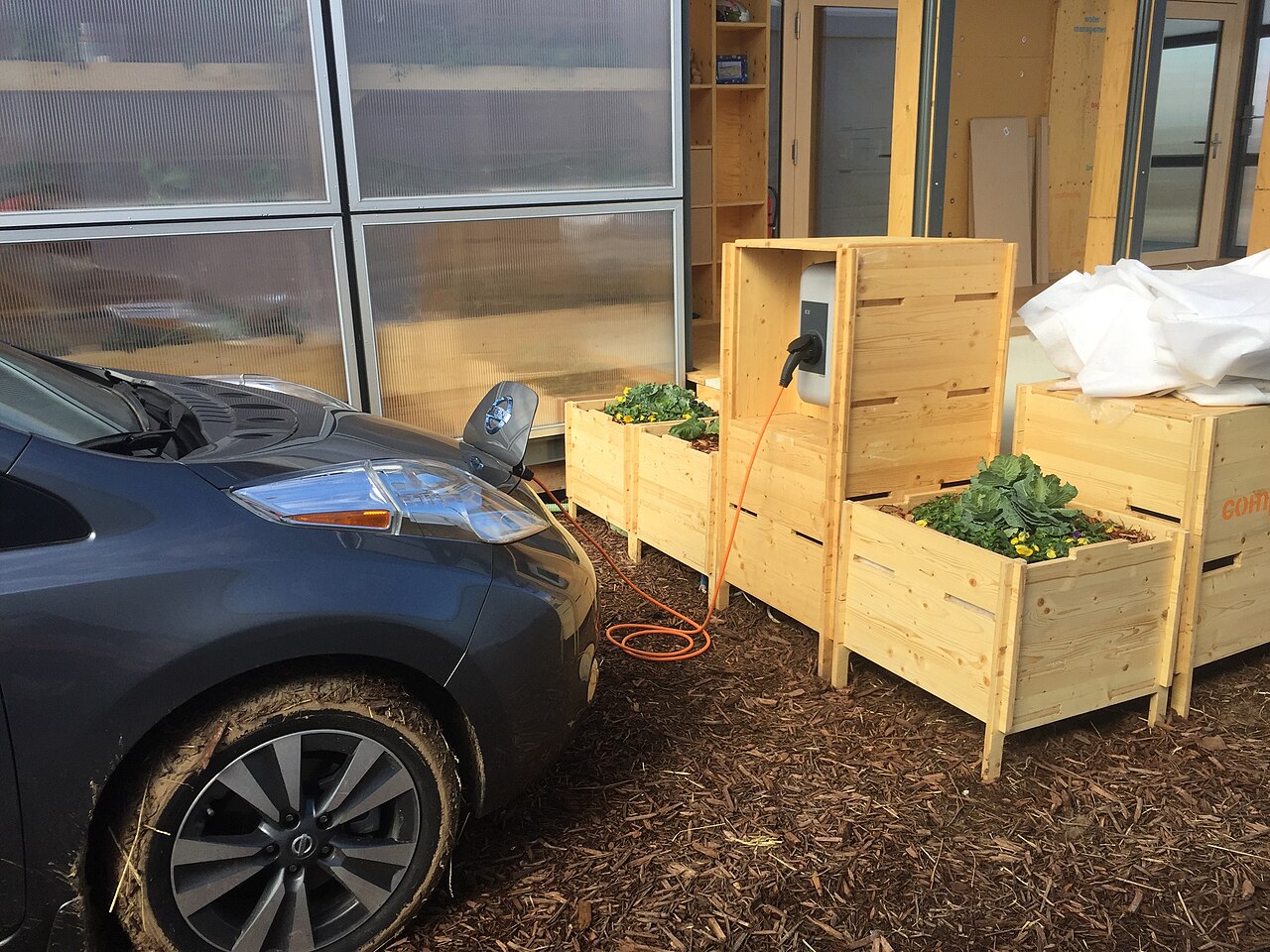
The Colorado Energy Office's Fleet-ZERO EV Charging Grant lists a Fall 2026 standard application round that runs from Nov. 16, 2026, according to the grant database Instrumentl. Instrumentl and a second database, Atom Grants, both list a closing date of Jan. 15, 2027, at 5:00 p.m. Mountain Time. Fleet-ZERO pays for charging equipment used by fleet vehicles, not consumer home chargers. The program covers businesses, fleet charging providers, governments, nonprofits, schools and tribal entities.
Please read this with one caveat. The program details below come from two kinds of source. The program's basic structure comes from the Colorado Energy Office's own Fleet-ZERO page, but ChargerFeed could only read an archived copy from January 2026, because the live page returned an access error when we checked. That archived copy still describes the Fall 2025 round. The Fall 2026 dates, the higher incentive amounts and the new charging-hub rule come only from the grant databases Instrumentl and Atom Grants, and the two do not agree on every detail. Applicants should check the Colorado Energy Office's current guidance before they rely on any number here.
The Program's Basic Structure
According to the archived Colorado Energy Office page (Wayback snapshot dated Jan. 21, 2026), Fleet-ZERO has two ways to apply:
- Standard application: up to $500,000 per awardee per round. Standard rounds run twice a year, once in spring and once in fall.
- Rolling application: up to $50,000 per awarded applicant, open year-round and, per the archived page, only available to qualifying entities.
Applicants must put up at least a 20% match. For qualifying entities, the match drops to 10%. The snapshot lists the Fall 2025 round as open from Sept. 15 to Oct. 17, 2025. The Fall 2026 window reported by the databases starts about two months later in the year than that.
Fall 2026 Round at a Glance
Here is what the two databases list for the current round. Each figure is credited to its source.
| Item | Instrumentl (updated Oct. 17, 2026) | Atom Grants |
|---|---|---|
| Standard round window | Nov. 16, 2026 to Jan. 15, 2027, 5:00 p.m. MT | Closes Jan. 15, 2027, 5:00 p.m. MT (standard and M/HD corridor) |
| Q&A submission deadline | Not listed | Dec. 4, 2026 |
| Rolling track | Year-round, requests of $50,000 or less | Rolling, requests up to $50,000 |
| Funding level | $5 million to $10 million annually, offered per charging port | $10 million+ available |
| Match | Minimum 20%, reduced for enhanced-incentive applicants | Not restated |
| Funding source | State and federal funds | Not listed |
The two databases disagree most on total funding. Instrumentl gives an annual range of $5 million to $10 million. Atom Grants says "$10M+" is available but does not say whether that covers this round, a year or the whole program. ChargerFeed could not confirm the Fall 2026 budget with the state.
What Changed This Round, According to Atom Grants
Atom Grants says several of the program's specialized tracks opened for Fall 2026 with new terms. None of these changes appear in the January 2026 archived state page, and Instrumentl does not mention them.
Higher EBUS per-port incentives
Atom Grants reports that per-port incentives in the EBUS category went up:
- DC fast chargers (DCFC) under 50 kW: from $25,000 to $50,000 per port.
- DCFC or Megawatt Charging System (MCS) ports at 100 kW and above: from $75,000 to $100,000 per port.
Those figures are per port as listed by Atom Grants for the Fall 2026 round. They are not quoted equipment prices.
Charging hubs now need three or more fleets
Atom Grants also says projects applying as Charging Hubs for the enhanced incentive must now serve three or more fleets. Neither database says what the threshold was before.
Medium- and heavy-duty corridor sites up to $2 million
Atom Grants says the medium- and heavy-duty (M/HD) corridor track is open for Fall 2026, with awards of up to $2 million per site. The deadline is the same Jan. 15, 2027, 5:00 p.m. MT cutoff as the standard round. That cap is well above the $500,000 per-awardee, per-round limit the archived state page gives for standard applications. Corridor sites appear to have their own funding rules, but ChargerFeed could not confirm how the two caps fit together without the state's current guidance.
Timing and Process Notes for Applicants
Atom Grants flags one rule that can cost applicants money: do not buy equipment or start work before you have an executed grant agreement. The archived state page likewise says projects completed before an application and an executed grant agreement are not eligible for funding. Fleets that are already ordering hardware should check how this applies to them before they commit.
Other dates from the databases:
- Nov. 16, 2026: Fall 2026 standard round opens (Instrumentl).
- Dec. 4, 2026: deadline to submit questions (Atom Grants).
- Jan. 15, 2027, 5:00 p.m. MT: standard and M/HD corridor applications close (both databases).
- Year-round: rolling applications for $50,000 or less (both databases; the archived state page also lists the $50,000 rolling cap).
Neither database gives a date for award decisions. Neither says how many ports or sites the round is expected to fund. Instrumentl (updated Oct. 17, 2026) and Atom Grants list the round as open, and neither mentions any Fall 2026 awards. ChargerFeed could not check the state's own page for the current status.
Planning a fleet charging site usually means working out utility service capacity and electrical work. Hosts should leave design and installation to a licensed electrician, follow the equipment manufacturer's instructions, and coordinate with their electric utility. Grant terms do not replace those steps.
What It Means for Drivers
Fleet-ZERO funds charging for fleets. That covers vehicles run by businesses, governments, nonprofits, schools, tribal entities and fleet charging providers. The archived state page says eligible projects include private depot charging and shared, public and semi-public fleet charging, but it also says projects primarily meant for publicly available charging should apply to the separate Charge Ahead Colorado program. None of the sources reviewed say how many funded chargers will be open to the public, so drivers should not assume this round will add public stations.
For people who drive fleet vehicles, the effects come later. Nothing changes at a depot until an applicant is awarded funds and has an executed grant agreement. Equipment purchases and construction come after that. If the reported changes hold, two things matter most for drivers:
- Shared hubs: because Charging Hub projects now need three or more fleets, according to Atom Grants, any hub funded this round would be shared by several fleets instead of built for one operator.
- Faster ports: the bigger per-port incentive for 100 kW+ DCFC and MCS ports, again according to Atom Grants, gives applicants more reason to install higher-power hardware for bus and medium- or heavy-duty duty cycles.
Any new sites would be announced or under construction, not operating, until awards are made and work is finished. None of the sources give a timeline for that.
