
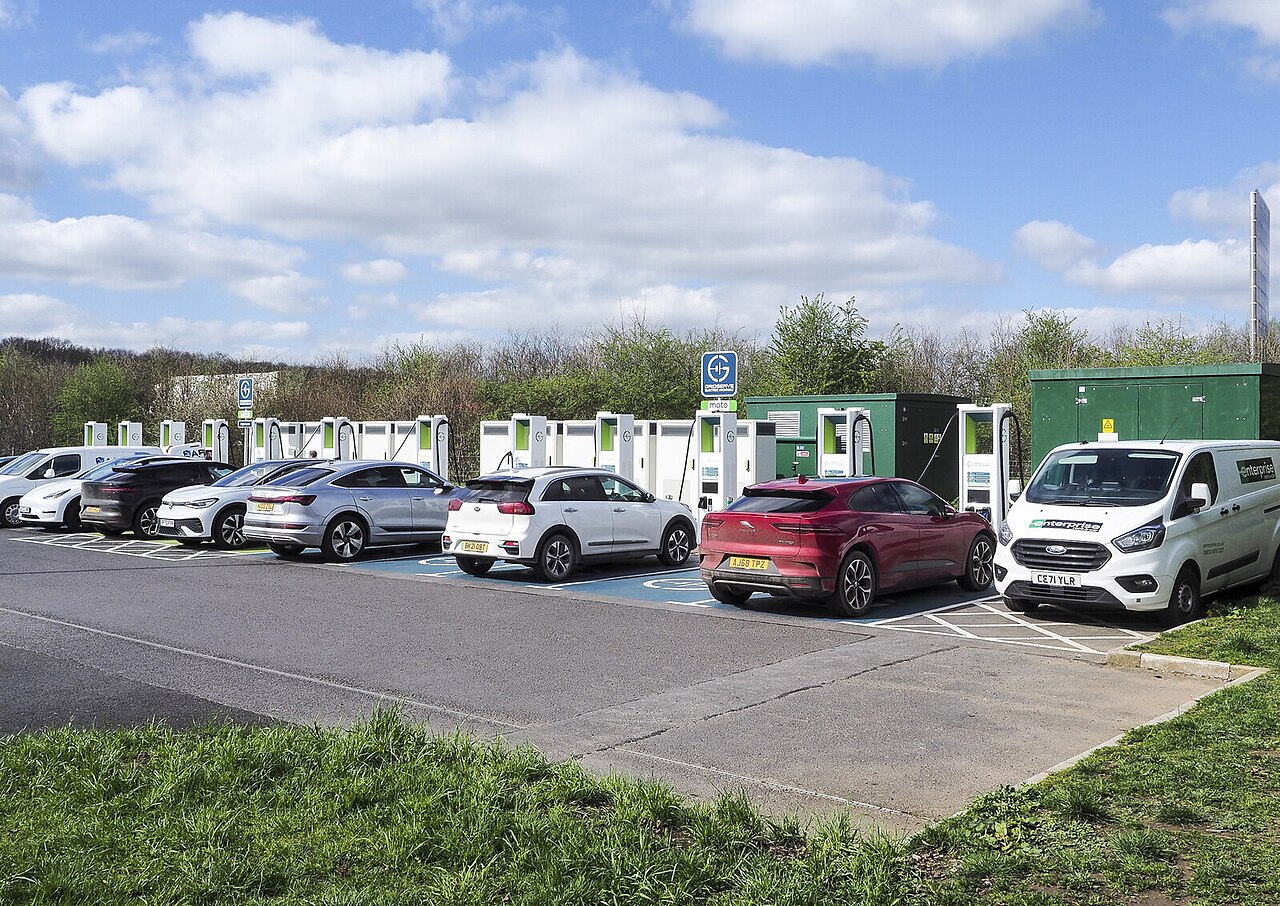
Northumberland County Council in northern England plans to add 36 public EV charge points to its own network. They will go in at 26 locations and will be paid for with external transport funding. The council announced on Nov. 10, 2026 that its Cabinet had approved the expansion. The funding is GBP 1.038 million from the City Region Sustainable Transport Settlement (CRSTS), and the council says it will be used to roll out the chargers until 2029.
The decision is an approval and a funding commitment. It does not mean new chargers are working. According to the council, the list of sites is "subject to a final review once connection and installation costs are confirmed." As of the Nov. 10 announcement, both the 26 locations and the count of 36 charge points are planned, not built.
Below are the main numbers, how the money works, and what the council has not yet published.
The Decision in Numbers
- 36 additional EV charge points approved by Cabinet (as of Nov. 10, 2026)
- 26 locations, with the final list subject to review
- GBP 1.038 million in external CRSTS funding
- Until 2029: the period over which the council says the funding will be used to roll out the chargers
- 78% of installations on council-owned land
- 22% on third-party land under a licence agreement
- 12 to 15 years: the typical charger lifecycle the council cites
The release gives no cost per charger. Simple division gives about GBP 28,800 per charge point (GBP 1.038 million across 36 units), or about GBP 39,900 per site (across 26 locations). That is ChargerFeed's arithmetic, not a council figure. The council has not said how the money will be split between hardware, grid connections, civil works and other costs. Because connection and installation costs have not been confirmed yet, the real cost of each site could change the final list.
Who Builds and Runs the Chargers
The council says the new charge points will be installed and maintained by its in-house EV team. Northumberland's network stays with the council's own staff for both installation and upkeep.
The release also explains how ongoing costs will be paid. The council says the funding is for the rollout, and that generated revenue will be used to meet the chargers' running costs, management and maintenance. The charge points have a typical lifecycle of 12 to 15 years, according to the council.
The release does not give the tariffs that will produce that revenue, or forecasts of how much the chargers will be used.
Council Land and Licensed Sites
According to the council, 78% of the installations will be on land the council owns. The other 22% will be on third-party land, used under a licence agreement.
The release does not name the third parties or the individual locations. With the site list still under review, the council has not published which towns, car parks or streets will get chargers.
Where the Money Comes From
The funding comes from the City Region Sustainable Transport Settlement. According to GOV.UK, CRSTS is a GBP 5.7 billion investment in local transport networks. It provides consolidated, long-term capital funding to eight city regions across England through five-year settlements from the 2022-23 tax year to 2026-27. GOV.UK says the delivery plans agreed in July 2022 were set with approximately 10% overprogramming, meaning they list more schemes than the funding covers because schemes may change in timing, scope or cost. The same page says that in 2024 the overprogramming allowance was increased from 10% to 25% for revised delivery plans.
Northumberland's EV share, GBP 1.038 million, is a very small part of the national total. The council says the money will roll out chargers until 2029, which runs past the 2026-27 end of the first settlement period. The release does not explain how the money will be spread across those years.
For context on what comes next: the North East Combined Authority announced on June 4, 2025 a GBP 1.85 billion funding deal for the latest phase of the programme, known as CRSTS2, covering 2027 to 2032. North East Mayor Kim McGuinness made the announcement, which focused on a new Metro line to Washington, and said the funding would also support hundreds of new EV charging points across the North East. The Northumberland charger release does not mention CRSTS2. Nothing in the sources links this charger expansion to second-phase money.
What the Council Has Not Said
The release leaves several questions open:
- Power levels. The release gives no kW ratings, so it is not clear whether the new units are slower destination chargers, faster units, or a mix.
- Tariffs. No per-kWh, per-minute or parking-related prices are published for the new charge points.
- Locations. The 26 sites are not named, and the list can still change.
- Timeline by site. Apart from the funding running until 2029, the release gives no installation dates or order of work.
- Existing network size. The release calls this an addition to the council's existing network but does not say how many council-run charge points are working today.
The release includes a statement from Cllr Richard Wearmouth, the Cabinet member with responsibility for transport, who called it "great to see more investment towards improving EV charging provision in Northumberland." ChargerFeed will update this coverage when the council publishes the confirmed site list, hardware specifications or tariffs.
What It Means for Drivers
For EV drivers in Northumberland, nothing changes at the plug yet. As of the council's Nov. 10, 2026 announcement, the 36 charge points are approved and funded, not installed. Rollout runs until 2029, so they may appear over a period of years rather than all at once. The council has not said which locations come first.
Most of the new chargers, about 78%, will be on council-owned land. The rest will be on third-party land under a licence agreement. The council says its in-house EV team will install and maintain them.
Drivers who want to plan around these chargers still lack the basics: where they will be, how fast they charge and what they cost. None of those are in the council's announcement. Because the site list depends on confirmed connection and installation costs, a location named in early planning may not end up on the final list.
This decision covers only council-run public charge points. It does not change anything for drivers who charge at home or at other networks, and the council has not announced any change to those arrangements.
