
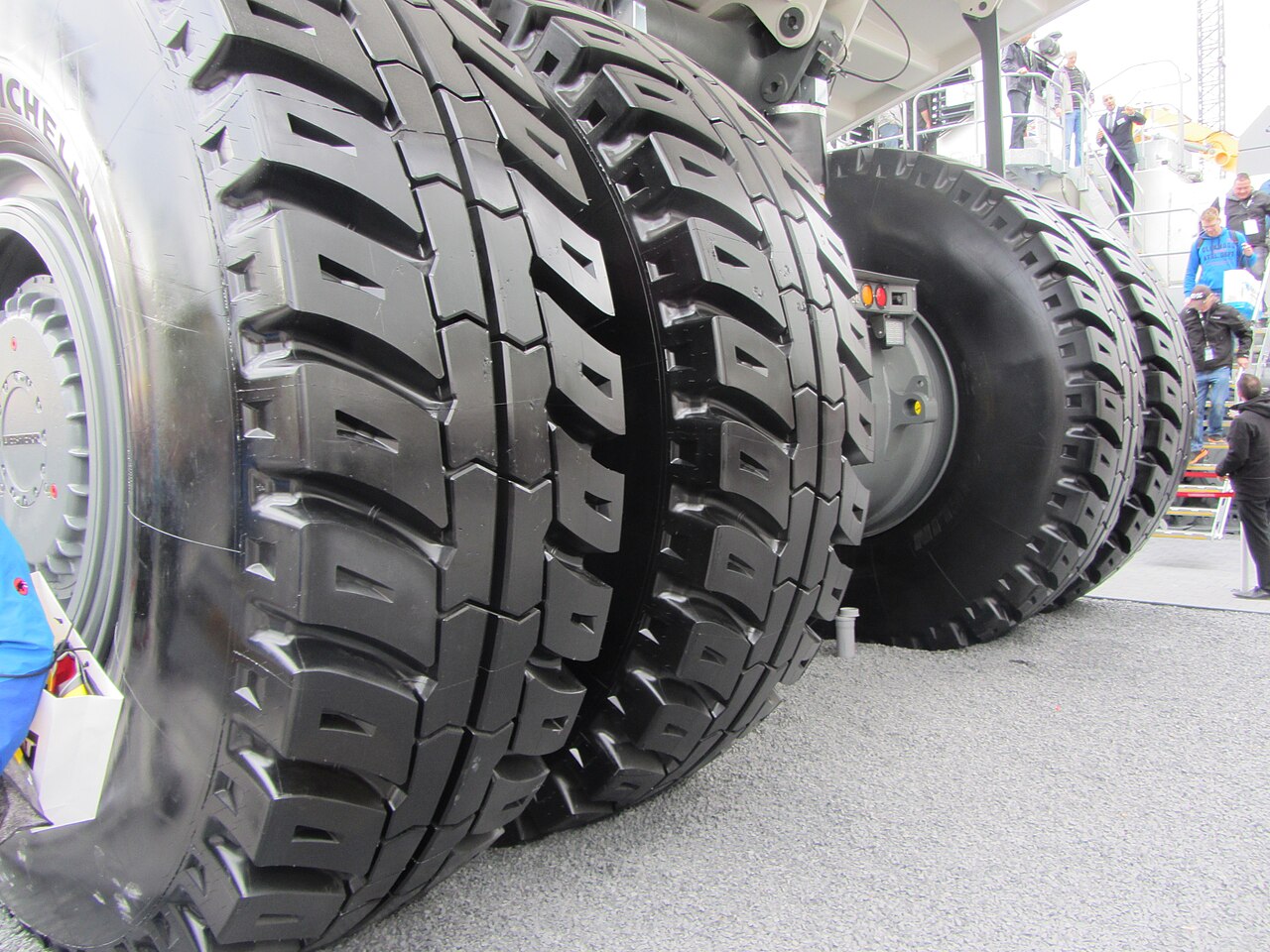
The cable is too heavy for a person to handle, so Fortescue has a robot do it. In a video the Australian iron ore miner released earlier in October 2026, covered by Electrek on Oct. 22, the company explains how it uses specially modified KUKA industrial robots, the kind normally used for welding in a car factory, to handle the liquid-cooled copper cables of its 6 MW fast charger for battery-electric haul trucks.
The truck in question is the Liebherr T 264, a 240-tonne-class mining haul truck. Fortescue and Liebherr have been developing the 6 MW system together since 2024, according to Electrek. This is a development program at a mine, not a public charging network, and none of the sources give prices or a count of chargers in service.
The numbers
- Charger power: 6 MW (six megawatts), per Fortescue's December 2024 announcement.
- Truck battery: 3.2 MWh (3,200 kWh) in the Liebherr T 264E. Electrek says that is about the same capacity as 40 Tesla Model Y packs.
- Truck class: 240 tonnes, per then-Fortescue Zero CEO Ellie Coates as quoted by ESD News.
- Charge-time target: 30 minutes, as stated by Coates in December 2024.
- Public funding: A$10 million from the Australian Renewable Energy Agency (ARENA), announced Dec. 3, 2024.
- Company goal: net zero operations by 2030, per Electrek.
A rough check of the target: 6 MW held for 30 minutes delivers 3 MWh, which is close to the T 264E's 3.2 MWh pack. That is ChargerFeed's arithmetic, not a figure from Fortescue. The sources don't say what state-of-charge window the 30-minute target covers, or whether the charger holds full power for the whole session.
Why a robot?
At these power levels the cable is the problem. Electrek describes the liquid-cooled copper cables as too big, too heavy and too dangerous for any human to handle, which is why Fortescue uses robots for the job.
Robotic connection was part of the design when the grant was announced. In December 2024, Coates said the chargers were developed for the Pilbara and were "equipped with robotic connection options," according to ESD News. In the new video, a Fortescue representative says nobody makes components for a six megawatt charger, so the company took systems from other industries, including industrial robots that would normally be used for welding in a car factory. Electrek says the robots are specially modified.
The sources don't describe the modifications, the connector standard, or how the robot finds and lines up with the truck's inlet, so those details are still unconfirmed.
Where the program stands
The status should be read carefully, because the published timeline and the current evidence are not the same thing.
- Funded (December 2024): ARENA awarded Fortescue A$10 million to develop a six-megawatt fast charger test unit, according to Fortescue's release. The project involves building, testing and validating multiple test unit chargers.
- Planned (December 2024 target): Fortescue said the project aimed to deploy the first production 6 MW charger by the end of 2025. ESD News reported the same target.
- Shown (October 2026): Fortescue's video shows robot-handled charging of its Liebherr T 264E haul truck. Electrek describes Fortescue and Liebherr as having worked on the system since 2024.
None of the three sources say whether the end-of-2025 production target was met, how many 6 MW chargers exist, or how many T 264E trucks are running in daily operations. Until Fortescue publishes those figures, the system is best described as in development and testing.
Fortescue's release says the charger is being developed by its Fortescue Zero unit and will be compatible with a wide range of battery-electric heavy mining equipment, not just the Liebherr truck. It also quotes Fortescue Metals CEO Dino Otranto saying the company intends to roll out around 250 fast chargers of varying capacities across its iron ore operations before the end of the decade; the release does not say how many of those would be 6 MW units. On the grant amount, Electrek's A$10 million figure matches Fortescue's own announcement.
What It Means for Drivers
For anyone driving a passenger EV, a delivery van or a road-going truck: nothing changes. The 6 MW charger was developed for mine haul trucks in the Pilbara region of Western Australia, and none of the sources describe it as part of a public charging network or announce pricing. Otranto said in 2024 that the project could serve as a catalyst for demand from external heavy industry customers, but the sources say nothing about road vehicles.
For fleet and depot operators, the story is a data point, not a product. It shows one heavy-equipment operator deciding that multi-megawatt cables are better handled by an industrial robot than by a person, and developing the charger with robotic connection options. Whether robotic connection spreads to road freight depots is an open question that these sources don't address.
For site hosts and utilities, the main detail is scale: 6 MW is the rated charger power, and the sources don't describe how Fortescue supplies that power at the mine. Any operator weighing high-power charging hardware should plan the electrical work with the utility, a licensed electrician and the equipment manufacturer's documentation, not with figures from a mining demonstration.
What to watch
- Whether Fortescue confirms the first production 6 MW charger is in service, and when it went in.
- How many T 264E trucks are working and how often they charge, which would show whether the 30-minute target holds in practice.
- Technical details of the robotic connection, including the connector design and how the arm aligns with the truck.
- Whether the charger is used with other Fortescue battery-electric mining equipment, as the company's 2024 release said it could be.
