
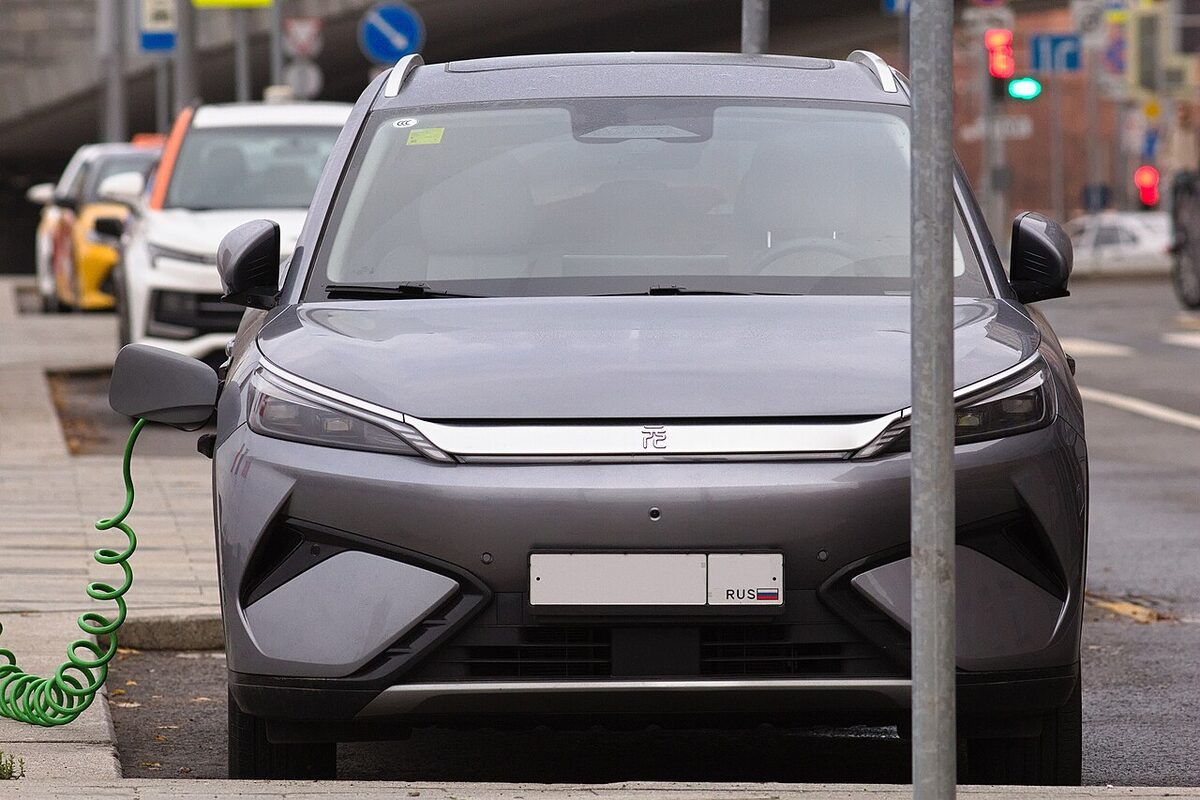
BYD has put its fastest charging hardware in its cheapest car. The second-generation Seagull went on sale in China starting at 62,900 yuan, about $9,500 once BYD's "Super Trade-in" incentive is applied, Electrek reported on Oct. 20, 2026. Without the trade-in, the regular starting price is 65,900 yuan ($9,900). BYD says the car can go from 10% to 70% in 5 minutes on its Flash Charging network.
The Seagull is BYD's smallest and most affordable EV in China. The launch came six days after BYD introduced flash charging in Indonesia. All charging times and station targets in this article are BYD's own claims, as reported by the outlets cited. None of them has been measured independently.
The car: two packs, five trims, three charging claims
According to Electrek, the new Seagull comes in five variants priced from 65,900 to 99,900 yuan ($9,900 to $15,000) before trade-in incentives. It uses BYD's Blade Battery 2.0, an LFP (lithium iron phosphate) chemistry, in two sizes:
- 30.1 kWh: 320 km (199 mi) CLTC range
- 39.2 kWh: 420 km (261 mi) CLTC range
CLTC is China's test cycle. It usually produces higher range figures than the U.S. EPA cycle, so the miles above should not be read as EPA-equivalent numbers.
Electrek lists three Flash Charging figures from BYD:
- 10% to 70% in 5 minutes
- 10% to 97% in 9 minutes
- 20% to 97% in 12 minutes at -30°C (-22°F)
The cold-weather figure stands out: BYD is claiming only 3 extra minutes, from a slightly higher starting charge, at -30°C. In CarNewsChina's April report on the network, BYD gave the same 5- and 9-minute figures for second-generation Blade Battery cars "at standard temperatures," plus the same 12-minute figure at -30°C, which that report describes as about 3 minutes longer than under normal conditions. The numbers are consistent across BYD's statements, but they are still BYD's statements.
A rough scale check (ChargerFeed arithmetic, not a BYD figure). The sources do not say which pack the 5-minute claim was measured on. If it applies to the 39.2 kWh pack, 10-70% is about 23.5 kWh added in 5 minutes, an average of roughly 280 kW. On the 30.1 kWh pack, the same window is about 18 kWh, or roughly 217 kW on average. For comparison, CnEVPost reports BYD's newest charger is rated up to 1,500 kW per gun. This estimate ignores charging losses and the shape of the charging curve.
Electrek notes that the Seagull is sold as the Dolphin Surf and Dolphin Mini in Europe, the UK and other global markets, and says BYD is expected to introduce the larger, upgraded version overseas, likely as the second-generation Dolphin Surf and Dolphin Mini. The sources do not give a date, specifications or pricing for those models.
The network: from 4,239 stations to a 20,000 target
The fast charging times depend on BYD's own flash chargers. Here is the network's history as reported, with the as-of date for each figure:
- March 2025: BYD released its first-generation flash charger, according to the Mar. 5, 2026 CnEVPost report.
- Mar. 5, 2026: BYD launched a 1,500 kW single-gun charger, which CnEVPost says is a 50% increase over the first-generation unit. As of that date BYD had completed 4,239 flash-charging stations. It set a goal of 20,000 stations in China by the end of 2026 and said it plans to roll out flash charging to overseas markets by the end of 2026.
- Apr. 1, 2026: BYD commissioned its 5,000th flash station, at the Qinglan Expressway service area near Lanzhou, Gansu province. CarNewsChina reported the network then covered 297 cities, 27 days after the March launch.
- Oct. 7, 2026: Selular.ID cites BYD as having built 12,165 flash-charging stations in China as of this date.
- Oct. 14, 2026: Flash charging was introduced in Jakarta, Indonesia. More detail below.
CnEVPost reports the 20,000-station plan splits into 18,000 stations built with Chinese charging network operators and 2,000 highway stations. It also reports that BYD said the stations are open to the public, so other brands' EVs can use them, although their charging power may be significantly lower than that of BYD models. The 20,000 figure is a plan, not a count of operating sites. At 12,165 stations as of Oct. 7, the network was about 8,000 stations short of the year-end goal (20,000 minus 12,165 is 7,835). Whether BYD reaches the goal is unknown from these sources.
Indonesia: the first step overseas
Selular.ID reports that BYD launched flash charging in Jakarta on Wednesday, Oct. 14, 2026, together with the second-generation Blade Battery. The charging claims match those made in China: 10-70% in 5 minutes and 10-97% in 9 minutes, with up to 1,500 kW delivered through a single connector. Richard Li, Flash Charging Director for BYD's Asia Pacific Auto Sales Division, is quoted in the piece. The article names the Denza D9 and Denza Z9 GT, both introduced the same day, as vehicles that currently support the technology, and says older BYD models are not necessarily compatible.
Selular.ID reports BYD is targeting 100 flash-charging facilities in Indonesia through the end of 2026. That is a target. The cited report does not say how many Indonesian sites were operating at launch or where they will be built. The sources also do not say whether the new Seagull will be sold in Indonesia.
What It Means for Drivers
In China: Seagull buyers can order now, according to Electrek. Prices start at 65,900 yuan ($9,900), or about $9,500 with the trade-in incentive (prices as reported Oct. 20, 2026). The 5-minute and 9-minute times are BYD's figures for its flash-charging network. On an ordinary DC fast charger, the car will charge at whatever rate that charger and the car agree on, and the sources do not give Seagull charging times on non-BYD equipment. As of Oct. 7, 2026, Selular.ID cites 12,165 BYD flash stations in China. Coverage will matter more than peak power for most owners.
Charging cost: CnEVPost reported on Mar. 5, 2026 that vehicles with the second-generation Blade Battery receive one year of free supercharging from the date of delivery, after which fees will align with industry peers. The sources do not say whether that offer applies to the new Seagull, and they give no per-kWh rates.
In Indonesia: BYD introduced flash charging on Oct. 14, 2026, for vehicles with the second-generation Blade Battery; Selular.ID names only the Denza D9 and Z9 GT as supported so far. The target is 100 facilities by the end of 2026, and the operating count at launch has not been reported. Drivers should confirm that a site is actually open before planning a trip around it.
In the U.S. and Europe: None of the sources describe flash-charging stations in these markets, or a Seagull launch there. BYD has said it plans to roll out flash charging to overseas markets by the end of 2026, and so far Indonesia is the market reported in these sources. Timing for the larger Dolphin Surf/Mini successor has not been announced.
For site hosts and fleet operators: CnEVPost reports that most of BYD's planned stations are being built with existing Chinese charging network operators, and that BYD offers a request process for new sites. The reports do not describe terms for third-party hosting outside China. Anyone weighing very-high-power charging equipment should get site-specific engineering and utility guidance and use a licensed electrician working to the manufacturer's instructions.
What to watch: independent tests of the 5-minute and -30°C claims, an updated station count against the 20,000 year-end goal, and the number of stations actually operating in Indonesia.
Sources
- BYD launches new Seagull EV with 5-minute Flash Charging, starting under $10,000 (Electrek, Oct. 20, 2026)
- BYD launches world's most powerful 1,500-kW EV charger, plans 20,000 stations by year-end (CnEVPost, Mar. 5, 2026)
- BYD hits 5,000th flash charging station just 27 days after launch (CarNewsChina, Apr. 1, 2026)
- BYD Bikin Geger! Cas Mobil Listrik 5 Menit, Siapkan 100 Stasiun di Indonesia (Selular.ID, Oct. 14, 2026)
