
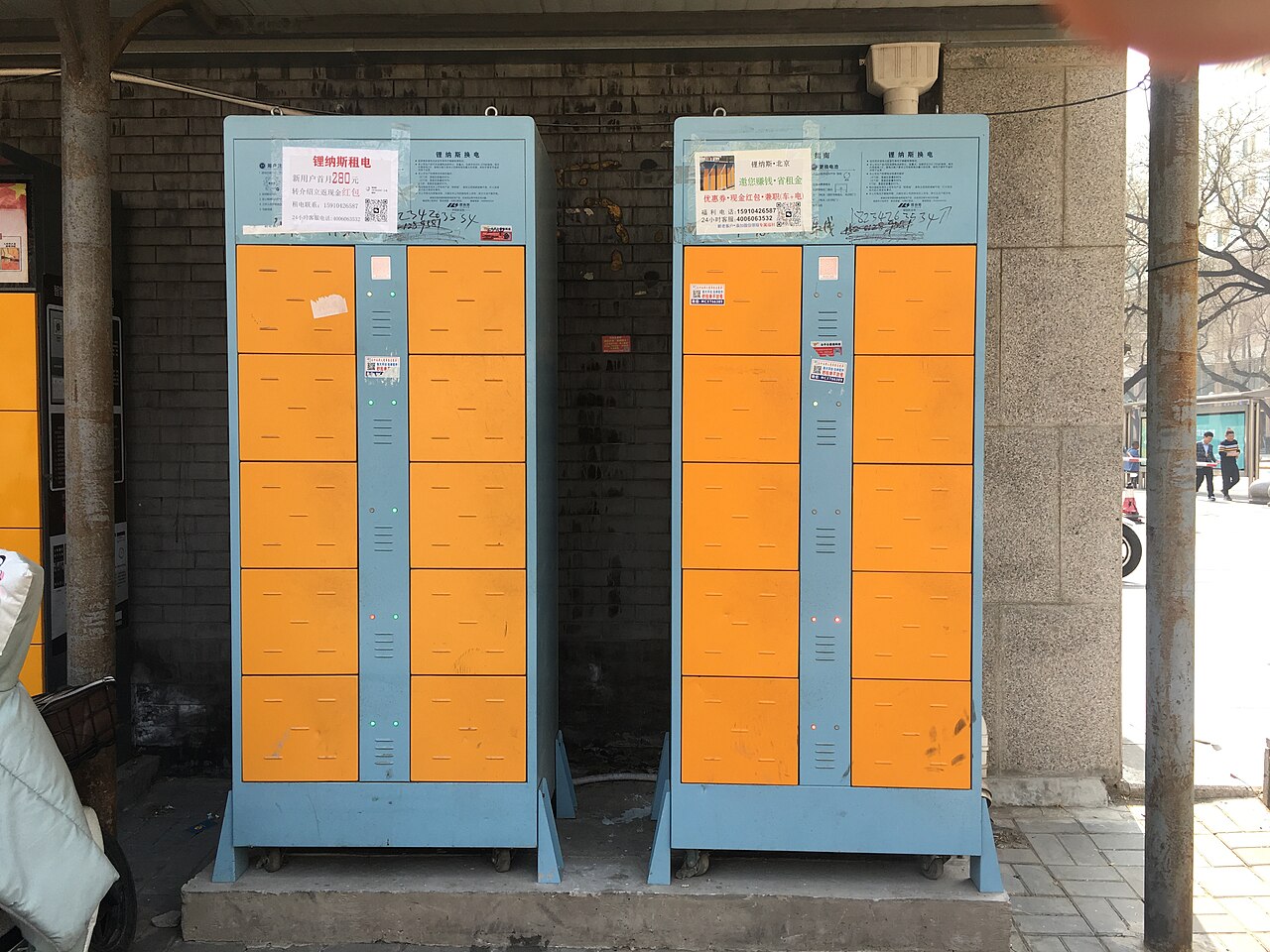
Huawei's smart-car business has signed on to CATL's battery-swap network in China. On Monday, Oct. 19, 2026, Yinwang Intelligent Technology (its English brand name is Newcool), battery maker CATL and CATL's battery-swapping subsidiary CAES signed a strategic cooperation framework. Under the framework, vehicles that use Huawei's Qiankun smart-driving solutions are to be made compatible with CATL's Choco-swap network, according to a CATL statement reported by CnEVPost.
The agreement covers both swappable batteries and the swap-station network, according to a Yinwang statement carried by Reuters (via mirror). It is a framework agreement. No vehicle models, launch date or service areas were announced.
This is a story about battery swapping in China, not plug-in charging. It doesn't change anything at a charger in North America or Europe. We're covering it because it shows how fast one company's swap network has grown, and because Huawei's smart-car unit has now picked swapping as one way to refuel vehicles that use its Qiankun solutions.
The Numbers
CATL's swap network is growing fast, and every count below carries the date its source gave.
- End of 2025: 1,020 Choco-swap stations (Electrek).
- Start of July 2026: more than 2,000 stations (Electrek).
- Sept. 29, 2026: 2,520 stations in about 200 Chinese cities (CATL, via CnEVPost and Electrek).
- Build pace: more than 200 new stations a month (Electrek).
- Target for end of 2026: more than 3,000 stations (Electrek). This is a plan, not a current count.
- Long-term goal: 30,000 stations (CATL, via CnEVPost). No date was given.
Some arithmetic on those figures: going from 1,020 stations at the end of 2025 to 2,520 on Sept. 29 means roughly 1,500 stations were added in about nine months. That is close to a 2.5x increase. Reaching 3,000 by year-end would take about 480 more stations in the last three months of 2026. That fits the reported pace of more than 200 a month, but it is still a target. Even at 3,000, the network would be one-tenth of the 30,000-station long-term goal.
CATL says a fully automated swap takes 99 seconds. That figure is the company's own claim, reported by CnEVPost. None of the sources say it has been independently measured.
Who Signed, and Who Owns Them
Three parties signed. Yinwang is Huawei's smart-car unit. According to Electrek, Huawei owns 80% of Yinwang, and Seres and Avatr (Changan's EV unit) own 10% each. CATL is the battery maker. CAES is CATL's battery-swapping subsidiary and operates its battery-swap business.
The framework talks about vehicles "using Huawei Qiankun solutions" and not a particular brand. Electrek notes that plenty of Chinese automakers buy Huawei's Qiankun systems, so which of those vehicles would get swappable packs is still an open question.
Yinwang is not the first partner from the auto industry. Electrek lists GAC, BAIC and NIO among CATL's existing Choco-swap partners.
What Was Actually Agreed
The sources describe a strategic cooperation framework. That is a statement of intent to work together, not a product launch. Here is what each source confirms:
- The three parties signed a framework on Oct. 19, 2026 (CnEVPost, Electrek, Reuters via mirror).
- The cooperation covers swappable batteries and the swap-station network (Reuters via mirror).
- Vehicles using Qiankun solutions are to become compatible with the Choco-swap network (CATL statement via CnEVPost).
Here is what none of the sources say:
- Which vehicle models will get Choco-swap packs.
- When compatible vehicles will go on sale or be able to swap.
- Which cities or regions will be served first.
- Any pricing for swaps or battery subscriptions.
On sourcing: we could not find a primary release from CATL or Yinwang to read. The company's statement is cited here through CnEVPost's report, and Yinwang's statement through Reuters syndication.
What It Means for Drivers
If you drive in China: nothing changes yet. The 2,520 Choco-swap stations reported as of Sept. 29 serve vehicles built for CATL's swap packs. A car that uses Qiankun smart-driving can't be assumed to swap there today just because of this agreement. Compatibility depends on future vehicles, or future versions of current vehicles, being built for swappable packs, and no models or dates have been announced. If you're thinking about buying a Qiankun-equipped car for its swap access, wait until a specific model and launch date are confirmed.
If you drive outside China: this agreement doesn't touch your charging options. The Choco-swap passenger-car network reported in these sources is in China, in about 200 cities as of Sept. 29, 2026. Electrek separately notes CATL is pushing swapping for heavy trucks, including a joint venture with Octopus Energy for the UK and Europe, but none of the sources announce passenger-car swapping elsewhere.
If you run a fleet, host chargers or work on EV infrastructure: treat this as industry context. In China, battery swapping is being built out alongside plug-in charging at a pace of more than 200 stations a month, by Electrek's count. Several automakers and now Huawei's smart-car unit have signed up. Electrek's own view is that swapping only works as infrastructure if many automakers share standard packs, and that it complements charging rather than replacing it.
What to Watch
- A named model. The framework becomes something drivers can use only once a Qiankun-equipped vehicle with a Choco-swap pack is announced, along with a date.
- The year-end count. CATL's target of more than 3,000 stations by the end of 2026 can be checked in a few months against the 2,520 reported for Sept. 29.
- A primary release. If CATL or Yinwang publishes its own statement, it may add detail beyond what CnEVPost and Reuters reported.
Sources
- CnEVPost: Huawei's smart car unit partners with CATL, joins Choco battery swap ecosystem (Oct. 19, 2026)
- Electrek: Huawei's car unit joins CATL's 2,520-station battery swap network (Oct. 19, 2026)
- Reuters: Huawei-backed smart car business to cooperate with CATL on battery swapping (Oct. 19, 2026, via Devdiscourse mirror)
