
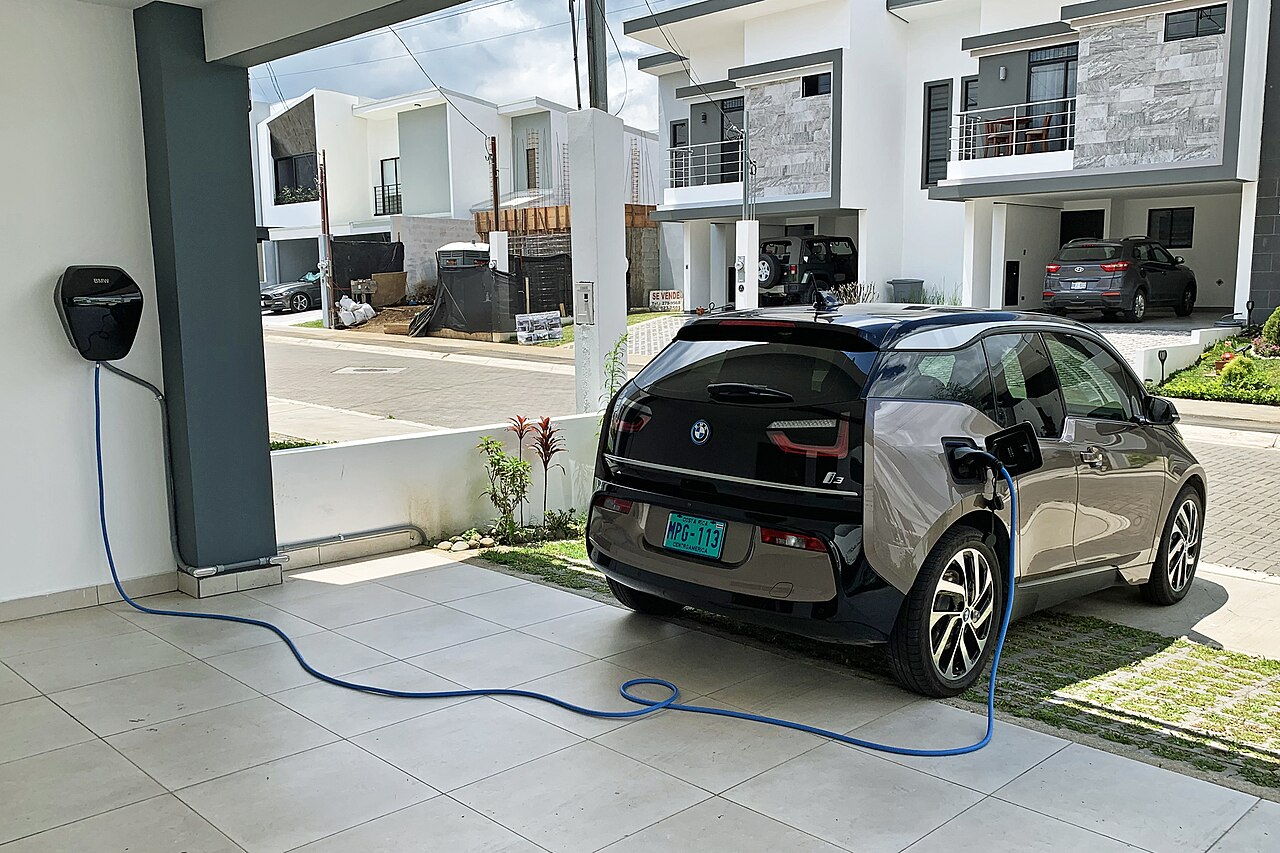
Charging an EV at home in Great Britain now carries no VAT, for a while at least. EDF Energy's notice says that from 1 October 2026, VAT on domestic electricity in Great Britain is temporarily cut from 5% to 0%. Octopus EV gives the period as 1 October 2026 to 31 March 2027. Public charging is not part of the cut. Octopus notes that public charging is taxed at 20%.
The VAT change comes alongside two other things: overnight EV tariffs that the suppliers quote at under 10p per kWh, and the last year of the government's home and workplace chargepoint grants. Below we go through each one in question-and-answer form, using the suppliers' and the Office for Zero Emission Vehicles' (OZEV) own published figures and dates.
What exactly changed on 1 October?
VAT on domestic electricity. EDF's GoElectric tariff page says that from 1 October 2026, VAT on domestic electricity in Great Britain is temporarily cut from 5% to 0%. It also says electricity used up to and including 30 September 2026 is still charged at 5%, and that the 0% rate applies from 1 October 2026 unless government policy changes. If your bill covers dates on both sides of 1 October, you should see two VAT rates on it.
Octopus EV's cost guide, published 20 October 2026, gives the same change with an end date: VAT on home electricity is set to fall to 0% from 1 October 2026 until 31 March 2027, and Octopus calls the cut temporary. The sources do not say what happens after 31 March 2027.
The cut only covers domestic electricity. Octopus says public charging is taxed at 20%, partly why it generally costs more than home charging. On tax alone, the gap between home and public charging is therefore larger than before the cut (our reading of the 5% and 20% rates), before you even compare per-kWh prices.
How cheap are overnight EV tariffs right now?
The two suppliers in our sources publish these off-peak figures:
- EDF GoElectric: 6.66p per kWh off-peak from 11pm to 6am, which is a seven-hour window, according to EDF's tariff page. EDF says its figures are "correct as of 1 October 2026." The tariff has fixed prices, needs a smart meter, and has a £75 exit fee.
- Octopus: Octopus EV's 20 October 2026 guide quotes 7p per kWh for Intelligent Octopus Go with EV Saver and 8p per kWh for Intelligent Octopus Go without EV Saver, both for 11:30pm to 5:30am. Octopus says these are rates correct as of 20 October 2026, and that the EV Saver rate is exclusive to Octopus EV drivers.
Octopus compares these with the standard variable rate under the Ofgem price cap, which it quotes at 26.32p per kWh using rates from 20 October 2026. EDF's 6.66p is roughly a quarter of that capped standard rate (our calculation, comparing figures dated 1 and 20 October).
Neither supplier, in the material we reviewed, says whether its quoted per-kWh overnight rate includes VAT. EDF states only that the electricity prices in its annual cost example were calculated using 0% VAT. Check your own tariff documents rather than assume a price includes or excludes VAT.
What does a full charge cost?
Octopus EV works through one example: a full charge of an MG4 Premium Long Range's 61.7 kWh battery, using rates from 20 October 2026.
| Rate (Octopus EV, 20 Oct 2026) | Price per kWh | Full 61.7 kWh charge |
|---|---|---|
| Intelligent Octopus Go, with EV Saver | 7p | £4.32 |
| Intelligent Octopus Go, no EV Saver | 8p | £4.94 |
| Standard variable (Ofgem cap) | 26.32p | £16.24 |
On Octopus's figures, a full charge at the 7p rate costs £11.92 less than the same charge at the capped standard variable rate (our subtraction). Octopus's example assumes one battery size and a full charge from empty. Octopus itself notes that most drivers top up rather than fill to 100%, so you will usually pay less per session than these figures, and the totals change with the size of the battery. Octopus also lists a daily standing charge on top of the unit rate, so check that as well.
EDF does not publish a full-charge example on the page we reviewed. It does offer an optional Smart Charging credit of £5 a month, or £60 a year, which continues while you remain opted in and regularly use the Smart Charging schedule, according to the GoElectric page.
What are the catches?
Each supplier sets conditions on its tariff:
- EDF GoElectric needs a smart meter, has fixed prices, and charges a £75 exit fee, per EDF.
- The cheap rate only applies during the set window. On GoElectric that is 11pm to 6am. If your car is plugged in and charging outside those hours, you pay a different rate.
- Octopus's two quoted rates show that the EV Saver option changes the price. Intelligent Octopus Go without EV Saver is 8p, against 7p with it in the same guide. Octopus says you need a smart meter and a compatible car or charger.
- All of these prices are snapshots. EDF dates its figures to 1 October 2026 and Octopus to 20 October 2026. Octopus says rates and eligibility can change, and tariffs and the Ofgem cap can change after those dates.
What about the chargepoint grants?
OZEV's guidance on GOV.UK, last updated 1 April 2026, says the home and workplace chargepoint grants have been extended for a final year. Five schemes are available until 31 March 2027, with new rates. That end date is the same day the temporary VAT cut on home electricity is due to end, according to Octopus.
The five schemes, as GOV.UK describes them:
- Renters and flat owners: up to £500 towards a chargepoint, for people with private off-street parking.
- On-street households: up to £500 towards a cross-pavement solution, such as a charging gully, for people who only have on-street parking.
- Workplace Charging Scheme: up to £500 per socket, for up to 40 sockets.
- Landlords: up to £500 per socket, for up to 200 sockets.
- State-funded education: up to £2,000 per socket, for up to 40 sockets.
Octopus EV describes the renter and flat-owner grant as covering 75% of the cost of buying and installing a chargepoint socket, up to £500, and notes that homeowners with a driveway are not covered by that scheme. GOV.UK's page gives the per-scheme limits above, and the full eligibility rules are on that page.
How much does the hardware cost?
Octopus EV puts a typical 7 kW home charger at £800 to £1,200 fitted, citing Heatable's cost guide, and says a more complicated installation can reach £1,500 or more. EDF lists the Pod Point Solo 3S from £999 upfront, or £34 a month. There is also a £499 upfront option bundled with a two-year tariff, per EDF's GoElectric page.
Installing a charger is a job for a qualified installer. ChargerFeed does not give wiring or installation guidance. Use a licensed electrician and follow the charger manufacturer's instructions, which also matters for meeting grant conditions.
What It Means for Drivers
If you can charge at home: From 1 October 2026, there is no VAT on the electricity you use at home in Great Britain, unless government policy changes. Electricity used up to and including 30 September is still charged at 5%, per EDF. Octopus says the 0% rate runs until 31 March 2027. Suppliers quote overnight EV rates of 6.66p per kWh (EDF GoElectric, 11pm to 6am, as of 1 October 2026) and 7p to 8p per kWh (Octopus Intelligent Octopus Go, as of 20 October 2026). Octopus quotes the capped standard variable rate at 26.32p per kWh.
If you rent or own a flat with private off-street parking: OZEV's grant of up to £500 is available until 31 March 2027. GOV.UK calls this the final year. Octopus describes it as 75% of the cost, up to £500.
If you park on the street at home: A separate grant of up to £500 covers a cross-pavement solution, such as a charging gully, until 31 March 2027, per GOV.UK.
If you rely on public chargers: The VAT cut covers domestic electricity, so it does not apply to you. Octopus says public charging is taxed at 20%.
Before switching tariffs: Check whether you have a smart meter, any exit fees (£75 on EDF GoElectric), the hours of the off-peak window, and the date your quoted price applies from. The figures in this article are dated between 1 and 20 October 2026.
