
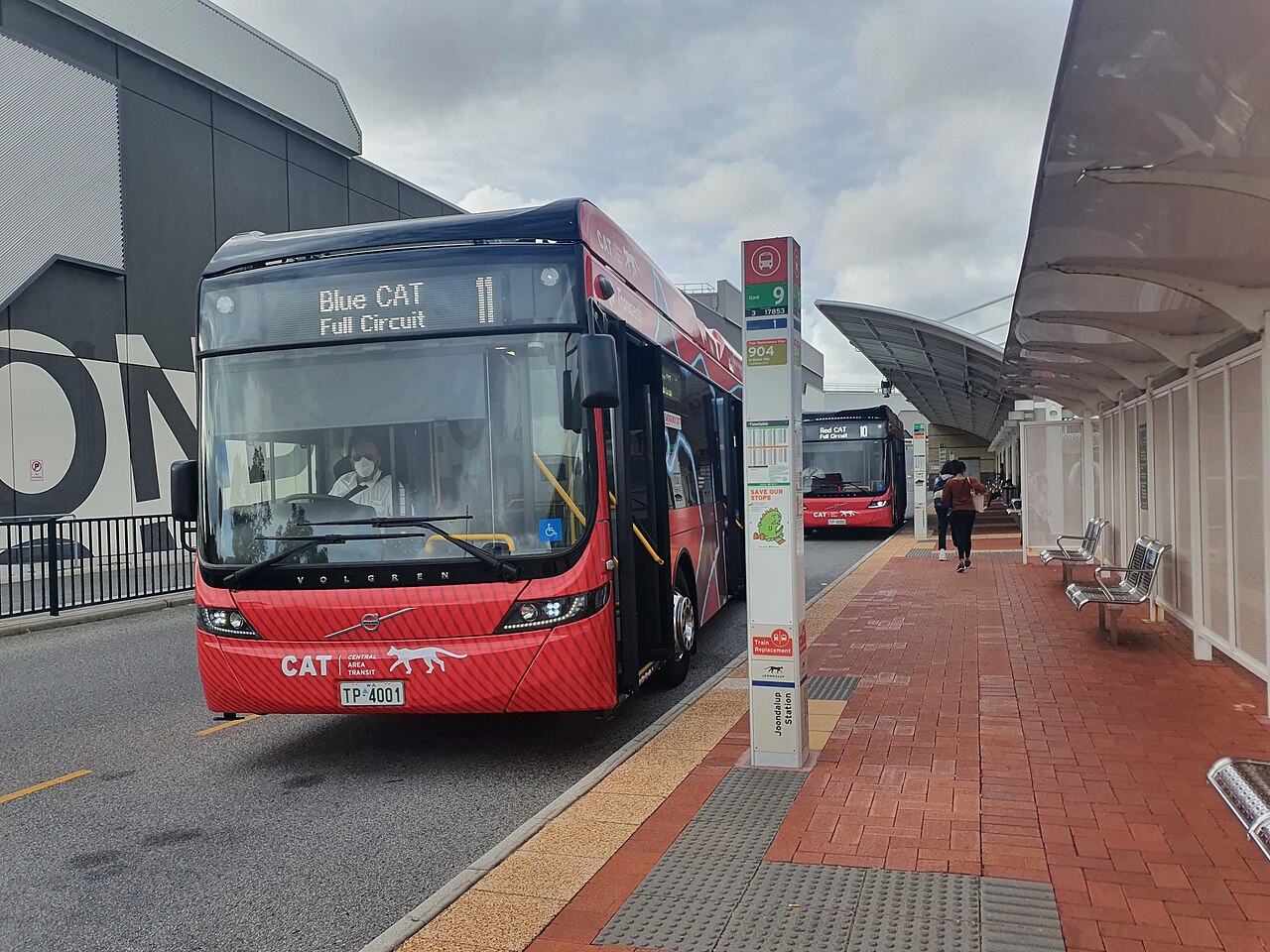
Western Australia's biggest electric bus depot is now open. According to a joint federal and Western Australian government media release dated Nov. 8, 2026, as reported by EV Infrastructure News, Sustainable Bus and Zecar, the Transperth depot at Bayswater, in Perth's eastern suburbs, has been upgraded with 65 dual and 2 single electric bus chargers, 67 units in all. It can charge an initial 132 buses, with a long-term capacity of 180. Twenty electric buses were reported to be operating from the site as of Nov. 8–9, 2026.
Bayswater is the fourth Transperth site with bus charging, after Elizabeth Quay Bus Station and the Malaga and Karrinyup depots. It is now the largest of the four. EV Infrastructure News, reporting on Nov. 9, said Bayswater overtakes Karrinyup, which was completed in July with 56 dual chargers providing 112 plugs and was until now the state's largest electric bus facility.
The numbers, as of Nov. 8–10, 2026
- Charging hardware at Bayswater: 65 dual chargers plus 2 single chargers (67 units), per EV Infrastructure News, Sustainable Bus and Zecar.
- Vehicle capacity: charging positions for an initial 132 buses, rising to 180 in the long term.
- Electric buses running from the depot now: 20 (Zecar says "around 20").
- Electric buses delivered under the program so far: the initial 130, per EV Infrastructure News and Sustainable Bus.
- Locally built electric buses in Transperth service: more than 200, per EV Infrastructure News and Sustainable Bus.
- Program funding: A$250 million, jointly funded by the federal and Western Australian governments. EV Infrastructure News converted this to about US$173 million. Sustainable Bus reports that the money covers both vehicle procurement and the adaptation of existing operating facilities.
- Delivery pace: locally made electric buses are entering service at about 11 a month, according to State Member for Bayswater Dan Bull, as quoted by EV Infrastructure News and Sustainable Bus.
Some quick arithmetic: if each dual unit serves two buses and each single unit serves one, 65 dual and 2 single chargers give 132 charging positions (65 x 2 + 2). That matches the stated initial capacity of 132 buses. The sources do not spell out this calculation, but the figures line up, and the same two-plugs-per-dual-unit ratio fits Karrinyup's reported 56 dual chargers and 112 plugs. It also fits Jandakot, where 41 dual chargers are described as providing capacity for 82 buses.
More than chargers
The upgrade went beyond charging equipment. Sustainable Bus and EV Infrastructure News list a new administration building, a workshop and a wash bay at Bayswater, along with a redesigned depot yard, bus and staff parking areas and security fencing. For a bus operator, a depot conversion usually means changing how the whole yard works: where buses park overnight, how they move through maintenance, and how staff are housed. The charging hardware is only one part of that.
The 20 buses running now are well short of the 132-bus initial capacity. The charging infrastructure has been built ahead of the fleet that will use it, and the remaining positions will fill as buses arrive. If the reported pace of about 11 new locally made buses a month holds, the fleet will keep growing steadily, although that figure covers the whole program rather than Bayswater alone. The sources do not give a date for when Bayswater itself will reach 132 or 180 buses.
Where Bayswater fits in the network
Transperth's electric bus charging now covers four locations:
- Elizabeth Quay Bus Station: an earlier charging site, named in all three sources.
- Malaga: an earlier charging depot.
- Karrinyup: completed in July with 56 dual chargers and 112 plugs, per EV Infrastructure News.
- Bayswater: now operating with 65 dual and 2 single chargers, the largest so far.
More sites are coming. All three sources report work at Jandakot, where electrical connection works are complete and chargers are being installed. All 41 dual chargers are expected to be operating by mid-2027, with capacity for 82 buses, and the chargers will be brought online progressively. EV Infrastructure News adds that the state awarded JET Charge an A$9.6 million contract for the Jandakot charging installation. Planning is also under way for upgrades at the Welshpool, Joondalup and Claisebrook depots. Those projects are planned, not built, and the sources give no charger counts or timelines for the three.
Open, funded, planned: keeping them straight
The announcement covers projects at different stages, so here is where each one stands:
- Open and operating: Bayswater (reported open Nov. 8–9, 2026, with 20 e-buses running), plus the earlier sites at Elizabeth Quay Bus Station, Malaga and Karrinyup.
- Funded: the A$250 million joint program covering buses and depot adaptation.
- Delivered: the initial 130 electric buses under the program, with more than 200 locally built e-buses in Transperth service overall.
- Under installation: Jandakot's 41 dual chargers, expected to be fully operating by mid-2027.
- Planning under way: upgrades at Welshpool, Joondalup and Claisebrook.
What It Means for Drivers
Bayswater is a depot for Transperth's bus fleet. Its chargers are there to recharge buses between shifts and overnight. None of the three sources describes public access, so private EV drivers should not expect to charge there. None of the sources mentions pricing or per-kWh rates, and none is given here.
For bus drivers and depot staff, the change is practical and already under way. Twenty electric buses now run out of Bayswater, and the depot has a new workshop, wash bay and administration building. As the fleet grows toward the 132-bus initial capacity, more of the depot's operations will move to electric buses, with a long-term ceiling of 180.
For passengers, the sources do not say which routes the Bayswater e-buses serve or when particular routes will switch. Riders will see more electric buses gradually as deliveries continue, at about 11 a month according to Dan Bull, rather than all at once.
For other fleet and depot operators, Bayswater and Karrinyup together give a useful reference point: a dual-charger layout that, on the reported figures, provides about one charging position per bus at initial capacity. Anyone planning a depot of their own needs site-specific engineering, utility coordination and licensed electrical contractors. Equipment should be installed only to the manufacturer's instructions and by a licensed electrician.
What to watch
- How quickly Bayswater's in-service count climbs from 20 toward 132.
- Whether Jandakot's 41 dual chargers are all operating by the mid-2027 target.
- When Welshpool, Joondalup and Claisebrook move from planning to construction.
Sources
- Government of Western Australia: Joint media statement, Perth’s largest EV bus depot now operating (Nov. 8, 2026)
- EV Infrastructure News: Western Australia opens Perth's largest electric bus depot (Nov. 9, 2026)
- Sustainable Bus: Transperth exceeds 200 electric buses in service as Bayswater depot opens with 132-bus initial capacity (Nov. 10, 2026)
- Zecar: Perth Opens Its Largest Electric Bus Depot in Bayswater (Nov. 10, 2026)
