
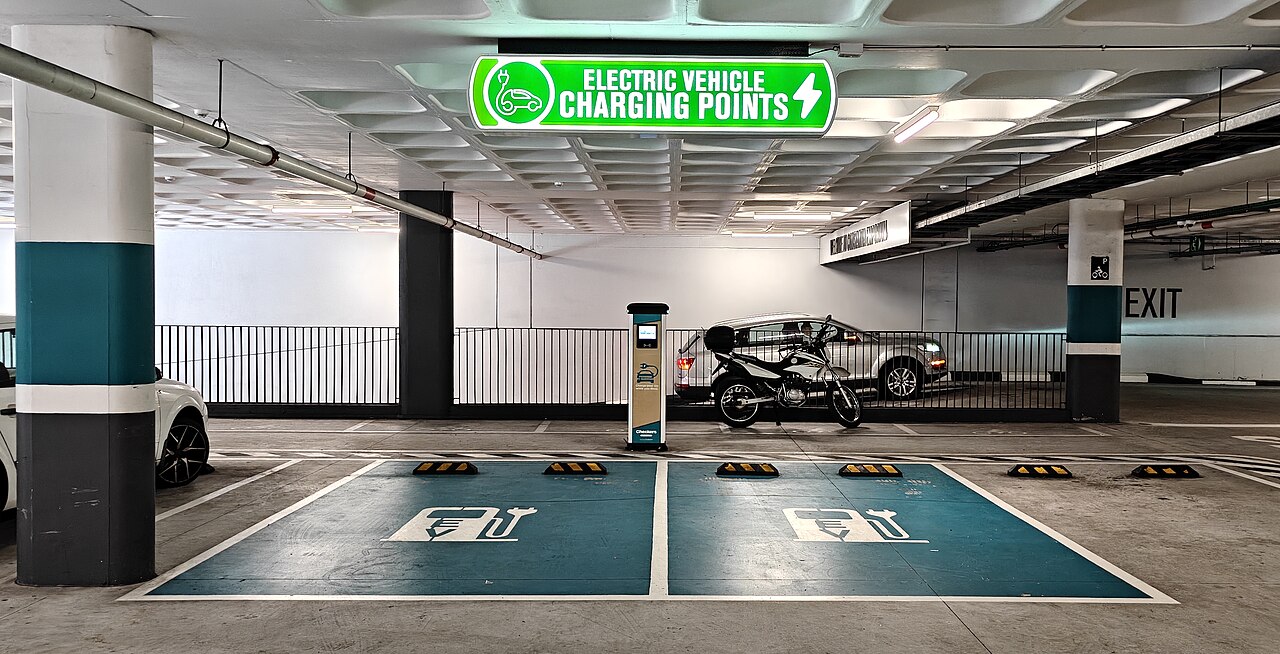
Abu Dhabi's public parking network now has 332 EV charge points, served by 244 charging units. The emirate's Integrated Transport Centre (ITC), which now goes by Abu Dhabi Mobility and is an affiliate of the Department of Municipalities and Transport, announced on Nov. 11, 2026 that the units had been installed and commissioned in collaboration with Q Mobility, in public parking areas regulated under the Mawaqif system.
The 244 units are the first ones in operation from a first phase of 1,000 units. That phase covers 405 locations in 10 main areas across Abu Dhabi City, Al Ain and Al Dhafra. The longer plan runs to 2032 and calls for 4,500 charging units with more than 9,000 charge points at about 2,250 locations, Gulf News reported.
The Numbers, Sorted by Status
The announcement mixes figures at different stages. Here they are by status, with dates:
- Operating (as of Nov. 11, 2026): 244 charging units and 332 charge points, commissioned in public parking areas.
- Phase one, in progress: 1,000 units at 405 locations in Abu Dhabi City, Al Ain and Al Dhafra. The 244 units now running are about 24% of that total.
- Planned by 2032: 4,500 units, more than 9,000 charge points and about 2,250 locations.
The operating figures work out to about 1.36 charge points per unit. The 2032 target works out to roughly two points per unit. Neither source says how many of the 332 points running today are standard AC and how many are fast DC.
Phase one uses two hardware classes. Standard chargers are rated at 22 kW, and fast chargers range from 60 kW to 160 kW, according to Gulf News. The sources do not give a timetable for the rest of phase one, other than the 2032 target for the full programme.
Who Builds and Runs the Chargers
The network is being built through public-private partnership (PPP) concessions covering the supply, installation, operation and maintenance of charging units in public parking areas, according to Gulf News. Gulf News and ARN News Centre both name three participating companies:
- ChargePoint
- Tatweer Middle East & Africa
- Loop Global
The chargers sit in designated bays within the Mawaqif public parking network, and Abu Dhabi Mobility carried out the Nov. 11 activation in collaboration with Q Mobility. Eng Hamad Adel Al Afeefi, Executive Director of the Intelligent Transportation Systems Sector at the ITC, was quoted in the Gulf News report on the commissioning.
An earlier release on the Abu Dhabi Mobility website, published May 8, 2025, covered the appointment of PPP operators. It described a first phase of 1,000 new charging stations at 400 locations across Abu Dhabi Island, Al Ain and Al Dhafra, under a single brand, "Charge AD." It also said the number of stations would increase in phases each year and that the network would expand through partners to provide charging points at locations such as hotels and shopping centres. The Nov. 11 announcement gives 405 locations for phase one, which is close to the 400 in that earlier release.
What It Means for Drivers
Based on what the two Nov. 11 reports say, a session at one of these public bays works like this:
- Where: In designated EV bays inside public parking areas. As of Nov. 11, 2026, 332 charge points are operating across the emirate. More are due as phase one continues toward 1,000 units at 405 locations in Abu Dhabi City, Al Ain and Al Dhafra.
- How to start: Scan the QR code on the charger. According to Gulf News, it leads you to download the app designated for that charging area. Both reports say the app or unit lets you find stations, check connector compatibility and view tariffs.
- Two separate charges: Standard Mawaqif parking fees apply to these bays, and charging is billed at the tariffs approved by the charging station operators. Using a charging bay does not waive the parking fee.
- Charging only: The bays may be used only while a vehicle is charging. ARN News Centre and Gulf News both report that drivers must vacate the bay once charging is finished, so the bays are not for general parking.
- Speed: Phase one includes 22 kW standard units and 60-160 kW fast units. The reports do not say which type is installed at which site. The app or the details on the unit are where drivers can check what a given charger offers.
What will it cost?
The Nov. 11 reports do not list per-kWh rates. ARN News Centre and Gulf News both say charging is subject to the tariffs approved by the charging station operators, and both say drivers can view tariffs in the app.
The earlier Abu Dhabi Mobility release, dated May 8, 2025, gave standard "Charge AD" tariffs of AED 0.70 per kWh for AC charging and AED 1.20 per kWh for fast DC charging. Because the Nov. 11 announcement neither repeats those rates nor uses the Charge AD name, drivers should check the rate shown in the app before each session rather than assume those figures still apply. The Mawaqif parking fee is extra.
Here is how those May 2025 rates would work out if they still apply. Adding 30 kWh would cost about AED 21 on AC at AED 0.70/kWh, or about AED 36 on fast DC at AED 1.20/kWh. Parking is not included in either figure.
What Is Still Unclear
The announcement leaves several questions for drivers, fleet operators and site hosts:
- Site list: Neither Nov. 11 report lists the 405 phase-one locations or says which of them already have working chargers.
- AC/DC split: The sources give no breakdown of the 332 operating points by power level.
- Apps: Three operators are involved, and Gulf News says the QR code leads to the application designated for the relevant charging area. That wording suggests the app may differ by area, and the reports do not say whether one app covers every operator's chargers. The earlier release's single Charge AD brand suggests unified branding was the aim, but the Nov. 11 reports do not confirm it.
- Pace: The sources give no interim targets between the 244 units running now, the 1,000 units in phase one and the 4,500 units planned for 2032.
For operators and site hosts, the model is worth noting. The chargers go into bays within the existing Mawaqif parking network, and parking fees and charging tariffs are billed separately. The vacate-after-charging rule is stated in both reports, but they do not say how it is enforced or whether idle fees apply.
ChargerFeed will update these counts as Abu Dhabi Mobility publishes new commissioning figures.
