
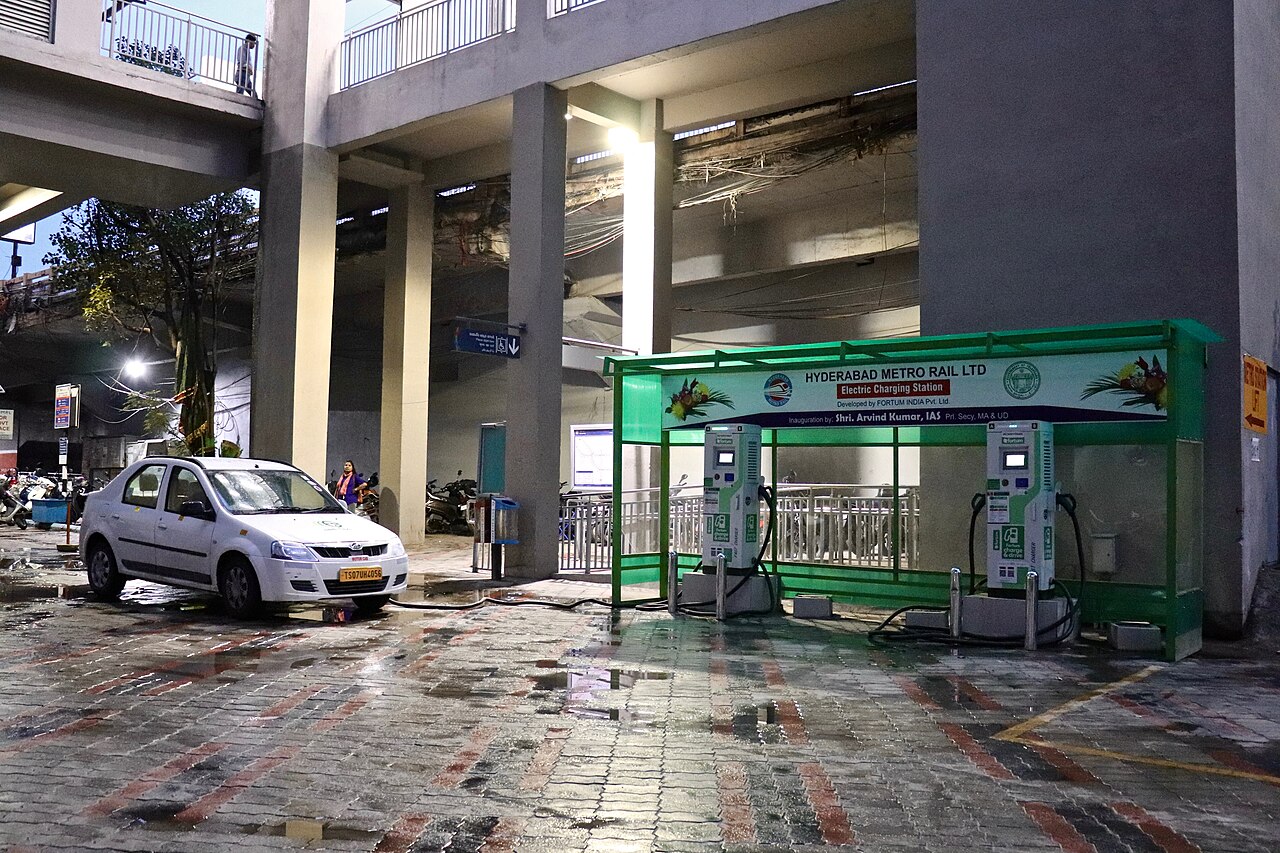
India's central government has sanctioned Rs 904 crore for 8,610 public charging stations under the PM E-DRIVE scheme, Heavy Industries Minister H D Kumaraswamy said on November 20, 2026. The money went to state governments and oil marketing companies (OMCs). It comes out of Rs 2,000 crore that the scheme sets aside for public charging.
Kumaraswamy spoke by video at the first GRID dialogue, an event the Society of Indian Automobile Manufacturers (SIAM) held on National EV Charging Day. ETV Bharat and Deccan Herald both reported the figures. His main point was about how progress gets counted. He said the measure should be how many stations are working and reliable, not how many have been sanctioned or installed.
That point shapes how to read the numbers. The figure of 8,610 is a count of sanctioned stations. Neither report says how many of them are built, switched on or open to the public.
The numbers, as of November 20, 2026
- Total PM E-DRIVE outlay: Rs 11,900 crore (Deccan Herald).
- Set aside for public charging: Rs 2,000 crore (both reports, and the Ministry of Heavy Industries' May 2025 scheme release on PIB).
- Station target: about 72,000 public charging stations, according to the May 2025 PIB release. Deccan Herald reports 72,300 new public charging stations, battery swapping stations and battery charging stations.
- Sanctioned so far: Rs 904 crore for 8,610 stations, given to states and OMCs.
- Operational count: not given in either report.
Some simple arithmetic on those figures, which is ours and not the ministry's:
- Rs 904 crore is about 45% of the Rs 2,000 crore charging budget. That leaves about Rs 1,096 crore not yet sanctioned.
- 8,610 stations is about 12% of the roughly 72,000 to 72,300 target.
- The sanctions so far average about Rs 10.5 lakh per station.
- Charging is about 17% of the Rs 11,900 crore scheme.
The money and the station count are moving at different speeds. Close to half the charging budget has been committed, but only about one station in eight of the target has been sanctioned. If the remaining Rs 1,096 crore were spread across the remaining 63,000-plus stations, it would come to well under Rs 2 lakh per station. That is a fraction of the average so far.
The sources don't explain this gap. Some possible reasons are a change in the mix of charger types, different subsidy levels for different site types, or a target that counts things the budget doesn't directly pay for. The sources confirm none of these. The ministry has not published a station-by-station breakdown in the material reviewed for this article.
Where the scheme says chargers will go
The May 2025 ministry release on PIB set out the plan. It covers public charging along 50 national highway corridors and in metro cities. It also covers toll plazas, railway stations, airports and fuel outlets. The release said Bharat Heavy Electricals Limited (BHEL) was being considered as the nodal agency for pooling demand. It also said BHEL was being considered to build a single "super app" for charging. That release dates from May 2025 and describes the plan as it stood then. It does not report progress as of November 2026.
On November 20, ETV Bharat reported, Kumaraswamy called for charging to spread beyond the current focus. He named tier-2 and tier-3 cities, rural areas and industrial clusters. He also called for planning higher-capacity charging for electric buses and trucks. Those remarks were a call for future planning. He did not announce new money or new sanctions for those segments.
Sanctioned, installed, operational: three different numbers
The minister's distinction matches how ChargerFeed treats charging counts in general. Each stage below is a different number:
- Earmarked: money set aside in the scheme, here Rs 2,000 crore.
- Sanctioned: money approved for specific stations and specific recipients, here Rs 904 crore for 8,610 stations.
- Installed: hardware physically in place.
- Operational: a station a driver can actually use and that works reliably.
The sources give numbers only for the first two stages. Kumaraswamy said the fourth stage is the one that counts. Neither report gives a figure for it.
What It Means for Drivers
For EV drivers in India, the practical point is that 8,610 sanctioned stations are not 8,610 places you can charge today. The announcement shows that central money has been approved for those sites through states and oil marketing companies. It does not say where they are, which ones are open, or when the rest will open.
Based on the sources:
- Highway and transit sites are named in the plan. The May 2025 scheme design puts charging along 50 national highway corridors and at metro cities, toll plazas, railway stations, airports and fuel outlets. OMCs are among the recipients of the sanctioned money, and fuel outlets are among the listed site types, but the reports do not say which sanctioned stations are at fuel outlets.
- Smaller cities and rural areas are a stated goal, not a funded rollout. The minister's call to reach tier-2 and tier-3 cities, rural areas and industrial clusters was made on November 20. The sources do not tie it to specific sanctions.
- Bus and truck charging is still at the planning stage. Higher-capacity charging for heavy vehicles was raised as something to plan for. No sanctions were reported for it.
- One app is proposed, not launched. The unified "super app" in the May 2025 release was described as part of BHEL's possible role. The sources reviewed do not report that it has launched.
- No prices were announced. Neither report gives charging tariffs, per-kWh rates or per-minute rates for PM E-DRIVE stations.
Fleet and depot operators, and site hosts who want to add their own charging, should note that this scheme money goes to states and OMCs. The reports do not describe a direct grant route for private sites. Any site installation should be designed and carried out by a licensed electrician, following the charger maker's instructions and local utility rules.
What to watch
The next useful numbers would be an operational count of PM E-DRIVE stations and how they are split between states and OMCs. A breakdown by charger type and location would also explain why the funding share and the station share differ so much. ChargerFeed did not find a Press Information Bureau release for the November 20 event. The figures here come from the ETV Bharat and Deccan Herald reports of the minister's speech, plus the May 2025 PIB release for background on the scheme.
Sources
- ETV Bharat: Kumaraswamy calls for reliable EV charging, says installation count alone cannot measure progress (Nov 20, 2026)
- Deccan Herald: EV chargers: H D Kumaraswamy urges to focus on working stations, not installations (Nov 20, 2026)
- PIB / Ministry of Heavy Industries: India Accelerates National EV Charging Grid under PM E-Drive (May 21, 2025)
