
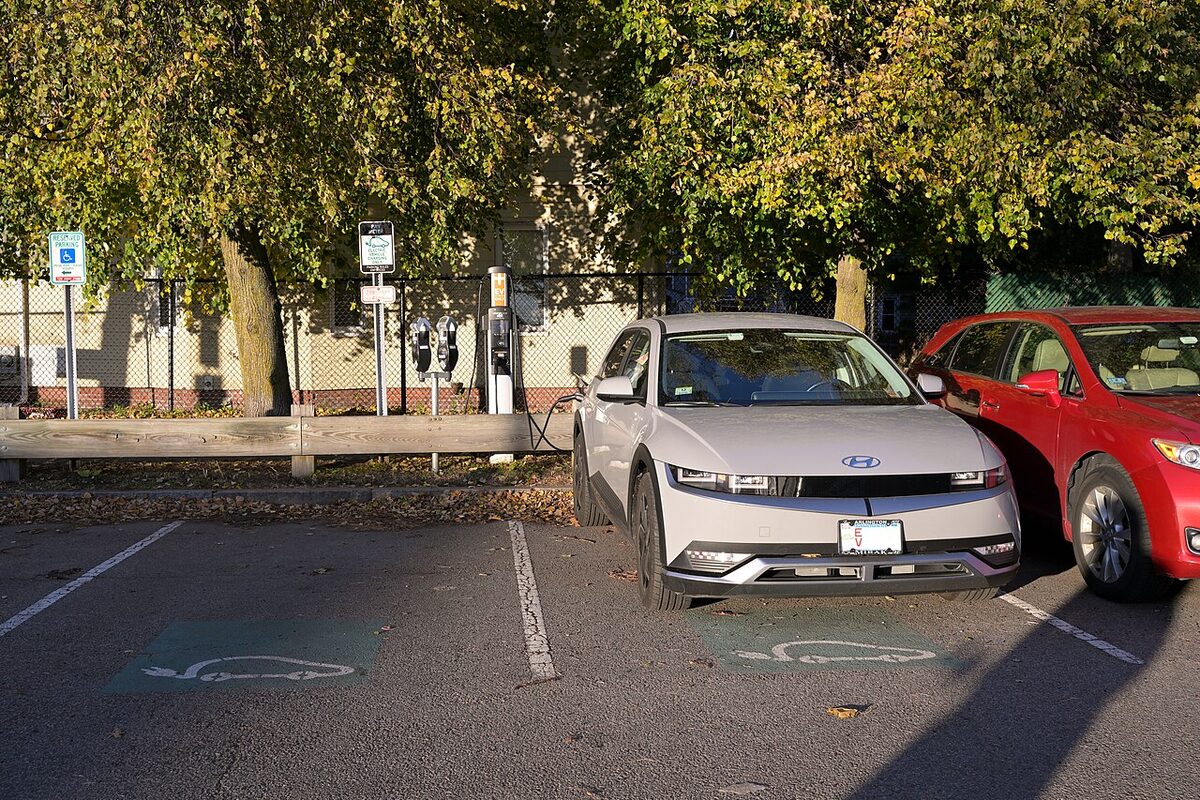
Hyundai and Kia EV owners in the US will get access to utility smart-charging programs through a platform that grid-software company WeaveGrid will co-develop and operate with Hyundai Motor Group. WeaveGrid announced the partnership on Nov. 12, 2026, in a release datelined Seoul and San Francisco.
The program has two stages. The first is managed charging, which the industry calls V1G: the car still draws power only one way, but the timing of the session moves to cheaper hours when the grid has more spare capacity. Vehicle-to-grid (V2G), where the battery sends power back to the grid, comes second. Automotive World reports that V2G will be added once bidirectional hardware, grid connection rules and utility programs mature.
Neither company has given a launch date, a list of participating utilities by state, or any pricing or incentive amounts. As of Nov. 19, 2026, this is an announced program, not an operating one.
What Was Announced
In its release, WeaveGrid says it will co-develop the platform with Hyundai Motor Group and power it. The platform connects the Group's US electric vehicles to utility energy services, which the companies say will be available to drivers later. Drivers will use the brands' existing apps, myHyundai and Kia Access, to set a departure time and a charge level. The platform then shifts charging to lower-cost hours that also support the local grid.
Utilities get data in return. According to the WeaveGrid release and EV Infrastructure News, participating utilities will receive charging and battery data from the vehicles; EV Infrastructure News describes it as down to the individual vehicle level on participating models. The release says the integration is direct and authorized, and that it protects vehicle cybersecurity and driver privacy.
The release includes quotes from Woong Tae Hwang of Hyundai Motor Group and from WeaveGrid CEO Apoorv Bhargava. It also says participation depends on each utility's eligibility requirements and may not be available in all areas.
The Hardware Angle: E-GMP and Bidirectional Charging
WeaveGrid says most of the Group's US EV lineup is built on the Electric-Global Modular Platform (E-GMP), which the release says was engineered for bidirectional charging. The release cites existing examples of what that design makes possible:
- Vehicle-to-load (V2L) on the IONIQ 5 and Kia EV6
- Home backup power for the Kia EV9
A car that can discharge its battery is only part of a working V2G system. The release and Automotive World say the companies plan to extend the platform to V2G as bidirectional hardware, interconnection rules and utility program designs evolve. Until those are in place, the announced US offering is V1G.
How Far the Utility Network Reaches
WeaveGrid's main customers are utilities. The release lists programs with Ameren Illinois, Exelon, CPS Energy, PG&E, Southern California Edison, Salt River Project, AEP and Xcel Energy, among others, and says WeaveGrid supports utilities serving more than 50 percent of EVs in the US. That figure describes the utilities' service territories. It is not a count of drivers who are enrolled or eligible. The release adds that program availability, features, incentive amounts and enrollment requirements vary by utility, location and customer eligibility, so a Hyundai or Kia owner in a WeaveGrid utility's territory may still find that a given program, or its incentives, is not available to them.
Part of a Pattern for WeaveGrid
EV Infrastructure News compares the Hyundai partnership to WeaveGrid's July agreement with GM Energy, a General Motors subsidiary. Under that program, owners of GM Energy's vehicle-to-home systems with a suitable grid interconnection can take part in programs based on WeaveGrid's DISCO distribution-level orchestration system, such as bidirectional charging and residential energy storage. The Hyundai deal also builds on an existing financial relationship: the WeaveGrid release says it follows Hyundai Motor Group's strategic investment in the company in January 2025. EV Infrastructure News adds that Toyota's Woven Capital invested $28 million in WeaveGrid in December 2024.
How It Fits Hyundai's Global V2X Push
Hyundai Motor Group already has a global energy-services program. In a July 24, 2026 release, the Group launched AllDayEnergy, a brand that puts V1G smart charging, V2G and vehicle-to-home (V2H) under one name, delivered through the Hyundai and Kia vehicle apps. That release does not mention WeaveGrid, and neither company has said whether the US platform will carry the AllDayEnergy name.
The two programs are sequenced the same way. Hyundai says AllDayEnergy starts with V1G, which adjusts charging timing in response to real-time electricity prices, grid conditions and customer preferences, and adds V2G and V2H afterward. The rollout begins in the UK through the Kia App; the release's headline says the second half of 2026 and its body says the second quarter of 2026. Expansion to Europe, the US and Korea is planned. The Group also describes work already underway:
- A V2G pilot in Jeju Special Self-Governing Province, Korea
- V2H deployed in the US for emergency household backup power during events such as major wildfires
- V2G and smart charging introduced in the Netherlands, optimizing charging against dynamic electricity prices
What It Means for Drivers
Who qualifies: Owners of Hyundai and Kia EVs in the US whose electric utility runs a program on WeaveGrid's platform and who meet that utility's eligibility rules. WeaveGrid and Automotive World both say eligibility, incentives and features vary by utility. No list of participating utilities by state has been published yet.
What changes at home: In phase one, drivers set a departure time and a target charge level in the myHyundai or Kia Access app, and the platform shifts the session to lower-cost hours that also support the local grid. Power still flows only into the car. Nothing in the sources says the program requires a new charger or new equipment for V1G.
What doesn't change yet: Exporting power from the car to the grid is not part of the initial US offering. The companies say V2G will follow once bidirectional hardware, interconnection rules and utility programs are ready, and they give no date. Owners interested in home backup or bidirectional charging should check their vehicle's capabilities and their utility's rules. Any home electrical work should be done by a licensed electrician following the equipment manufacturer's instructions.
When and how much: There is no announced launch date, enrollment date, pricing or incentive amount. Any savings will depend on your utility's rates and program terms.
Data: Participating utilities will receive charging and battery data from the vehicles. Before enrolling, drivers should read the data-sharing terms in the app and in their utility's program.
Sources
- WeaveGrid to Power V1G, V2X Developments with Hyundai and Kia (WeaveGrid, Nov. 12, 2026)
- WeaveGrid partners with Hyundai to offer time-shifted charge windows, V2G coming soon (EV Infrastructure News, Nov. 16, 2026)
- WeaveGrid to run Hyundai and Kia smart charging platform (Automotive World, Nov. 12, 2026)
- Hyundai Motor Group Launches AllDayEnergy, Its Global V2X Service (Hyundai Motor Group, July 24, 2026)
