
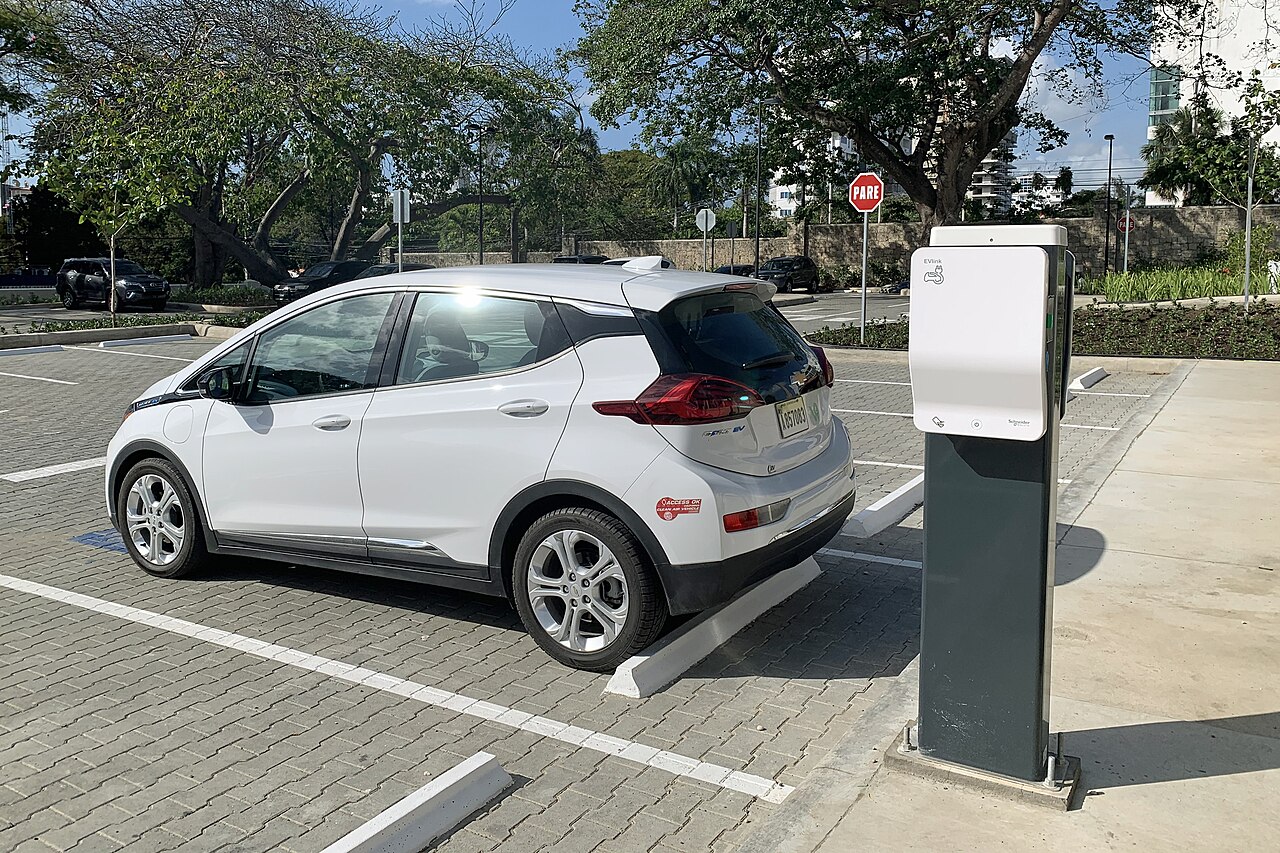
General Motors says a small group of its California drivers will soon be able to do something no GM owner in the state has done before: send electricity from a parked EV, through the house, and back onto the grid. In a Nov. 19, 2026 newsroom post, GM said its GM Energy unit and WeaveGrid are launching a program with select customers in Southern California Edison's (SCE) service area. GM calls them "the first GM drivers in California" to send EV power through their homes and back to the grid.
The program comes with a large incentive package, which GM says is available through the California Energy Commission (CEC). GM also used the announcement to say where its hardware is heading. It is pursuing AC-based bidirectional charging and joining an industry standards group working on exactly that.
The Numbers
The figures below come from GM's Nov. 19, 2026 announcement. GM says eligible SCE customers participating in the utility's Emergency Load Reduction Program (ELRP) may receive:
- Up to $8,000 toward a GM Energy vehicle-to-home (V2H) system
- Up to $8,099 toward eligible installation and interconnection costs
Added together, those two maximums come to $16,099 per participant. Electrek described it the same day as "more than $16,000" in help with equipment and installation. These are maximums, not guaranteed amounts. GM says participants can also use time-of-use energy management and join eligible demand-response events "which may pay them for sending energy to the grid." GM adds that actual savings and payments depend on eligibility, usage, rate plans, participation and program terms.
GM did not give a per-kWh payment rate for exported energy. SCE's own ELRP fact sheet does give one for the program generally: $2 per kWh ($2,000 per MWh) of actual load reduction during an event, applied as bill credits. That is the rate as listed on SCE's page, viewed November 2026. SCE's page does not say how that rate applies to V2G exports from a GM vehicle, and GM did not tie its pilot to that figure.
An Eligibility Wrinkle
GM's announcement says the incentives go to SCE customers in ELRP, and it frames the pilot as reaching drivers through their homes. SCE's ELRP fact sheet describes the program differently. It calls ELRP a seven-year demand-response pilot running 2021 through 2027 and describes it as available to SCE business customers, listing non-residential (commercial, industrial and agricultural) customers as eligible. The SCE page makes no mention of GM, V2H equipment or equipment incentives.
The sources don't explain the difference. One possibility is a residential or vehicle-specific track that SCE's general fact sheet doesn't cover, but neither GM nor SCE says so. For now, the residential eligibility language belongs to GM. Drivers who want to know whether they qualify should confirm with GM Energy and SCE directly, not rely on either document alone.
The SCE fact sheet also sets out when ELRP events can happen. Events occur only between May 1 and Oct. 31, between 4 and 9 p.m., and are called after the California Independent System Operator (CAISO) issues an Energy Emergency Alert. If the GM pilot's grid-export events follow ELRP rules, paid export opportunities would be seasonal and tied to grid emergencies, not a year-round revenue stream. GM's announcement doesn't spell out the event schedule for its participants.
DC Today, AC Tomorrow
The second half of GM's announcement is about hardware. GM says today's bidirectional charging products, including the GM Energy Home System, use DC-based technology with a wall-mounted inverter to convert energy to AC to back up the home. GM says it is now "pursuing AC-based technology" that could remove barriers customers face when considering home energy technology.
With AC bidirectional charging, the car's onboard inverter does the conversion work. Electrek noted that moving that work into the car could make the equipment on the garage wall simpler and cheaper to install.
GM has not announced an AC bidirectional product. EVChargingStations.com, writing Nov. 20, 2026, called this the first time GM has expressed interest in AC bidirectional transfer and said GM has not confirmed any AC plans. The outlet understands the SCE pilot will still use GM's first-generation DC solution, mainly as a way to learn how V2G works for customers and utilities. It also pointed to rival approaches: Tesla's AC vehicle-to-home setup in the Cybertruck and Ford's 10 kW AC bidirectional system in the upcoming Ford Fathom.
The CharIN Task Force
GM says it is joining CharIN's North America AC Vehicle-to-Grid Task Force, which it describes as "launching soon." According to GM, the group will work on aligning technical standards, certification and utility interconnection requirements so AC V2G can work reliably across vehicles, charging equipment and utility networks.
CharIN's own event page shows the effort is already underway. It lists an inaugural North American AC V2G Task Force Workshop on Sept. 17, 2026. The workshop was offered in a hybrid format, with the in-person session at Valeo North America in Troy, Michigan, and opened with welcome remarks from Erika Myers, executive director of CharIN Inc. Topics included:
- Standards progress, including ISO 15118-20, SAE J3072, UL 1741 Supplement SC and IEEE 2030.5
- Current status of AC V2G deployment in North America, and lessons from Europe
- Utility and regulatory perspectives
- Certification and conformance testing needs
- Defining priorities and workstreams for the task force
The workshop was open to members and non-members. CharIN's agenda lists a General Motors representative, Mengjia Cao (High Voltage Charging Standards and Regulations Lead), presenting an SAE J3072 overview and updates, so GM was involved in the September kickoff. GM's "launching soon" wording and CharIN's September workshop date can both be accurate if formal workstreams have not started yet. The agenda lists "formation of task force workstreams" among next steps, but neither source says what has happened since.
What It Means for Drivers
Who: Per GM, select customers in SCE's service area who are participating in ELRP. GM hasn't said how many participants there will be or how participants are chosen. SCE's fact sheet describes ELRP as a business-customer program, so check eligibility with GM Energy and SCE before planning around the incentives.
What changes: Participants would be the first GM drivers in California able to send EV power back to the grid through their homes. GM says the incentives cover up to $8,000 for a GM Energy V2H system and up to $8,099 for eligible installation and interconnection, per GM's Nov. 19, 2026 announcement. Participants can also use time-of-use energy management and may be paid for eligible demand-response events.
When: GM describes the program as launching. The sources give no enrollment deadline or start date for exports. Under SCE's published ELRP rules, events only occur May 1 to Oct. 31, 4 to 9 p.m., after a CAISO emergency alert. That suggests the next ELRP export season would begin May 1, 2027, which is also the final year of ELRP's 2021-2027 pilot window as SCE describes it.
Everyone else: GM drivers outside the pilot can't get V2G through this program. GM says managed charging, which adjusts when an EV draws power, is available through 13 utilities as of Nov. 19, 2026, with eligibility and incentives varying by utility. Separately, the AC bidirectional work is a statement of direction, not a product. No GM AC V2G hardware has been announced.
Installation: GM says the pilot will cover the full customer experience, from signing up and installation to utility approval and joining grid events. Utility approval is part of the process for sending power back to the grid, so check the requirements with GM Energy and your utility before buying equipment.
The Bottom Line
The SCE pilot is small and focused on learning. GM says today's bidirectional products are DC-based, and EVChargingStations.com understands the pilot will use that first-generation DC approach, with incentives of up to $16,099 per participant available through the CEC. The CharIN task force membership points to GM's longer-term interest in AC-based technology, which Electrek notes could make the home hardware simpler. Neither step amounts to a broadly available V2G product yet. Both are worth watching for what they show about how utilities, automakers and standards bodies plan to handle EV power flowing in both directions.
Sources
- Vehicle-to-Grid power is getting closer. Here's GM's latest progress (GM Newsroom, Nov. 19, 2026)
- CharIN V2G AC Task Force Workshop kick-off event (CharIN)
- GM's V2G pilot wants to pay California drivers for power from parked EVs (Electrek, Nov. 19, 2026)
- Emergency Load Reduction Program (ELRP) Fact Sheet (Southern California Edison)
- General Motors: Vehicle-to-Grid Power is Getting Closer (EVChargingStations.com, Nov. 20, 2026)
