
Munich-based charge point operator Qwello has lined up up to EUR 55 million in growth equity, according to a company release dated Oct. 26, 2026. EV Infrastructure News puts that at about US$61 million. Up to EUR 25 million comes from the ABN AMRO Sustainable Impact Fund, a new investor. The rest comes from existing shareholders, led by Tiger Infrastructure Partners, which has backed Qwello since 2021.
Qwello says the money will pay for two things: more charge points in the cities it already serves, and selective acquisitions of other operators. The company says it runs more than 19,500 charge points across more than 800 municipalities in eight countries, as of the Oct. 26 announcement.
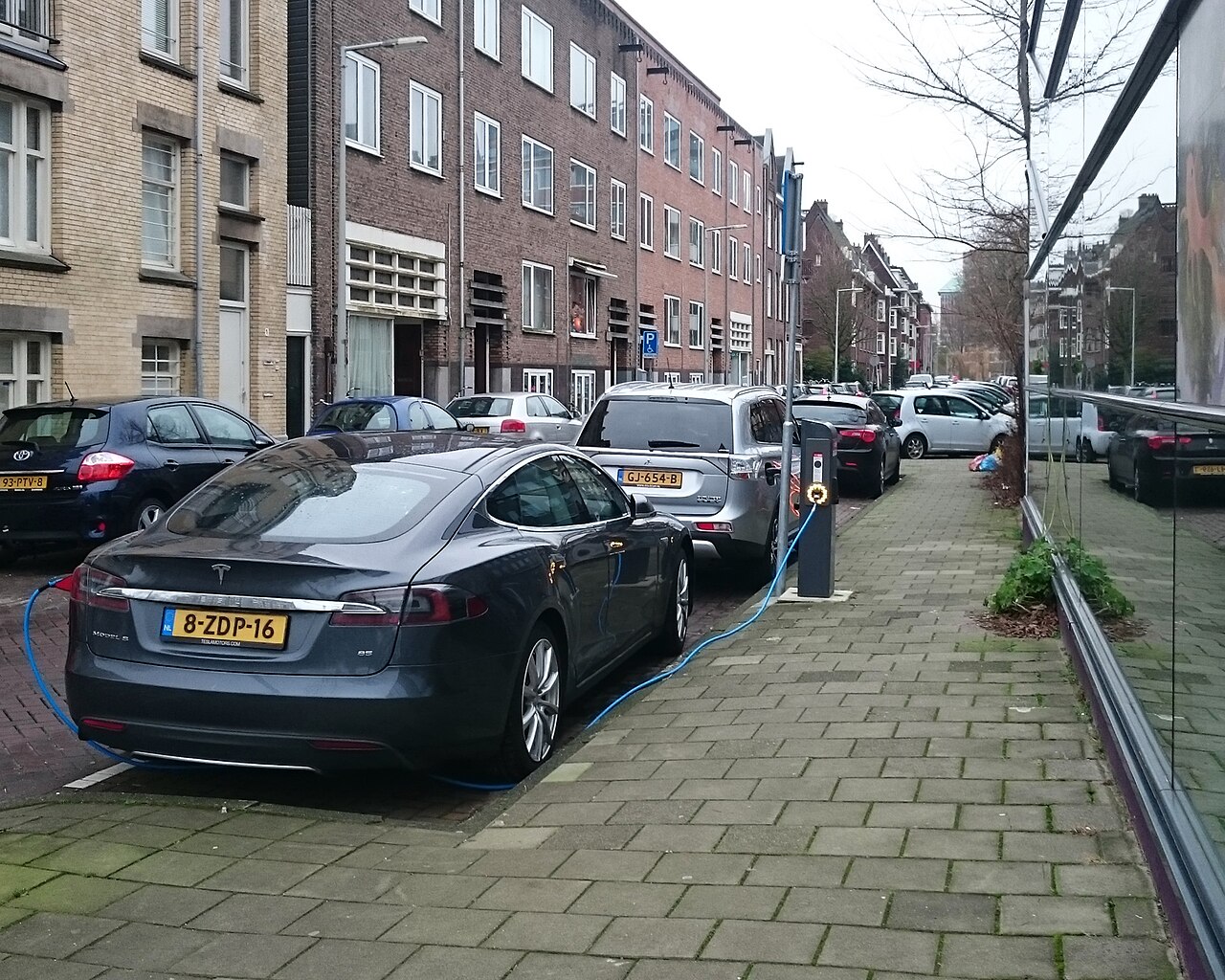
The deal is small next to the big highway fast-charging rounds that usually lead European charging news. It still matters because of what Qwello builds. Its network is public charging in dense urban and residential areas for people who often cannot charge at home.
The deal in numbers
- Headline amount: up to EUR 55 million in growth equity (company release, Oct. 26, 2026). These are commitments with an "up to" ceiling. The sources do not say how much is paid in now and how much later.
- ABN AMRO Sustainable Impact Fund: up to EUR 25 million (company release; confirmed by Startbase and EV Infrastructure News).
- Tiger Infrastructure Partners and other existing shareholders: the remainder. ABN AMRO's Gaetano Giuffré describes "a similar amount from Tiger Infrastructure and other shareholders" (quoted in the release and by EV Infrastructure News). Startbase says the balance comes from Tiger and other existing shareholders.
- Network size: more than 19,500 charge points in more than 800 municipalities (company figure, Oct. 26, 2026).
- Countries: Denmark, France, Germany, the Netherlands, Poland, Spain, Sweden and the United Kingdom.
None of the three sources gives a valuation, the ownership stakes after the deal, or a target number of new charge points. Qwello has not published a deployment schedule for this money.
How Qwello got here
This raise follows a run of deals, and Qwello has grown partly by buying other operators rather than only building new sites.
2024: funding and a takeover. According to EV Infrastructure News, Qwello took over Park & Charge in 2024. In the same year it secured up to EUR 65 million in funding from ABN AMRO and Investec, partly to finance that purchase. The new round is equity from a fund and existing shareholders. Qwello's CEO describes a relationship with ABN AMRO Bank dating from 2024, and the bank's Sustainable Impact Fund now invests directly.
September 2026: Groen-Eco. Qwello took a majority stake in Dutch operator Groen-Eco in September 2026. EV Infrastructure News reports that this added more than 1,400 charge points at 230 sites in the Netherlands, expanding Qwello into B2B and destination charging. For scale, 1,400 is about 7% of the 19,500 figure Qwello gave in October.
October 2026: growth equity. The new money explicitly covers both organic build-out and further acquisitions. Qwello's next jumps in network size could come from buying smaller operators and adding their sites, as well as from new installations in partnership with municipalities.
Why urban charging is a different business
Startbase draws the contrast directly. Many of the operators that raise large sums in Europe build fast-charging hubs along highways, where drivers stop for a quick top-up on long trips. Qwello builds public chargers in dense urban and residential areas, aimed at drivers who live in apartments or rentals and have no private charger.
That model has its own economics and its own partners. Qwello's release says its network is privately financed and built in close partnership with municipalities. Startbase reports that Qwello handles the process for municipalities from planning and financing through installation and operation, so that cities can expand public charging without bearing the full cost themselves. Under that model the operator funds the build, which is consistent with new capital being useful for adding sites.
The sources do not give Qwello's charging power levels, its prices or its utilization rates, so this article does not estimate them. Pricing varies by country and operator, and drivers should check the rate shown on the charger or in the operator's app at the time of the session.
What the investors said
EV Infrastructure News carried comments from Qwello CEO Henrik Thiele and from Gaetano Giuffré of ABN AMRO Sustainable Impact Fund about the deal. Both framed it around expanding the network and making acquisitions. The company release sets out the same priorities: dense urban and residential coverage, continued work with municipalities, and selective acquisitions.
The sustainability claims
Qwello says its network runs on 100% renewable energy. It also says the network avoided more than 28,000 tonnes of CO2 last year. Both are company claims. The release does not lay out the method behind the CO2 figure, such as which baseline vehicles were assumed or how renewable supply was certified, and ChargerFeed has not independently verified either number.
What It Means for Drivers
Today, nothing changes at the plug. The announcement is about financing. It does not open any specific new sites, change prices or change how drivers access existing Qwello chargers. The company's count of more than 19,500 points was stated as of Oct. 26, 2026. The sources do not say how that count treats the roughly 1,400 Groen-Eco points added in the Netherlands.
Who this is aimed at. The network targets drivers in towns and cities who rely on public charging, often because they live in apartments or rentals without a private charger. Drivers in the eight countries listed above are the ones most likely to see new Qwello-operated points. Qwello serves more than 800 municipalities, so new chargers are more likely to show up through local announcements than through a single national rollout.
What is funded vs. planned. The equity is a commitment of up to EUR 55 million. The specific new sites, cities and acquisition targets have not been announced. None of the sources gives a timeline or a count for new charge points. Treat any expansion in a particular neighborhood as planned until a municipality or Qwello confirms it.
If Qwello buys your local operator. The Groen-Eco and Park & Charge deals show that Qwello grows partly by acquiring smaller operators. If your usual charger changes hands, check the operator's app or the label on the charger for current pricing and access terms. The sources do not say whether acquired networks keep their existing pricing or apps.
Home charging is a separate question. Qwello's model serves drivers without home charging. If you are thinking about installing a charger at home instead, hire a licensed electrician and follow the manufacturer's instructions.
What to watch
- Whether Qwello names further acquisitions in the Netherlands, Germany or its other six markets, and how many charge points each adds.
- Updated network counts with an as-of date, to separate organic growth from acquired sites.
- New municipal agreements, which are the leading indicator of where chargers will actually appear.
- Any disclosure of how much of the "up to" EUR 55 million is drawn, and when.
This article reports on a private financing and is not investment advice.
Sources
- Qwello: Secures Up to EUR 55 Million in Growth Equity from ABN AMRO Sustainable Impact Fund and Existing Investors (company release, Oct. 26, 2026)
- EV Infrastructure News: Qwello secures up to EUR 55m for further network expansion and acquisitions (Oct. 27, 2026)
- Startbase: Qwello sichert sich bis zu 55 Millionen Euro für den Ausbau seines europäischen Ladenetzes (Oct. 27, 2026)
