
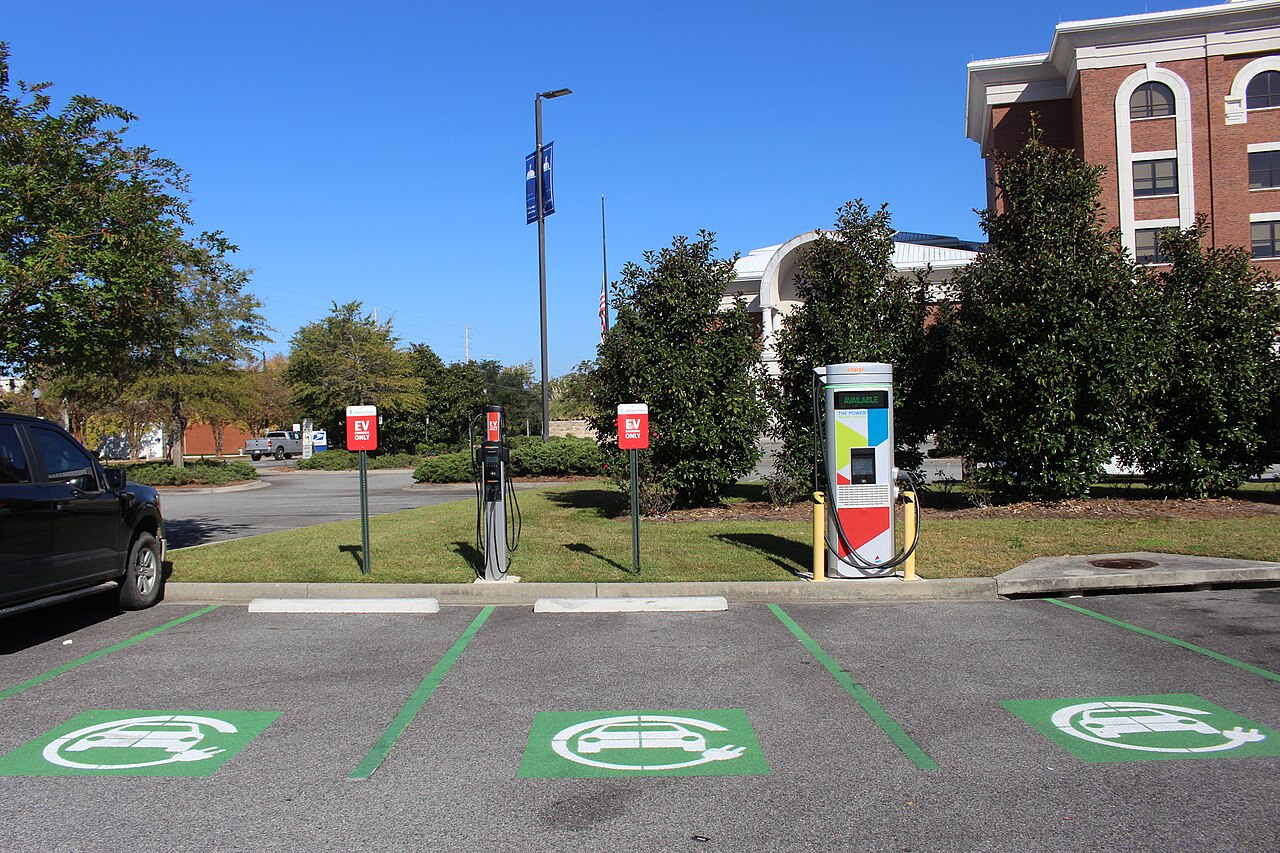
When ChargePoint introduced the Express Solo on April 22, 2026, the headline number was 600 kW. Electrek reported at the time that the company called it the world's fastest standalone unit. Six months later the top figure is higher: 750 kW to a single port. There is a condition, though. You need two stations, not one.
On Oct. 27, 2026, InsideEVs reported that the 750 kW peak requires at least two connected Express Solo stations, with power shared across up to four connected vehicles. ChargePoint's own product page for its Eaton-built next-generation DC architecture, checked by ChargerFeed on Oct. 28, 2026, says the same thing: two paired Solo stations can charge four vehicles, "delivering up to 750kW to any port."
The same day, electrive reported a separate business move: ChargePoint has introduced a Channel Partner Program for European sales companies.
Neither InsideEVs nor ChargePoint's product page gives a price or a delivery date for the Express Solo.
The hardware, by the numbers
Here is what ChargePoint's product page lists for the Express Solo:
- Power variants: 200 kW, 400 kW and 600 kW.
- Cables: liquid-cooled, with continuous 800 A.
- Vehicles per station: one Solo station charges two vehicles simultaneously.
- Paired configuration: two Solo stations can charge four vehicles, with up to 750 kW available at any port.
- Density: up to 40% more kW per square foot versus other stations. ChargePoint does not name the equipment it is comparing against.
- Comparison claim: maximum power of up to 600 kW, against 400 to 480 kW for "other DC fast chargers." This is ChargePoint's own comparison, which the page says is based on publicly available manufacturer specifications as of April 2026. The page does not say which competing products it means.
- Energy inputs: DC inputs for energy from on-site solar and battery storage. Electrek's April report also said the platform supports bidirectional charging.
The same page covers a larger sibling for depots and high-power sites. Each Express Distro Power Block 2000 cabinet is listed at up to 600 kW, and up to three cabinets can be paired for a total of 1.8 MW, with MCS (Megawatt Charging System) connectors available. MCS is the connector standard built for heavy trucks.
According to InsideEVs, the Solo hardware also has cables suspended on moving arms, cut-resistant cables and an alarm that uses the station's speakers, screen and lights to draw attention when it detects tampering. InsideEVs adds that the Solo combines the charger and power conversion equipment in a single enclosure, which removes the need for a large, separate power cabinet. ChargerFeed read the InsideEVs article through an Internet Archive snapshot taken Oct. 28, 2026, because the live page blocked direct access.
Why 750 kW needs two boxes
The single-station ceiling has not changed. A standalone Solo still tops out at 600 kW, the April launch figure that ChargePoint's comparison chart still uses. The 750 kW number only applies when two stations are linked.
The product page does not give a per-port breakdown for a busy paired site. InsideEVs describes the arrangement plainly: the stations share available power across up to four connected vehicles, "meaning that all four won't get 750 kW simultaneously." If a vehicle that can accept 750 kW arrives and few other vehicles are plugged in, it may pull that peak. InsideEVs notes that this would not be a typical passenger car but something like an electric heavy truck, and gives the Tesla Semi as an example of a vehicle that can pull over a megawatt. ChargePoint's page says the system "automatically allocates energy where it delivers the fastest turnaround."
The April materials and the current page describe expansion in more than one way. In April, Electrek reported that the Solo charges two EVs and can be paired with an additional dispenser to serve up to four. The current product page describes four-vehicle charging as two paired Solo stations. It also lists a separate "Express Solo - Paired Hybrid" setup, in which the Solo doubles as a power cabinet for up to three dual-port PL2000 stations and delivers up to 600 kW across multiple ports. ChargerFeed did not find a source that reconciles these descriptions in detail.
Connectors: CCS or NACS at the same post
InsideEVs reports that the Solo uses ChargePoint's Omni Port, a system of built-in adapters that offers both CCS and NACS connectors. ChargePoint's page says the Omni Port delivers CCS1 and NACS at every port. Electrek reported in April that the Express Solo is ChargePoint's first DC fast charger that will be sold in both North America and Europe.
The European channel program
The second announcement is about how ChargePoint sells in Europe. ChargerFeed could not open the full electrive article, which blocked direct access, and read only the excerpt that electrive publishes in its own RSS feed. That excerpt says ChargePoint has introduced a "Channel Partner Program" that gives European sales companies access to tiered pricing, growth bonuses and marketing budgets. In return, ChargePoint expects a high level of business commitment and the completion of central training and certifications.
The excerpt does not list the participating countries, the tier names, the products partners can sell, the program's leadership, discount levels, revenue thresholds or launch timing. ChargerFeed has therefore left those details out rather than guess at them. Readers who want the full terms should consult the full electrive report or ChargePoint directly.
What is announced, and what is not
Here is where things stand as of Oct. 28, 2026, based on the sources:
- Announced: the Express Solo product line in 200, 400 and 600 kW versions (first unveiled April 22, 2026), and the 750 kW paired-station capability now on ChargePoint's product page.
- Announced: a European Channel Partner Program with tiered pricing, as reported by electrive on Oct. 27, 2026.
- Not stated: Express Solo pricing, a ship date, and any count of installed or operating units. InsideEVs reported no pricing or availability, and ChargerFeed found none in the other sources.
- Not stated: any public site where a paired 750 kW installation is open to drivers.
What It Means for Drivers
For now, this changes nothing about where you can charge. None of the sources names an open site with Express Solo hardware, paired or single, and there is no ship date. The 750 kW figure describes what the equipment can do, not a station you can drive to.
When these units do show up, the claims that matter most to drivers are these. At a paired installation, ChargePoint says up to 750 kW can reach any one of four ports, but power is shared across the vehicles plugged in. The speed you see will depend on how many other cars are charging. Your own car's charging limits also apply. InsideEVs says a more powerful charger will not shorten your stop if your EV cannot take the extra power, and the sources do not say which vehicles can accept anything close to 750 kW. A single, unpaired Solo is listed at up to 600 kW.
On connectors, InsideEVs and ChargePoint both describe the Omni Port as offering CCS and NACS. If that works as described, drivers in North America would not need to find a specific connector type at a Solo site or carry an adapter.
For drivers in Europe, the partner program could affect who sells and installs ChargePoint hardware locally. The electrive excerpt gives no timeline for new public sites.
Site hosts and fleet operators thinking about high-power equipment should note that the product page lists DC inputs for solar and storage. Installation design, grid connection and electrical work belong with a licensed electrician, the local utility and the manufacturer's own instructions, not a product page.
Sources
- ChargePoint: Next-Gen DC Architecture, Powered by Eaton (product page)
- InsideEVs: ChargePoint's New Charger Can Hit A Whopping 750 kW. That's Not Even Its Best Trick. (Oct. 27, 2026; Internet Archive snapshot)
- electrive RSS feed: excerpt of "ChargePoint launches new partner programme for distributors" (Oct. 27, 2026)
- Electrek: ChargePoint just unveiled a 600 kW EV charger (Apr. 22, 2026)
