
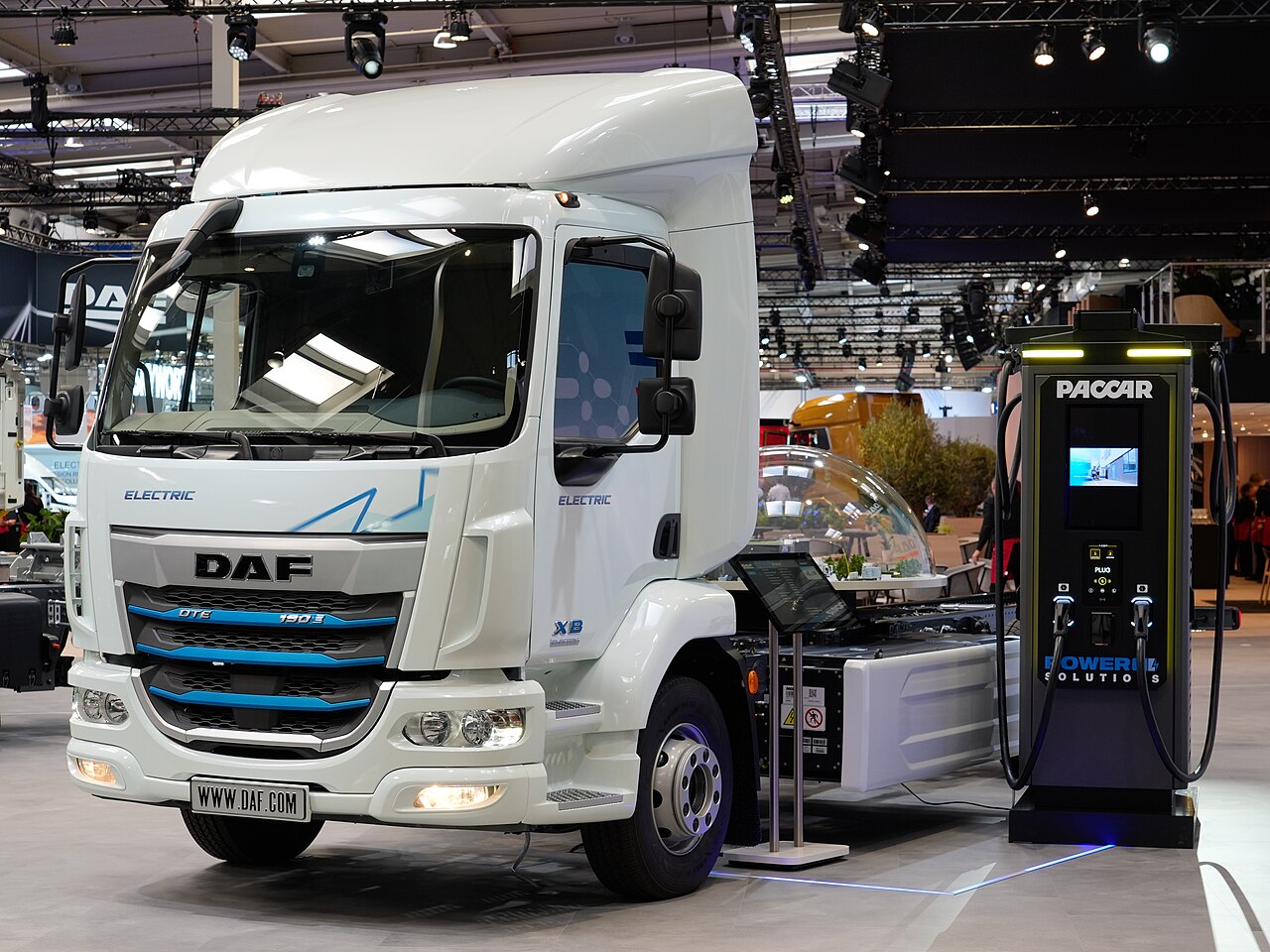
Britain's heavy goods vehicles moved 1.53 billion tonnes of freight in 2025. At the end of June 2026, 0.3% of the licensed HGV fleet was zero-emission. A report published on October 22, 2026 by the Aldersgate Group and the Renewable Energy Association (REA) looks at that gap. Its argument is that the main constraint now sits on the energy side of the depot fence: grid connections, electricity prices and the cost of finance.
The report is titled Ready to Move: a framework for decarbonising UK HGVs. The Aldersgate Group is an alliance of business, political and civil society leaders, and the REA is a trade association for renewable energy and clean technology businesses. What follows is a set of policy recommendations to government. Nothing in it is a decision, a funding award or a regulatory change.
The numbers behind the report
The Aldersgate Group's press release sets out the baseline figures:
- Freight volume: GB-registered HGVs carried 1.53 billion tonnes in 2025.
- Emissions share: HGVs produced around 17% of domestic transport greenhouse-gas emissions in 2024.
- Fleet stock: 0.3% of the licensed HGV fleet was zero-emission as of the end of June 2026.
- New sales: zero-emission trucks made up 1.1% of new HGV registrations in Q3 2026, according to SMMT figures cited in the release.
- Fuel price context: the average UK diesel price passed £2 per litre for the first time in early October 2026, according to the RAC as cited by the groups.
Two different measures appear here. The 0.3% figure covers every licensed HGV on the road. The 1.1% figure covers only new registrations in a single quarter, so the two numbers describe different things and should not be compared directly.
Why the grid is the bottleneck
The report's main point is that vehicles are not what is holding the sector back. The groups say operators face slow and expensive grid connections, which for many depots cost substantially more than the charging equipment itself.
Transport & Energy's report on the findings describes the sequencing problem. Depot charging may need significant grid investment before the first electric vehicle enters service. An operator has to commit capital and wait for network work well before any electric truck earns revenue.
According to the Aldersgate Group release, current grants mainly cover the equipment, which creates what it calls a "postcode lottery" that favours operators who already have enough grid capacity. The release also says freight has been largely left out of national planning for future electricity demand, which has focused on other users such as data centres.
The groups also list electricity prices as a barrier next to grid connections. The sources do not give specific per-kWh tariffs for depot charging, so this article does not quote any.
The finance problem for smaller hauliers
The third barrier is the cost of borrowing. Transport & Energy reports that smaller hauliers face the greatest difficulties. Uncertainty about future resale values and battery condition raises the cost of borrowing and leasing an electric truck. The release adds that a grant can make a truck cheaper to buy but does not resolve the uncertainty that makes it expensive to finance.
The recommendations below target both parts of that problem: the residual-value risk and the missing information about battery health.
What the report recommends
Transport & Energy summarises the report under three priorities: a long-term framework, finance that reduces risk, and infrastructure planned ahead of demand. The Aldersgate Group release lists the specific asks:
- Keep the existing trajectory. Retain the 2035 and 2040 phase-out trajectory for new non-zero-emission HGV sales.
- One roadmap. Publish a single transition roadmap, with clear responsibilities and milestones across government departments. The groups also ask for a clear, time-limited role for low carbon fuels where zero-emission vehicles are not yet viable.
- Loan and residual-value guarantees. Develop targeted residual-value and SME loan guarantees through the National Wealth Fund and the British Business Bank, and help smaller operators access competitively priced electricity.
- Battery-health information. Provide consistent battery-health information for lenders and second-hand buyers.
- Freight in network planning. Include freight in energy and network planning and invest ahead of need at logistics hubs and freight corridors. Highways Industry, reporting on October 25, 2026, calls this the key recommendation for highways and infrastructure.
- Shared charging and storage. Support shared charging and battery storage where these reduce costs, and improve grid-connection processes.
The REA's announcement page confirms the joint report and its October 22, 2026 date, along with a short summary. ChargerFeed did not read the full report document, which is linked from the REA page. The details above come from the Aldersgate Group release and the two trade-press reports listed below.
Status check: what is decided and what isn't
- Published: the Ready to Move report, October 22, 2026.
- Proposed, not adopted: the single roadmap, the guarantees through the National Wealth Fund and British Business Bank, the battery-health information, freight-inclusive network planning, and support for shared charging and storage.
- Not announced: no government response, funding or timetable for these recommendations appears in the sources reviewed. The release says the report was published ahead of the Autumn Budget on October 28 and the government's response to its consultation on a new HGV CO2 emissions regulatory framework.
What It Means for Drivers
The report does not change where anyone can charge today. It does not open, fund or approve any charging site. Fleet operators, HGV drivers and site hosts face the same conditions as before October 22.
The report does describe who currently finds charging hardest to get. Depot charging is the model it focuses on, and the groups say that is where the delays and costs build up: a grid connection may need significant investment before a single electric truck arrives. Smaller hauliers, which the groups say face the greatest financing difficulties, and operators without enough grid capacity at their depots are the ones the groups say are most affected. The shared charging and battery storage the report supports is a recommendation, not something in service.
For operators weighing fuel costs, the groups point to two reference points: the average UK diesel price passing £2 per litre in early October 2026 (RAC, as cited by the groups) and electricity prices that the report identifies as a barrier without the sources giving specific figures. Any depot charging project still needs a licensed electrician and the network operator's connection process, and equipment should be installed according to the manufacturer's instructions.
Watch for whether the government responds to the roadmap request, and whether the National Wealth Fund or British Business Bank announce products aimed at zero-emission HGV finance. The next SMMT quarterly registration data will show whether the 1.1% new-registration share is moving.
Sources
- Aldersgate Group: Ready to Move: a call for road freight to be put at the heart of clean energy planning (22 Oct 2026)
- REA: New report by the REA and Aldersgate Group: Ready to Move (22 Oct 2026)
- Transport & Energy: Electric truck transition held back by grid connections and costs (22 Oct 2026)
- Highways Industry: Electric HGVs held back by grid connections and finance, Aldersgate Group and REA warn (25 Oct 2026)
