
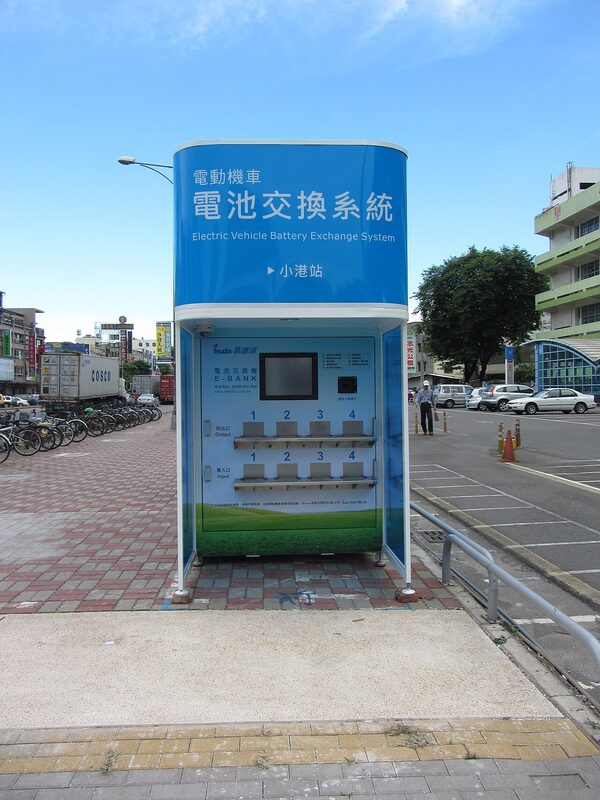
BAIC Group and CATL have signed an agreement that deepens their battery-swap partnership. BAIC, the Beijing-based automaker, says it will connect compatible models from several of its brands to CATL's Choco-Swap network and open its dealer network to support swap-station construction around its dealerships. According to a BAIC statement reported by CnEVPost on Thursday, Oct 22, 2026, the goal is a swap ecosystem serving vehicles "in the million level."
The agreement sets no timeline, names no additional models and gives no station count. ChargerFeed could not read BAIC's own statement directly. The company claims below come from CnEVPost's report and should be read that way.
The network BAIC is joining already has scale. CATL said it had 2,520 swap stations in 200 Chinese cities as of Sept 29, 2026, CnEVPost reported. As of April 2026 the count was more than 1,470 stations in 99 cities, according to Battery-Tech Network. Comparing those two reported figures, the network added roughly 1,050 stations and about doubled its city count in about five months.
What the agreement covers
CnEVPost reports that the agreement covers four areas:
- Vehicle and battery development: BAIC will connect compatible models across multiple brands to CATL's Choco swap network.
- Swap station network construction: BAIC will open its dealer network to support CATL's deployment of swap stations around dealerships, and the companies will work with dealers to explore joint station development and operation.
- Battery energy services: the companies plan to consolidate battery swap assets under specialized management and improve operating efficiency through a division of responsibilities.
- Business-model innovation: the companies plan to promote unified swap standards and shared, interoperable networks.
The dealer piece could matter most for the physical network. Dealerships often have land, grid connections and staff, so they are plausible sites for new swap stations. But BAIC has not said how many dealers will take part or when stations would open.
How this builds on earlier deals
The new agreement follows a 2024 deal and several 2026 milestones in the BAIC–CATL relationship.
- June 2024: The original BAIC–CATL agreement, covering swap-compatible vehicles, battery block development and battery data management. CnEVPost describes the new deal as building on it.
- April 25, 2026: BAIC Group, CATL and CAES signed a strategic agreement covering swap-ready models, combined fast-charging and swapping stations, and battery lifecycle management, Battery-Tech Network reported. It said the Arcfox S3 Choco-Swap Edition, unveiled at Auto China 2026, is the first BAIC model with Choco-Swap technology, that buyers can purchase the vehicle and lease the battery, and that replenishment takes 99 seconds.
- May 22, 2026: Arcfox launched the Beta S3. Its battery swap version uses CATL's Choco-SEB solution and offers a battery rental option, according to CnEVPost.
- August 2026: A battery swap version of the Arcfox Beta T1 appeared in a vehicle filing catalog published by the Ministry of Industry and Information Technology (MIIT), CnEVPost reported. The filing showed the vehicle and battery could be sold separately. A catalog appearance is a regulatory filing, not an on-sale announcement.
- Oct 22, 2026: The new deal extends swap adoption to "multiple brands," with no list given.
BAIC is not the only partner joining this month. CnEVPost reported that Newcool, also known as Yinwang, Huawei's intelligent automotive technology company, announced on Oct 19 that it had joined CATL's Choco swap ecosystem.
Operating, targeted and planned: keeping the numbers straight
CATL's swap figures are a mix of stations already running and stations only planned. Here they are, separated:
- Operating (as of Sept 29, 2026): 2,520 stations in 200 cities, per CATL via CnEVPost.
- Year-end 2026 target: more than 3,000 stations in nearly 216 cities. In core urban areas, the aim is a station within 10 minutes, per Gasgoo (Sept 11, 2026). Compared with the 2,520 operating on Sept 29, reaching it means adding roughly 480 or more stations by the end of the year.
- Highway build-out (planned): 1,000 highway stations. Gasgoo places them in 2027, arranged along a backbone grid described as "11 south-north and 9 east-west." CnEVPost describes the plan as spanning 2026 and 2027. The two outlets differ on timing, and neither gives a completion schedule.
- Long-term goal: 30,000 stations, reported by both CnEVPost and Gasgoo. No date was given.
On capacity, Gasgoo reports that a single Choco-Swap station can handle up to 600 service sessions daily. That is a stated maximum. Actual daily use per station was not reported.
None of the sources says how many of the future stations will come from the BAIC dealer arrangement, or whether any are funded or under construction.
What It Means for Drivers
For now, very little changes for most drivers. Swapping works only on cars built for CATL's swappable packs. The sources name only Arcfox swap models as BAIC's compatible cars: the Beta S3 swap version, launched in May, and the Beta T1 swap version, which appeared in the MIIT catalog. The sources do not say that other BAIC models are swap-capable today.
What the agreement promises is more models and more stations later. BAIC says compatible models across several brands will connect to the network, and that its dealer network will support station construction. With no model list or timeline, there is no telling which future BAIC cars will be swap-capable or when stations will show up at a given dealer.
The network itself covers 200 Chinese cities as of Sept 29. CATL aims for a station within 10 minutes in core urban areas by the end of 2026. The highway stations, which would make long-distance swapping more practical, are planned rather than operating.
Buyers should also know about the ownership model. The swap-version Arcfox cars use battery rental or leasing: the battery is leased separately from the car, according to CnEVPost and Battery-Tech Network. None of the sources reported rental or per-swap prices, so ChargerFeed cannot compare the cost with plug-in charging. Prospective buyers should get current pricing from the seller in writing.
All of this applies to mainland China. None of the sources mentions plans for Choco-Swap or these BAIC swap models in other markets.
What to watch
Three things will show whether the deal amounts to much. First, which BAIC brands and models get swap versions, and when they reach the MIIT catalog. Second, whether swap stations actually open around BAIC dealerships, and how many. Third, whether CATL reaches its year-end target of more than 3,000 stations. Progress on unified swap standards would also matter, because broader compatibility across brands is what would let more drivers use the same stations.
Sources
- CATL expands battery swap partnership as BAIC plans adoption across multiple brands (CnEVPost, Oct 22, 2026)
- CATL's Choco-Swap Network Targets Over 3,000 Battery Swap Stations by Year-End (Gasgoo, Sept 11, 2026)
- BAIC, CATL and CAES to Launch Supercharge and Swap Network (Battery-Tech Network, Jul 1, 2026)
