
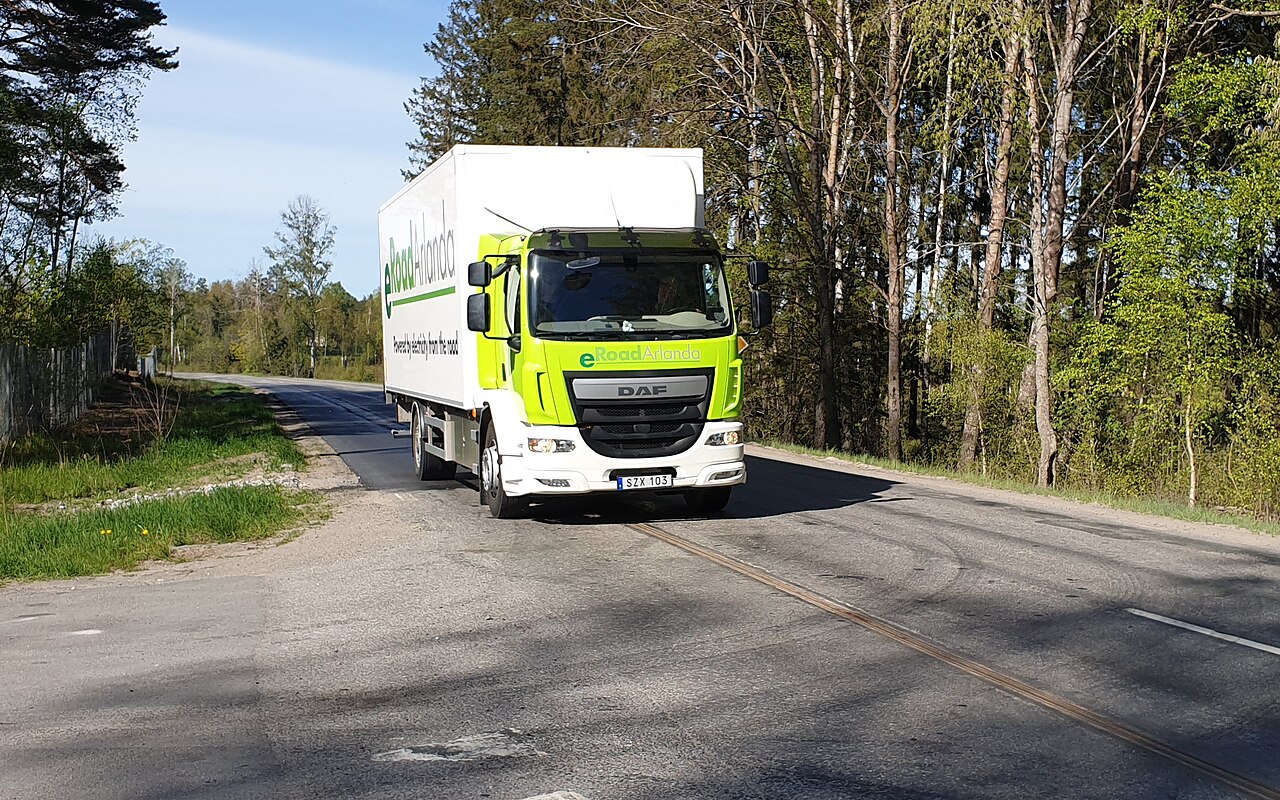
Meta has signed a second deal with Nevoya, an electric truckload carrier, even though it has no freight of its own for Nevoya to haul. The two companies said on Thursday, Nov. 12, 2026, that a multi-year agreement will support 25 Class 8 battery-electric trucks on Interstate 10 between San Bernardino, California, and Phoenix, Arizona. Meta's money buys environmental attribute certificates (EACs). It is not tied to moving Meta's own goods.
The deal is announced, not running. According to EV Infrastructure News, the trucks are expected to begin operations in 2027. None of the sources ChargerFeed reviewed named the truck manufacturer, the charging sites or the charger hardware.
The deal in numbers
- 25 Class 8 battery-electric trucks (planned, as of Nov. 13, 2026)
- 1 corridor: I-10, San Bernardino, CA to Phoenix, AZ
- 2027: expected start of operations
- 100%: share of truck charging that will be matched with renewable energy certificates (RECs), per the announcement
- 2: Nevoya agreements involving Meta, counting this one
- About 4 million: freight miles per year the 25 trucks are expected to cover, according to Nevoya as reported by TheTrucker.com and DC Velocity
- 63: trucks in Nevoya's earlier Houston–Dallas deployment, which Meta supports as one of several buyers
The sources reviewed give no financial terms.
What Meta is actually buying
The structure is the story here. Electrek summed it up in its headline: Meta will "deploy" 25 electric semis but "has nothing to ship." Meta is not buying the trucks, hiring drivers or moving its own products. It pays for cleaner freight by purchasing EACs tied to Nevoya's zero-emission operations.
The Nevoya announcement, reprinted by TheTrucker.com, states that the purchase is not tied to moving Meta's goods. The company still gave a reason for choosing this route: I-10 is a key corridor for data center construction materials. DC Velocity framed the deal as Meta buying zero-emission trucking capacity to offset emissions from data center construction.
Electrek reported that Devon Lake, Meta's Head of Net Zero Strategy, described the purchase in terms of scope 3 emissions. Those are the indirect emissions in a company's value chain, such as the freight that delivers materials to its construction sites, as opposed to emissions from sources the company owns. Nevoya co-founder John Verdon was also quoted in the announcement; he said Meta "coming back for a second corridor is a strong signal that this model works."
Put simply, the certificates split the emissions benefit from the physical trucking. Under the deal, Meta pays for the environmental attributes of Nevoya's battery-electric freight service on I-10 once the trucks are running. The sources describe the instrument as EACs and, for the Texas deployment, the GMA's book-and-claim approach.
How this differs from the Texas deal
Meta first backed Nevoya in Texas. Nevoya's 63-truck deployment on the Houston–Dallas corridor is supported by a buyers' alliance organized through the GMA, and Meta is one of its buyers. Electrek reported that the GMA calls the Dallas–Houston run the first large-scale application of book-and-claim to zero-emission trucking.
The I-10 agreement is different. Electrek and EV Infrastructure News both describe it as a standalone deal between Nevoya and Meta, with no multi-buyer alliance. That makes Meta the sole named certificate buyer behind this corridor's 25 trucks, compared with being one of several in Texas.
| Houston–Dallas (TX) | San Bernardino–Phoenix (I-10) | |
|---|---|---|
| Trucks | 63 | 25 (planned) |
| Buyer structure | GMA buyers' alliance; Meta one of the buyers | Standalone Nevoya–Meta agreement |
| Instrument | Environmental attribute certificates (GMA calls the Texas run book and claim) | Environmental attribute certificates |
| Status (as of Nov. 13, 2026) | Existing deployment | Announced; operations expected 2027 |
The charging piece
For ChargerFeed readers, the most relevant line in the announcement is about infrastructure. According to TheTrucker.com's reprint, the agreement includes bringing new charging infrastructure online, and charging for the trucks will be matched 100% with renewable energy certificates. EV Infrastructure News reported that Nevoya will invest in trucks on I-10 powered by renewables.
"Matched with RECs" is an accounting claim. It means renewable energy certificates equal to the trucks' charging consumption will be bought or retired. It does not mean the electrons at the plug come straight from a solar or wind farm. The sources do not say who will supply the RECs or which utility territories the chargers will sit in.
Several basics are still undisclosed in the sources reviewed: where the charging sites will be along the corridor, how many charge points there will be, their power ratings, and who will own and operate them. None of this charging is operating yet.
What It Means for Drivers
Passenger-car drivers on I-10 should not expect any change from this announcement. The deal covers heavy-duty Class 8 freight, and nothing in the sources suggests the new sites are meant for light-duty EVs.
Truck operators have more at stake. EV Infrastructure News reported that Nevoya expects the charging infrastructure to be available to all freight operators on the corridor, not only its own fleet. That is a stated expectation, not a published access policy. As of Nov. 13, 2026, the sources give no locations, prices, per-kWh rates, reservation rules or opening dates for individual sites. The only timing in the sources is that the 25 trucks are expected to begin operations in 2027.
For fleet and depot operators planning electric runs between San Bernardino and Phoenix, this is one to watch, not one to plan routes around yet. Until Nevoya publishes site details and access terms, the shared-access charging is still a plan.
For the charging industry and site hosts, the deal shows a funding model that doesn't depend on the shipper's own freight. A corporate certificate buyer addressing scope 3 emissions is paying for a share of electric trucking on a corridor where, per the announcement, the purchase is not tied to moving its own goods. Whether other buyers follow on other corridors is an open question.
What to watch
- Named charging sites, power levels and operator along I-10
- Published access terms and pricing for third-party freight operators
- The truck manufacturer and model for the 25-unit fleet
- Whether the 2027 start date holds
- Additional certificate buyers joining Nevoya corridors beyond Texas and I-10
Sources
- TheTrucker.com: Nevoya and Meta expand partnership with 25 new electric trucks on the I-10 corridor
- Electrek: Meta to deploy 25 electric semis across I-10 corridor, but has nothing to ship (Nov. 13, 2026)
- DC Velocity: Meta buys zero-emission trucking capacity to offset data center construction (Nov. 13, 2026)
- EV Infrastructure News: Meta buys EACs from electric truck haulage operator Nevoya
