
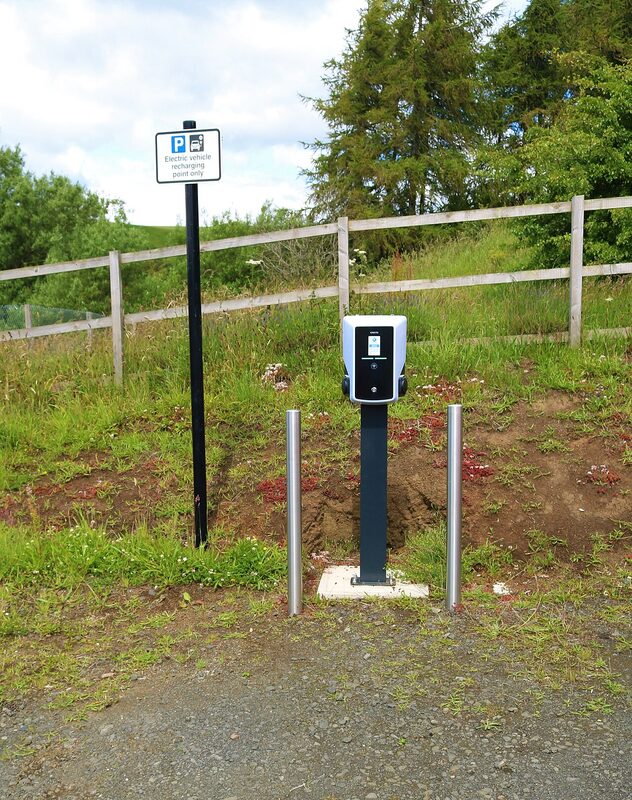
Ireland's Department of Transport has published its National EV Infrastructure Strategy 2026-2028. The plan replaces the 2022-25 strategy and covers public charging through the end of 2028. CompleteCar.ie reported the publication on Nov. 4, 2026. It said the strategy aims to "support the continued rollout of accessible, reliable and comprehensive charging infrastructure through to the end of 2028." CompleteCar.ie describes new funding for national-road charging through three LDV grant schemes.
A note on sourcing. The Government's own release and the final strategy document on gov.ie could not be retrieved for this article. The figures for the final strategy below come from CompleteCar.ie, which cites Department of Transport numbers. Scheme-level and strategy-stage figures come from Zero Emission Vehicles Ireland (ZEVI), the Department's EV office. They are taken from its scheme page and from a ZEVI presentation hosted by the Open Charge Alliance. Where the two sets of numbers differ, we name the source.
The baseline: how much charging Ireland has now
CompleteCar.ie cites Department figures showing 3,620 public charging connectors at about 1,200 sites, with a combined capacity of up to 280 MW. The outlet puts the number of EVs on Irish roads at an estimated 270,000 (cars and vans). It also reports that electric cars have become the top choice among new-car buyers, ahead of hybrids, petrol and diesel, for the first time this year.
On density, CompleteCar.ie reports about 95 chargers per 100,000 people in Ireland. It gives 820 per 100,000 for the Netherlands. The ratio uses "chargers" while the headline count uses "connectors", and the source does not say how the two relate. Treat the ratio as a rough comparison, not an exact conversion.
ZEVI's slides for the Open Charge Alliance's OCPP conference use data up to August 2026, and their figures are somewhat lower:
- 266,253 EVs under current taxation (August 2026), of which 55% are battery-electric
- 3,237 chargepoints
- 26 local authority pilot schemes in 15 counties
The 3,237 figure counts chargepoints as of August. The 3,620 figure counts connectors in the November reporting. A single chargepoint can have more than one connector, and the two counts are from different dates. The difference (about 383) should not be read as that many new chargers installed between August and November.
Where the money goes
According to CompleteCar.ie, the new funding is delivered through three EV Recharging Infrastructure Light Duty Vehicle (LDV) National Road Grant Schemes, run by ZEVI and Transport Infrastructure Ireland (TII). The article quotes TII chief executive Lorcan O'Connor on the rollout. ZEVI's conference slides say the Government is allocating EUR 170 million in 2026 to accelerate delivery of EV charging infrastructure across Ireland. The slides do not break that sum down by scheme.
The ZEVI slides give these totals for the LDV schemes (LDV 1, 2 and 3):
- 162 new EV charging hubs
- 516 high-powered recharging points
- Construction has begun on all schemes
- The slides say the bulk of delivery is completed in 2026
Status matters here. Per ZEVI, construction has begun on all schemes. The sources give no count of how many hubs are energised and taking customers.
Phase 3: filling in the single-carriageway network
ZEVI's scheme page gives the most detail on the third phase, LDV3. It launched in February 2025 and targets the 3,000 km of non-TEN-T national single-carriageway roads. The locations of 90 successful sites were announced in October 2025. Together, the grants for those 90 new high-powered recharging pools target 192 high-powered recharging points and an additional 22 MW of capacity.
That works out to just over two high-powered points per LDV3 site on average (192 divided by 90 is about 2.1).
What the strategy prioritises
ZEVI's slides describe the 2026-28 strategy as developed to replace the 2022-25 strategy. The public consultation closed on 24 April and drew about 200 responses. Minister for Transport Darragh O'Brien is quoted by CompleteCar.ie thanking those who took part. The slides list five thematic areas of focus:
- Neighbourhood charging and other options (on-street, cross-pavement) for people without a home charger, including apartment residents. CompleteCar.ie confirms that the final strategy expands neighbourhood charging options for this group.
- High-power charging hubs along national roads and main transport corridors.
- Heavy-duty vehicle charging, supporting depot and en-route solutions for HDVs and commercial fleets.
- Meeting EU AFIR obligations, under the EU Alternative Fuels Infrastructure Regulation.
- Universal design, so that infrastructure is accessible and built in line with universal design guidelines.
The ZEVI slides do not attach separate budgets or site counts to the neighbourhood, heavy-duty and accessibility work. Neither does the CompleteCar.ie report. For now, the programme with published numbers is the national-road LDV hubs.
The digital layer
The ZEVI presentation was given at a standards event, and it also covered charger communications. It notes that OCPP 2.0.1, the charger-to-back-office protocol, leverages public key infrastructure (PKI) in its Transport Layer Security. It also says the EU's PKI and governance structures will be housed at the Joint Research Centre in Ispra before being handed over to industry. The slides do not say how Ireland's grant schemes will require or use that infrastructure.
What It Means for Drivers
On national roads: ZEVI says construction has started on all LDV schemes (162 hubs, 516 high-powered points), with the bulk of delivery completed in 2026. The 90 LDV3 sites, announced in October 2025, target the 3,000 km of non-TEN-T national single-carriageway roads. The sources do not give opening dates for individual sites, so check with the operator or TII for specific locations.
Without a driveway: The final strategy expands neighbourhood charging for people without home charging, including apartment dwellers, according to CompleteCar.ie, which called the plan "a little light on detail for the moment". The sources available do not give a timeline, a funding amount or a delivery mechanism for this strand beyond the 26 local authority pilots in 15 counties counted in ZEVI's August data. Residents who want to know what is planned near them should check with their local authority.
On price: The sources do not describe any tariff measure in the strategy. CompleteCar.ie reported that ESB raised its public charging prices in the week the strategy was published (week of Nov. 4, 2026). The outlet said that in some cases this makes public charging more expensive than petrol or diesel for the same distance. CompleteCar.ie did not publish the new per-kWh rates, so none are quoted here. Check current tariffs with the operator before you charge. CompleteCar.ie also reports that talk of reducing VAT on public charging seems to have gone away for now.
For fleet and depot operators: Heavy-duty depot and en-route charging is a stated area of focus in the strategy. The sources reviewed do not give a dedicated scheme, budget or site count for it.
What to watch
- Openings against the 2026 target. ZEVI's slides say the bulk of delivery of the 516 high-powered LDV points is completed in 2026. Year-end counts will show how much of that reached customers.
- Which count gets used. Official tallies are currently quoted in both connectors (3,620) and chargepoints (3,237, August). Consistent reporting would make progress easier to track.
- Detail on the other strands. The final strategy text should set out funding and timelines for neighbourhood, heavy-duty and accessibility charging.
- Tariffs. ESB's price change and the fading VAT discussion mean running costs, not just charger numbers, will shape how drivers judge the network.
Sources
- Irish EV charging strategy promises more fast chargers (CompleteCar.ie, Nov. 4, 2026)
- EV Recharging Infrastructure LDV National Road Grant Scheme, Phase 3 (Zero Emission Vehicles Ireland)
- Ireland's EV Infrastructure and Digital Policy Perspective (ZEVI presentation, Open Charge Alliance OCPP Conference)
