
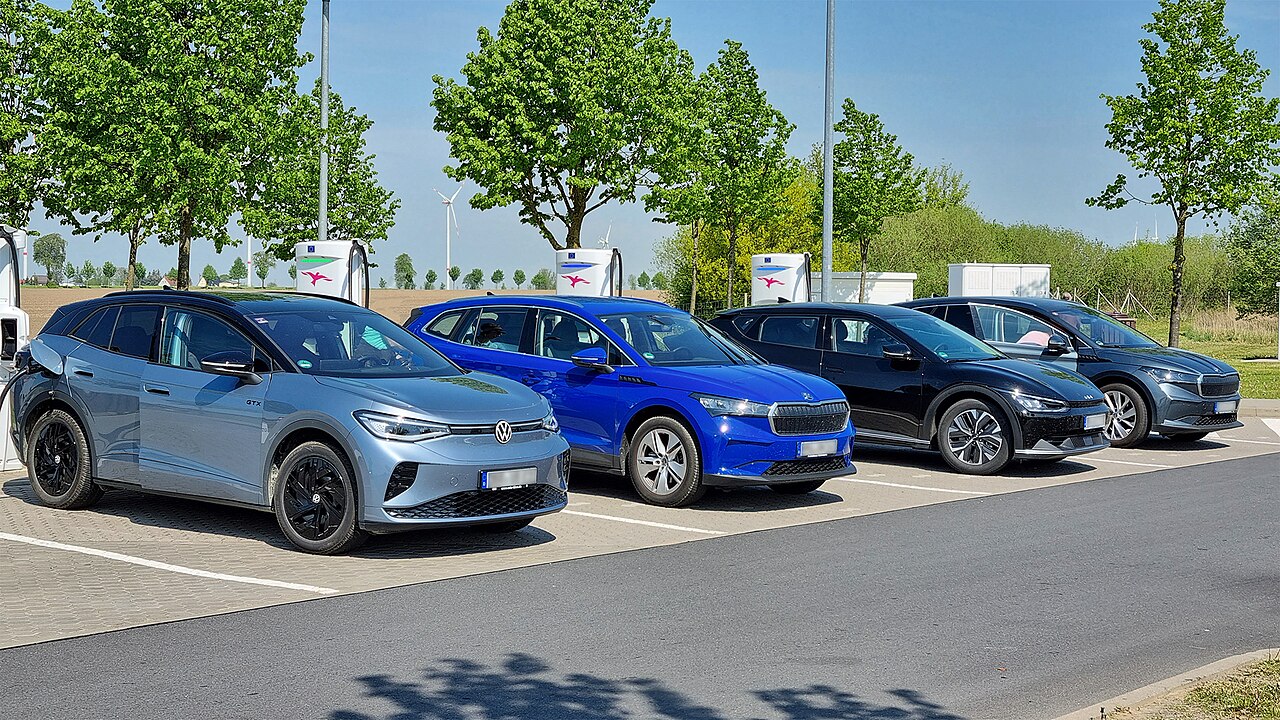
Ionity has ended a pilot of shared-power fast chargers from Polish manufacturer Ekoenergetyka at its hub in Elverum, Norway, after repeated malfunctions. All of that hardware is gone. Six charging points at the site now run on Huawei equipment, which reports describe as the first Huawei installation anywhere in Ionity's network.
The swap is also the first concrete result of the Ionity–Huawei partnership announced at the Power2Drive trade show in Munich in summer 2026, and Elverum is the first site to come out of it. Every account available to ChargerFeed is secondary. The German and Czech outlets based their coverage on reporting by electrive and, in the German case, on comments from an Ionity spokesperson; the Danish outlet gives no source. We could not read an Ionity first-party page that confirms the details, so the figures below are attributed to the outlet that reported them.
What Was at Elverum Before
The original pilot opened in late 2025. As described in the coverage, it used Ekoenergetyka equipment built around power sharing: two power cabinets with a combined 800 kW feeding six charging points, with a per-point maximum of up to 500 kW. fDrive.cz and Dr. Web both report that power was distributed in steps of 66.7 kW according to demand. In this kind of setup a pool of cabinet power is split among however many vehicles are plugged in. A car charging alone can draw a large share, and when every point is busy each car gets less.
The Czech site fDrive.cz reports that Ionity ended the pilot after repeated problems. Dr. Web reports that an Ionity spokesperson cited a technical defect and that all of the hardware was replaced rather than repaired in place. Mobilsiden.dk says the station was shut down after technical breakdowns and reopened with Huawei equipment.
The sources differ on detail about the fault. Dr. Web says Ionity has named neither the type nor the cause of the defect. Mobilsiden.dk goes further, reporting that overvoltage faults traced to a defect in the charging station soon after opening caused six electric cars to have their internal pyro fuses triggered and to be towed away. ChargerFeed has not seen that account in the other two sources and has not independently verified it.
What Is There Now
According to fDrive.cz, the site now has three Huawei charging stations with six charging points between them, plus a separate power unit. Mobilsiden.dk describes three liquid-cooled dispensers and a 720 kW power cabinet, with up to 600 kW available.
Read together, the two numbers suggest a shared-power design again, though that is our inference. If six points share a 720 kW cabinet, they cannot all deliver a 600 kW rating at the same moment. The headline figure is a ceiling for a car charging on a lightly used site. It is not what every bay can deliver at once. The sources do not say how the Huawei system splits power among the points.
An Alpitronic station with two 400 kW connectors was already at the site, separate from the pilot, and it remains in place according to fDrive.cz and Dr. Web.
The Rating Discrepancy
The per-point ratings depend on which source you read, and the sources don't fully agree:
- Ionity spokesperson, as reported by Dr. Web: four points at 600 kW and two at 480 kW.
- Ionity's website, as reported by Dr. Web: 2 x 500 kW.
- Ionity's website, as reported by fDrive.cz: four points up to 600 kW and two up to 500 kW.
- Mobilsiden.dk: up to 600 kW across three dispensers, fed by a 720 kW cabinet.
All four accounts agree that the top rating is around 600 kW. They disagree on whether the remaining points are rated at 480 kW or 500 kW, and on how the website listing reads. The listing may have been updated between reports, or the outlets may have read it differently. Either way, as of mid-November 2026 there is no single confirmed per-point specification for the Huawei equipment at Elverum. Like the cabinet figures above, these are nameplate maximums. What a given car actually gets depends on its own charging curve, battery temperature, state of charge and how many other vehicles are drawing from the shared cabinet.
Why the Swap Matters Beyond One Site
Ionity is a pan-European high-power charging network, and its hardware choices are watched closely across the industry. Mobilsiden.dk notes that after years of relying on ABB equipment, Ionity has been rolling out Alpitronic chargers, and that it is in full swing doing so. The same outlet reports that Huawei had already supplied equipment to Electra, another charging operator, and calls the Ionity deal an important European reference project for Huawei.
Huawei now joins Alpitronic as a supplier at an Ionity site. The sources do not say how many more Ionity sites will get Huawei hardware, on what timeline, or whether any additional locations have been funded or scheduled. For now, Elverum is the only Ionity–Huawei site described in the reporting. Any further deployments under the Power2Drive partnership are announced intent, not installed hardware.
Losing the Elverum pilot does not appear to end Ionity's relationship with Ekoenergetyka. According to fDrive.cz, the two companies have worked together since summer 2023, and Ionity has so far bought mainly compact all-in-one charging units rated up to 350 kW, which have appeared in Croatia, Slovenia and Finland. Dr. Web reports that electrive does not see the partnership as fundamentally called into question. The equipment at Elverum was a different product, the shared-cabinet setup with higher per-point peaks. The reporting does not give order volumes or say what Ionity will order next.
What It Means for Drivers
As described in the cited reports, as of mid-November 2026:
- Elverum is operating again. Mobilsiden.dk reports that the station was shut down after the breakdowns and reopened with Huawei equipment. The sources give no exact closure or reopening dates.
- Six Huawei points plus two Alpitronic connectors. According to fDrive.cz, drivers will find three Huawei stations with six points, plus the existing Alpitronic station with two 400 kW connectors.
- Peak ratings are ceilings, not guarantees. The Huawei points are reported at up to 600 kW on some bays and 480 or 500 kW on others, and Mobilsiden.dk reports a 720 kW cabinet. Power may be split when the site is busy, and your car's own charging curve will set the pace.
- Check the app or website before relying on a specific number. Ionity's own listing and its spokesperson's figures don't match in the reports, so the rating shown at the dispenser or in Ionity's app is the best guide on the day.
- No pricing changes were reported. None of the sources mention any change to Ionity's tariffs at Elverum in connection with the hardware swap. ChargerFeed has not verified current per-kWh rates at the site.
- Other Ionity sites are not affected as far as the reports say. The sources describe only Elverum. They do not report changes at other locations that use Ekoenergetyka equipment.
Site hosts or fleet operators weighing similar shared-power hardware should treat Elverum as one data point. Electrical design and installation of high-power charging equipment is work for licensed electricians and the equipment manufacturer's specifications, together with the local grid operator.
Open Questions
Three things are still unclear. The first is the root cause of the Ekoenergetyka malfunctions, which Ionity has not detailed publicly. The second is the final per-point rating of the Huawei equipment, given the conflicting figures above. The third is whether Ionity will put Huawei hardware at more sites, and where. ChargerFeed will update this story if Ionity publishes first-party details.
