
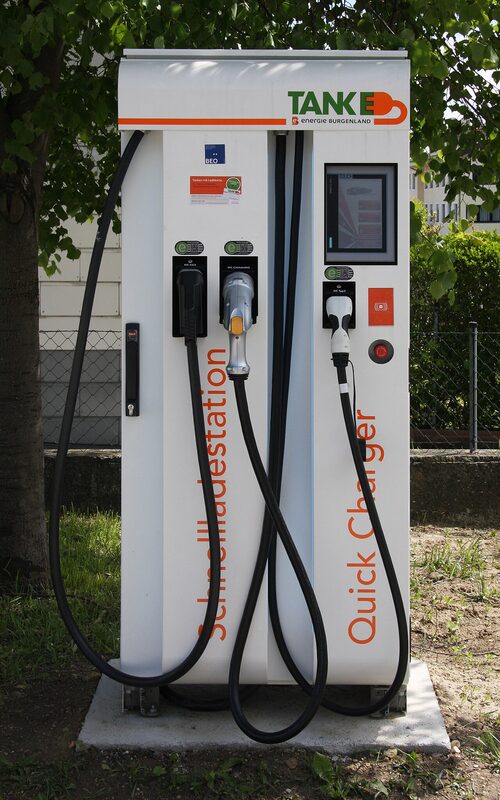
Every Plug and Charge session depends on two small computers agreeing with each other: the communication controller in the vehicle and the one in the charger. When they disagree, the driver sees a failed session, a retry or an app prompt where there should have been none. CharIN, the industry association behind the Combined Charging System and the Megawatt Charging System, holds Testivals to find those disagreements before cars and chargers reach the field. Its next North American event is about two weeks away in Sacramento.
According to CharIN's event page, the ISO 15118-20 Testival North America 2026 will run in Sacramento, hosted by Cal EPIC, with testing on Nov. 17 and 18, a public side program on Nov. 18, and a separate one-day MCS Workshop on Nov. 19. As of Nov. 2, 2026, the event is scheduled and has not yet taken place.
The Schedule at a Glance
- Nov. 17-18: controller testing. Vehicle-side (EVCC) and charger-side (SECC) communication controllers are tested against each other for MCS, DC and AC charging. In each test scenario, CharIN says, two controllers from different companies are paired.
- Nov. 18: public day side program. CharIN lists AC vehicle-to-grid (V2G) and its evolving conformance testing program among the discussion topics.
- Nov. 19: MCS Workshop. A one-day program run by CharIN and Cal EPIC for industry, fleets, utilities, government agencies and researchers. It includes live MCS charging demonstrations and a tour of the Capital Charge Yard.
What Gets Tested
CharIN's event page sets out a broad scope. It covers controllers for MCS, DC and AC charging, and it says the AC and DC scope includes CCS and NACS controller implementations for light-duty charging, while MCS testing addresses high-power charging for heavy-duty vehicles. That matters because North American light-duty charging now runs on two connector families, and both can use ISO 15118 for high-level communication between car and charger.
The page says participants will validate three things, along with other supported ISO 15118-20 capabilities:
- Mutual TLS 1.3 authentication. The vehicle and the charger each prove their identity to the other over an encrypted channel, instead of only one side being checked.
- Plug and Charge. The vehicle identifies itself and authorizes payment through the charging connection, without a separate card or app step.
- Smart charging communication. The charger and the vehicle exchange information so charging can be managed rather than simply running at the maximum available power.
CharIN also says industry stakeholders have begun implementing Amendment 1, and its capabilities will be included in the testing scope if sufficiently mature by the time of the event. That condition is worth noting. The amendment is new, and the event page does not promise that any Amendment 1 testing will happen.
Why Amendment 1 Matters
electrive reported on Sept. 26, 2026 that ISO 15118-20:2022/Amd 1:2026 was published in July 2026. According to that report, the amendment includes, among other things:
- MCS services,
- AC-DER applications for grid integration, and
- a revised security concept.
One point is easy to mix up. electrive notes that ISO 15118-20 does not describe the MCS plug itself; the physical MCS interface is specified in IEC TS 63379. The ISO standard covers the digital conversation between truck and charger. The IEC document covers the connector hardware. A heavy-duty charger has to get both right to work.
What the Last Testival Found
The most recent data point comes from CharIN's Testival in Arnhem in May 2026. Per electrive, 13 of 23 DC test systems and 7 of 11 AC test systems there supported bidirectional energy flow. That is about 57% of DC systems and 64% of AC systems. In the same report, electrive said CharIN still considers V2G implementations and compliance tests with European grid requirements to be at a relatively early stage of development, and the headline called interoperability "a key challenge."
Those are counts of test systems brought to one event, not of products on sale. They show what developers were working on as of May 2026, not what drivers can buy. The electrive article does not mention the Sacramento event, so Arnhem results should not be read as a forecast for it.
The Host Site: Capital Charge Yard
CharIN's event page describes Cal EPIC (California Energy, Power, and Innovation Collaborative) as a Sacramento-based nonprofit. Its 33,000-square-foot Innovation Hub is home to the Capital Charge Yard EVSE interoperability and conformance testing center, alongside a prototyping and manufacturing lab and clean tech workforce development programs.
The yard has public funding behind it. A California Energy Commission (CEC) document prepared for the commission's Jan. 21, 2026 business meeting proposed a resolution approving a $4,000,000 agreement with Cal EPIC for a project titled Capital Charge Yard. According to that document, the money supports a charging interoperability and collaboration space at Cal EPIC's Sacramento facility for interoperability testing and standards conformance testing. The agreement's listed start date was Feb. 2, 2026, its listed end date is March 30, 2031, and the budget materials name CharIN Inc.
The CEC document is a proposed resolution; the copy we read has the vote lines blank, so it does not itself confirm the outcome of the meeting. Neither source reports how much of the $4 million has been spent or which test capabilities are operating now. The CharIN event pages do describe the Innovation Hub as the yard's home and include a tour of it in the Nov. 19 program.
The MCS Workshop
The Nov. 19 workshop is aimed at people planning heavy-duty charging more than at people writing controller firmware. CharIN's workshop page lists these topics:
- MCS standards and interoperability
- market development and the MCS West Coast Corridor
- infrastructure funding
- utility interconnection and energization
- permitting
- grid capacity bridge solutions and utility programs
The program also includes live MCS charging demonstrations, technology demonstrations and exhibitors, and the Capital Charge Yard tour. For depot and fleet operators, interconnection and grid capacity often decide how fast a site can open. The workshop agenda puts those topics next to the standards work.
What It Means for Drivers
Nothing changes at any charger on Nov. 17. A Testival is an engineering event in which controllers from different companies are connected to each other and checked for interoperability problems. None of the cited sources announces a new public charger, a deployment, a price change or a new network feature tied to the event.
The effect on drivers is indirect and comes later. Features such as Plug and Charge and smart charging only work when the car's controller and the charger's controller follow the standard the same way. CharIN's inclusion of both CCS and NACS light-duty controllers means both connector families are part of that check. If the Arnhem numbers are any guide, bidirectional charging is still being worked out: many test systems supported it, but CharIN considers V2G implementations to be at a relatively early stage.
For truck drivers and fleets, the MCS sessions are the closer link. The amendment that includes MCS services is only months old (published July 2026, per electrive), and the Sacramento program puts it next to live MCS charging demonstrations. Whether a given truck or depot charger gains any of these features depends on its manufacturer, and the sources give no timelines.
Drivers who want to see the work can look to the Nov. 18 public day, which CharIN describes as including observation of Testival testing and discussion of AC V2G and conformance testing. Before planning a trip, check CharIN's event page for registration and attendance details.
Sources
- CharIN ISO 15118-20 Testival North America 2026 - Sacramento (CharIN event page)
- CharIN MCS Workshop North America 2026 - Sacramento (CharIN event page)
- California Energy Commission, Jan. 21, 2026 Business Meeting: Proposed Resolution for Cal EPIC, Capital Charge Yard (PDF)
- CharIN Testival 2026: interoperability remains a key challenge (electrive, Sept. 26, 2026; Wayback Machine snapshot)
