
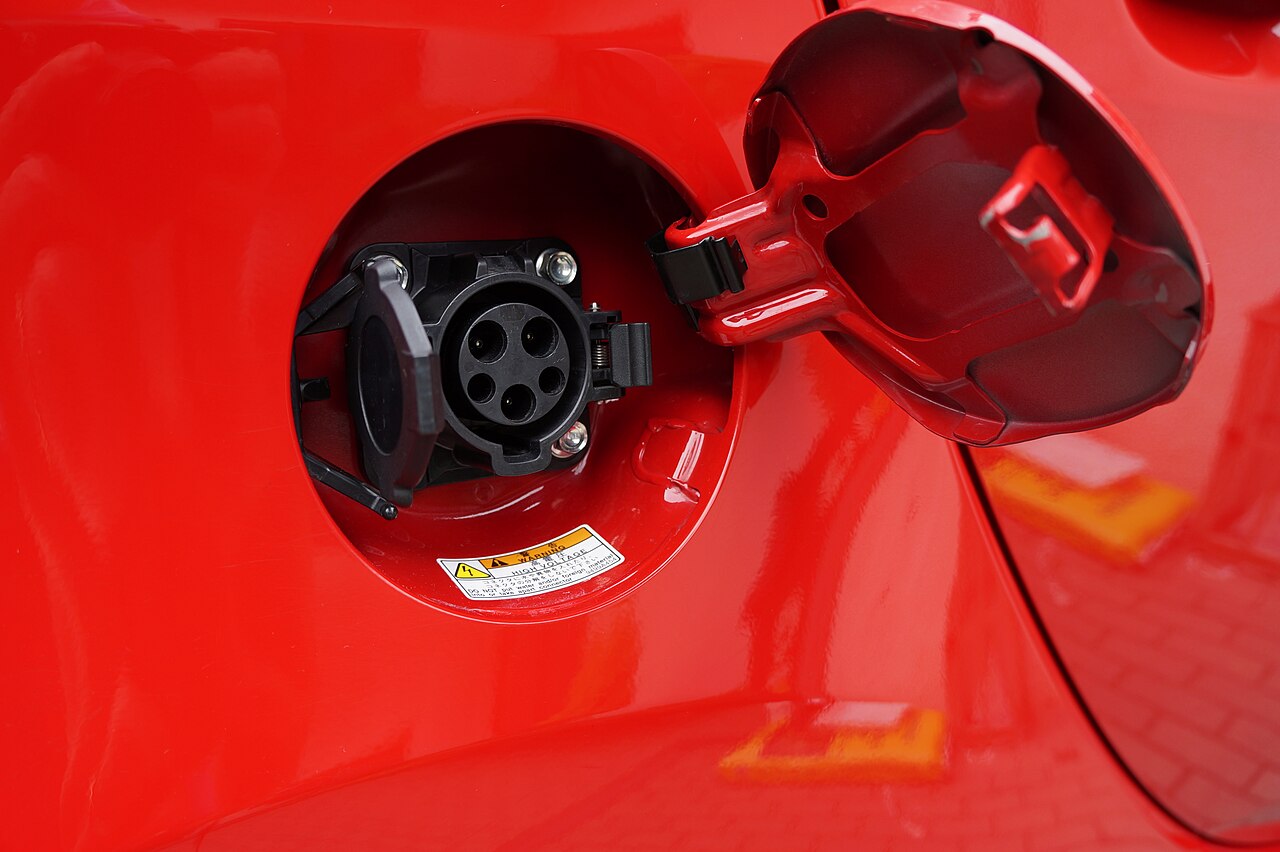
Most vehicle-to-home setups sold today work the same way. The car sends DC power out through its charge port, and a large, costly box on the garage wall turns it into household AC. On Oct. 27, 2026, Ford described a different design for its 2027 Fathom pickup. The truck does the conversion itself, and the equipment at the house becomes much simpler and, by the reported figures, much cheaper.
Per Electrek, the inverter sits in the Fathom's E-box. Ford says the truck can deliver "over 10 kW" of AC power to a home without a separate inverter. The Fathom is set to start at $28,350, according to Canary Media and TechCrunch (both Oct. 27, 2026). Electrek describes it as the first EV from a US automaker priced under $30,000 that can deliver that much AC power to a house this way. The truck arrives in 2027. Everything in this article covers an announced product, not one on sale or delivering power today.
Where the inverter lives, and why it matters
The inverter is the costly part of bidirectional charging. Canary Media reports that the DC-to-AC equipment most EVs need for home backup today costs from just under $7,000 to more than $10,000. As one point of comparison, Canary puts GM's DC vehicle-to-home bundle at $6,748.
Moving the inverter into the vehicle changes that math. Willett Kempton of the University of Delaware told Canary Media that building AC bidirectional capability into a vehicle costs roughly $200 to $300 per vehicle, if the automaker designs it in from the start. He added that adding it afterward costs much more. The cost moves from a one-off home installation to a part built into the vehicle.
The trade-off is that the truck and the wall equipment now have to agree, over a shared protocol, on when and how much power flows in each direction. That is where the standards come in.
The standard underneath: SAE J3068
Canary Media reports that the Fathom uses communications from SAE J3068, a standard SAE International lists for AC conductive charging. One document in that family covers bidirectional power: J3068/2_202401, "Control of Bidirectional Power for AC Conductive Charging."
According to SAE's listing, J3068/2 was issued on Jan. 22, 2024, by the SAE Truck and Bus Electrical Systems Committee. It is classed as an Information Report. SAE says it extends J3068 and J3068/1 to include multiple ways to control charging and discharging to an EPS (electric power system), managed charging and other related capabilities, designed to support both site electrical limits and power grid management.
Two points about that wording:
- Information Report is not the same as a full Standard. SAE gives J3068/2 the Information Report label. Readers should not treat it as a finished, mandatory spec for bidirectional AC charging.
- The sources do not say which parts Ford implements. Canary Media and Electrek say Ford uses SAE J3068 communications. None of the sources ChargerFeed reviewed say whether Ford follows J3068/2 in full or only in part.
For site hosts and utilities, the main point is that the control messages come from a published SAE standards family and not a closed, Ford-only protocol. That matters to anyone who will later need other hardware or other vehicles to work with this setup.
What Ford is selling for the house
Electrek reports two home-energy functions:
- Home Power Management. The truck charges when electricity rates are low and sends power to the home when rates are high.
- Home Backup Power. The truck powers the house during an outage. This needs both the Ford Home Power Station and a Home Backup Panel.
TechCrunch reports that both setups let owners take part in virtual power plant programs, which use software to control a fleet of distributed energy storage devices such as EVs.
The prices, and how firm they are
Electrek states that Ford has not released hardware prices, and Canary Media says Ford has not finalized them. The figures below are approximate numbers that Ford gave outlets on Oct. 27, 2026, and should be treated as estimates:
- Home Power Station: about $650, per TechCrunch, which describes it as about 50% less than Ford's first-generation bidirectional charger. Canary Media gives the same comparison: roughly half the $1,300 Ford Charge Station Pro.
- Home Backup Power package (charger plus backup panel): about $2,100, per TechCrunch, or about 60% less than Ford's first-generation product. Canary Media measures the 60% cut against $5,200 for Ford's current charger plus home integration system.
- Installation is not included in either figure, per TechCrunch and Canary Media. TechCrunch notes that installing existing V2X chargers can cost up to $10,000. Ford did not announce any installer partnerships, according to TechCrunch.
On those reported numbers, the house-side equipment for full backup would cost roughly 21% to 30% of the $7,000 to $10,000-plus Canary Media cites for DC-to-AC home equipment today ($2,100 divided by $10,000 and by $7,000), before installation. Installation is a big variable, and none of the sources estimate it for the new hardware.
The interconnection problem
Hardware cost is one barrier. Permission from the local utility is another. Electrek notes that someone using a truck only for backup power during an outage should not have to go through the same approval process as someone sending electricity to the grid, which is the kind of distinction utility rules have to address.
Electrek reports that Ford formed a working group in July with five utilities: American Electric Power (AEP), BC Hydro, Consumers Energy, Exelon and Pacific Gas and Electric (PG&E). Electrek says the group is working on making it easier for customers to connect bidirectional EVs, updating utility procedures for newer bidirectional charging standards, and easing participation in virtual power plants. Canary Media likewise reports that Ford has been working with utilities since July.
None of the sources describe rule changes the group has secured. For now, Canary Media reports, only California and Maryland have set utility regulations for AC bidirectional charging outside of pilot projects.
What It Means for Drivers
Nothing changes today. The Fathom is announced for 2027, and the sources do not describe any of the home-power hardware as on sale. Pricing is not final.
If you plan to buy one: The design moves the most expensive part of home backup into the truck. Based on the reported figures, a Home Power Station would cost about $650 and the full backup package about $2,100 (TechCrunch, Oct. 27, 2026), plus installation. Canary Media cites roughly $7,000 to over $10,000 for today's DC-to-AC home equipment. Budget separately for installation, which none of the sources priced for this hardware.
Where you live matters. Per Canary Media, only California and Maryland have set utility regulations for AC bidirectional charging outside pilots. If you are a customer of AEP, BC Hydro, Consumers Energy, Exelon or PG&E, your utility is in Ford's working group. That is not a promise of faster approval, but it is the group to watch. Elsewhere, ask your utility how it handles interconnection before you count on backup power.
Installation is not a DIY job. Any equipment that connects a vehicle to your home's electrical system, and especially a backup panel, should be installed by a licensed electrician following the manufacturer's instructions and local permitting rules. Check with your utility about interconnection approval before the system is switched on.
For fleets, site hosts and utilities: Because the controls use SAE J3068 communications, Ford's approach rests on a published AC standards family. The open question is how fully Ford implements J3068/2, which SAE lists as an Information Report, and whether other automakers follow the same in-vehicle-inverter approach. Kempton told Canary Media that other automakers he talks with are interested.
Sources
- SAE International: J3068/2_202401 Control of Bidirectional Power for AC Conductive Charging (Information Report)
- Canary Media: Ford's new EV pickup will come with more affordable home-power backup (Oct. 27, 2026)
- Electrek: Ford's new sub-$30K electric truck can power your home for a lot less (Oct. 27, 2026)
- TechCrunch: Ford Fathom will be the cheapest American EV capable of powering a house (Oct. 27, 2026)
