
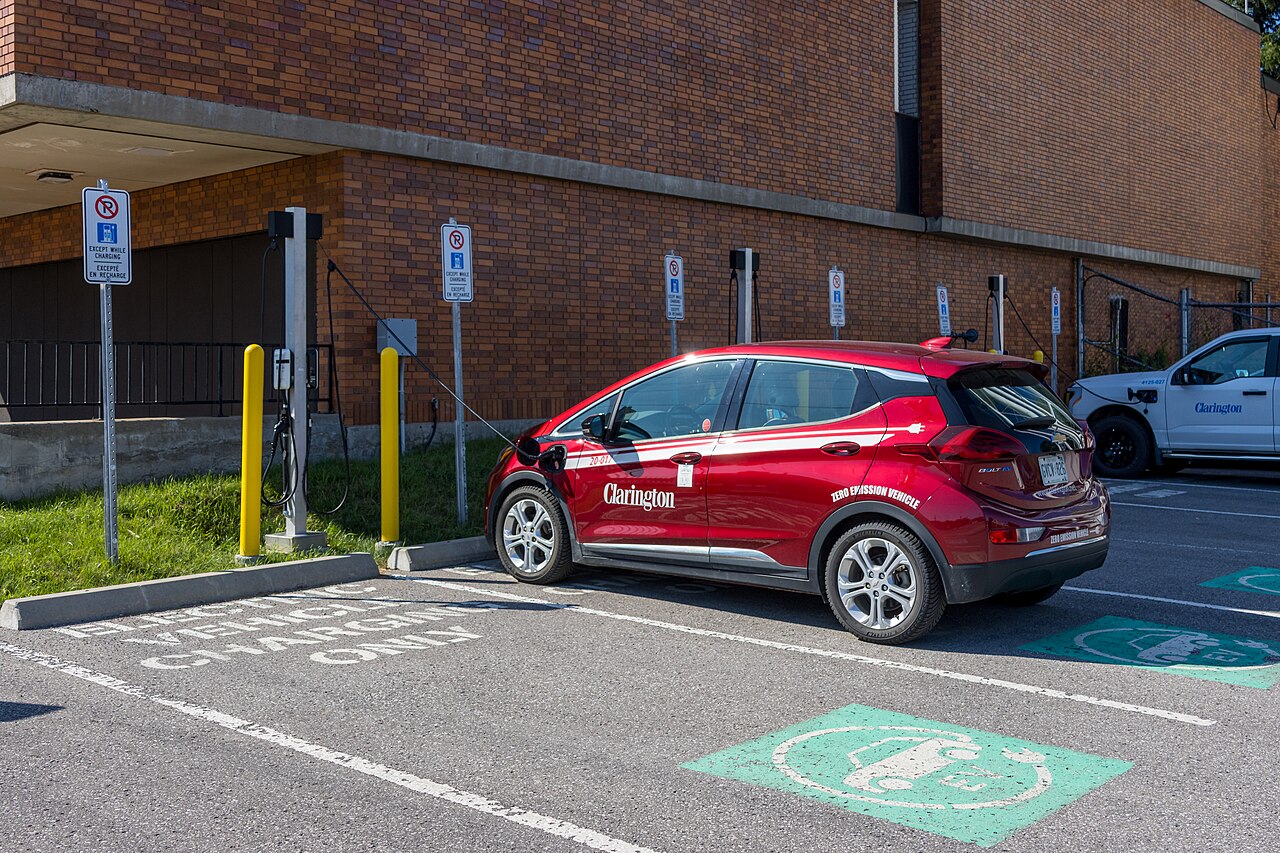
Canada's federal Budget 2026, tabled on Nov. 5, 2026, proposes $587 million over five years, starting in 2027-28, to renew the Zero-Emission Vehicle Infrastructure Program (ZEVIP). The program is run by Environment and Climate Change Canada. According to Chapter 1 of the budget document, the money would support more than 55,000 additional EV chargers "in areas where the infrastructure is needed most."
Two smaller items sit alongside it: $45 million over five years from 2027-28 to Natural Resources Canada for charging research and development, and $2.2 million over five years to renew the Greening Government Operations Fleet Program, which covers the federal government's own vehicle fleet.
One point matters for how to read the figures. They are proposed budget amounts. As of the Nov. 5, 2026 budget, the 55,000 additional chargers are a target for the proposed funding, not chargers the budget describes as built. The first year of the new money is fiscal 2027-28.
The numbers at a glance
- $587M over five years (2027-28 onward), ZEVIP renewal, ECCC: proposed
- 55,000+ additional chargers targeted by the renewal: planned, not funded or built
- $45M over five years, charging R&D, Natural Resources Canada: proposed
- $2.2M over five years, federal fleet program renewal: proposed
- 50,000+ chargers the budget says Canada has supported to date
- 58,874 federally supported chargers in operation or planned by 2028-29 under existing ZEVIP funding (budget Figure 1.9)
Dividing $587 million by 55,000 chargers gives about $10,700 in federal money per charger. That is ChargerFeed's own arithmetic, not a program cost figure. The budget does not say how the money would be split between Level 2 and DC fast charging, and it does not say what share of each project's cost ZEVIP would cover.
What already exists: the 58,874 baseline
The budget says Canada has "supported more than 50,000 chargers to date" and that it has the ambition to roughly double the number of federally supported chargers. Figure 1.9 gives a more detailed count: 58,874 federally supported chargers in operation or planned by 2028-29, counting existing ZEVIP funding only and excluding the proposed Budget 2026 money. That total mixes chargers already operating with chargers that are planned but not yet built. The figure does not separate the two.
By province and territory, per Figure 1.9:
- Ontario: 23,802
- British Columbia: 17,147
- Quebec: 9,555
- Alberta: 2,751
- Nova Scotia: 1,973
- Manitoba: 1,258
- New Brunswick: 733
- Saskatchewan: 455
- Prince Edward Island: 454
- Newfoundland and Labrador: 346
- Yukon: 246
- Northwest Territories: 42
- Location to be determined: 112
The breakdown is lopsided. Ontario alone accounts for about 40% of the total, and British Columbia for about 29%. Together with Quebec (about 16%), the three provinces hold 50,504 of the 58,874 chargers, or roughly 86%. Alberta, the fourth-largest provincial count, has 2,751. Figure 1.9 does not list Nunavut.
That distribution is the backdrop for the renewal's wording. The budget targets the new chargers at "areas where the infrastructure is needed most." It does not define those areas, and it does not set provincial allocations for the 55,000.
How it fits with February's package
Motor Illustrated called the ZEVIP renewal the budget's biggest new automotive line item. In its Nov. 5 report, the outlet said the renewal comes on top of a $1.5 billion charging package and 8,000 new ports announced in February. So the budget renews an existing funding stream into 2027-28 and beyond rather than starting a new program.
Clean Energy Canada, a clean-energy advocacy group, put the charger money in its affordability framing. In a Nov. 5 media release, executive director Rachel Doran's statement on the budget cited the $587 million for over 55,000 new chargers. The statement also pointed to $4 billion over 10 years for electricity infrastructure and to the extension of the clean electricity and clean technology investment tax credits to 2040. Those are the group's characterizations of the budget.
What It Means for Drivers
The new money starts in 2027-28. The renewal's funding is proposed to start in fiscal 2027-28 and run for five years. The 55,000-charger target describes what the money is meant to support over that period. It is not a count of sites under construction. The budget text read for this article does not name specific locations, networks or highway corridors.
The current build-out continues under existing money. The 58,874 chargers in Figure 1.9, either operating or planned by 2028-29, are supported under existing ZEVIP funding. Based on the budget's own provincial counts, most of that build-out is in Ontario, BC and Quebec.
No new purchase incentive. Motor Illustrated reported that the budget adds no new EV rebate funding. The existing Electric Vehicle Affordability Program, launched in February, offers up to $5,000 on eligible EVs and $2,500 on plug-in hybrids in 2026. Those amounts drop each year until 2030 (Motor Illustrated, Nov. 5, 2026).
Fuel tax timeline. Gasoline and diesel drivers should note one change. Per Motor Illustrated, the federal fuel excise tax has been suspended since April 20, 2026. It returns at 50% of the standard rate on Feb. 1, 2027 and at the full rate on April 1, 2027.
Vehicle standards. Motor Illustrated reported that the budget says vehicle greenhouse gas emissions standards will be updated. It gives no new targets or timeline.
The budget text gives no charging prices or per-kWh rates, and the proposed ZEVIP renewal does not set any. Charging prices are not part of what the budget announces.
What It Means for Site Hosts and Fleets
For businesses, municipalities and fleet operators that have applied to ZEVIP before, the renewal mainly signals that the program is proposed to continue past its current funding. The budget passage on the renewal does not include new application windows, eligibility rules, cost-share rates or charger-type requirements. Those details would be a matter for Environment and Climate Change Canada, which runs the program.
The $45 million for Natural Resources Canada is described in the budget as funding for charging infrastructure research and development, not deployment. The $2.2 million fleet item is described as supporting readiness assessments for the transition of the federal vehicle fleet to zero-emission vehicles.
What to Watch
- Whether the proposed $587 million is approved as tabled, and when ECCC publishes renewed program terms.
- How "areas where the infrastructure is needed most" is defined, and whether provincial or regional targets follow.
- How many of the 58,874 baseline chargers move from planned to operating by 2028-29.
