
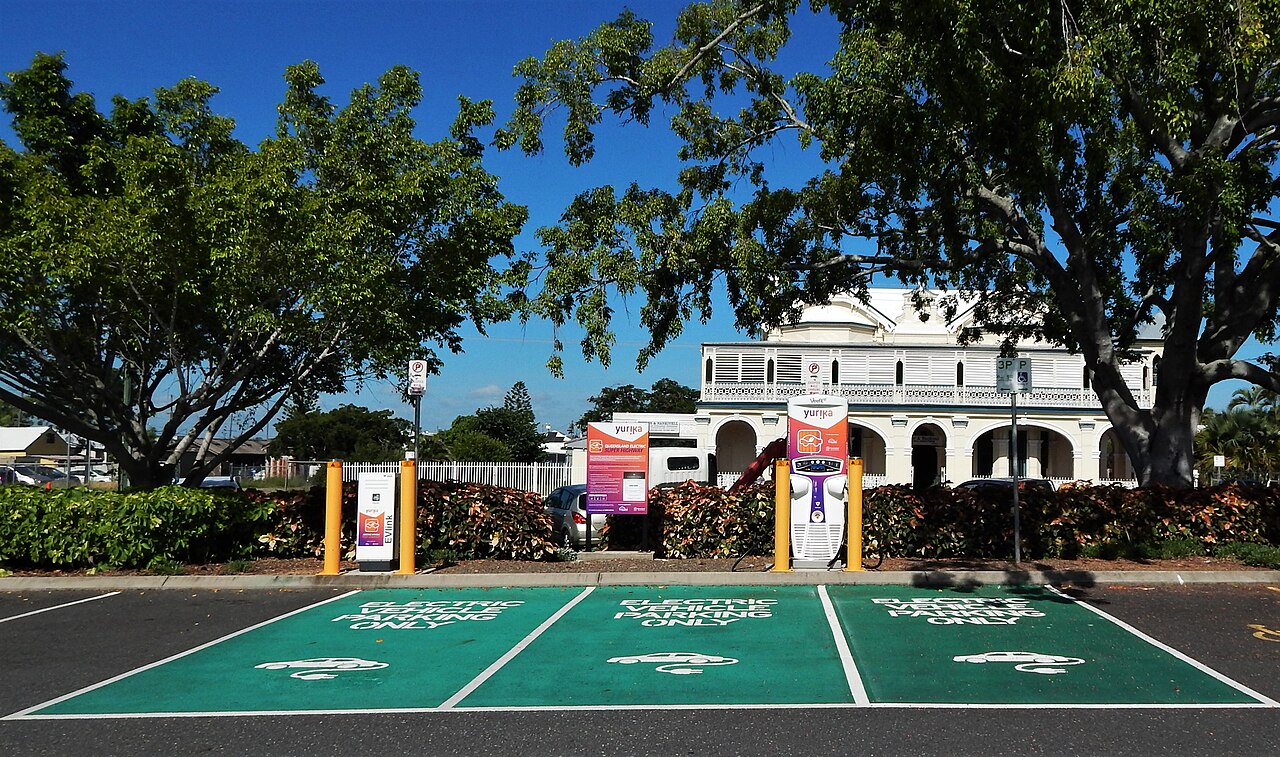
Australia's national energy rule-maker has drafted a rule that would let electricity distribution networks help build public EV chargers and recover part of the cost from household power bills. The rule covers one federal program. Thirteen signatories, made up of energy retailers, charge point operators, Tesla and industry bodies, have signed an open letter opposing it, and formal submissions close on 5 November 2026, three days from now.
The Australian Energy Market Commission (AEMC) released the draft determination and draft rule on 24 September 2026. It is a draft, not a final rule. The AEMC says its final determination is due by the end of 2026.
The numbers
- A$40 million: the Commonwealth's Accelerating EV Charging Program. EV Infrastructure News converted this to about US$27 million.
- About 14,000 chargers: the program's estimated target, in regional blackspots and high-density metropolitan areas, by 2029, according to the AEMC information sheet dated 24 September 2026. These chargers are planned. None of them is counted as operating under this rule, which is still in draft.
- About 30% / 70%: the Commonwealth funds about 30% of eligible infrastructure, and participating distribution networks recover the other 70% from electricity consumers. These figures come from the AEMC media release as reproduced by Energy Source & Distribution, and from EV Infrastructure News. The AEMC information sheet itself refers only to "a set proportion" funded by consumers, subject to a cap.
- About A$1.00 a year: the AEMC's estimate of the added cost on a typical residential bill, for five years (per the reproduced AEMC media release, 24 September 2026).
- 30 June 2029: the date the program is scheduled to conclude. The rule applies only to this program.
Why a rule change is needed at all
The Department of Climate Change, Energy, the Environment and Water (DCCEEW) asked the AEMC to change the National Electricity Rules so that distribution network service providers (DNSPs) could take part in its grant program. According to the AEMC information sheet, ring-fencing, restricted-asset and normal connection arrangements would otherwise prohibit that participation.
The draft rule classifies the networks' program activities as standard control services. According to the AEMC information sheet, that classification allows cost recovery from electricity consumers and removes those barriers for this work. It also caps how much consumers can be required to fund.
The draft also sets out how the money would flow. A transitional cost adjustment mechanism would handle recovery of the costs networks bid for sites delivered. The Australian Energy Regulator (AER) would assess ongoing costs in later regulatory periods, and the AER's expenditure incentive schemes would apply to over- and under-spends.
How the two parts of the program would work
The program has two parts, and the AEMC treats them differently.
Metropolitan kerbside sites. In dense urban areas, many residents can't charge at home. Within locations DCCEEW has approved, DNSPs would bid for kerbside sites. Charge point operators (CPOs) get first right of refusal on each site and would fund their own chargers. If no CPO takes a site, the network must install an AC charger itself as provider of last resort, according to the AEMC information sheet.
Regional blackspots. In regional areas with gaps in coverage, DNSPs that win DCCEEW's competitive tender must install DC chargers.
The AEMC says the emissions-reduction benefits likely outweigh the costs to consumers. It found the strongest case for intervention in the regional DC chargers and "significant uncertainty" over the last-resort kerbside AC element. In the reproduced media release, AEMC chair Anna Collyer said the benefits outweigh the costs given the program's targeted and time-limited design. EV Infrastructure News reported that Collyer said the rule does not extend to any broader role for networks in EV charging.
That point matters because other proposals are in play. Energy Networks Australia and Nexa Advisory have each lodged broader rule change requests on networks and EV charging. The AEMC says it is handling those separately, and that the draft determination should not be read as a preference for either a regulated or a market-led approach in future decisions.
Who objects, and why
On 7 October 2026, EV Infrastructure News reported a joint open letter, published by Nexa Advisory, with 13 signatories:
- Energy retailers: AGL, EnergyAustralia, ENGIE, Flow Power
- Charge point operators: Evie Networks, JOLT, EVX
- Tesla
- Industry bodies: Australian Energy Council, Master Electricians Australia, National Electrical and Communications Association (NECA), Australian Electric Vehicle Association
The signatories say the AEMC has not yet established the case for network ownership funded through electricity bills. EV Charging & Infrastructure, reporting on 29 October 2026, said the letter raises "serious concerns". The coalition's objection is aimed at the draft allowing networks to own chargers in regional areas and to act as provider of last resort on metropolitan sites that private operators don't take up, with part of the cost recovered from electricity consumers.
Behind this is a structural question: whether regulated networks, whose costs are recovered from every customer, should operate in markets where private companies compete. The AEMC's draft allows it for this program only, with a cap on consumer funding and an end date. The signatories say the evidence does not yet support network ownership. The signatories include several CPOs that could compete for the same kerbside sites.
What It Means for Drivers
Nothing changes for drivers yet. The rule is a draft, and no chargers under it are operating. Here is what the sources say would change if the rule is finalised in its current form:
- Residents without off-street parking in dense metro areas could see more kerbside chargers in DCCEEW-approved locations. Private CPOs get first right of refusal on each site. Networks install AC chargers only where no operator takes a site.
- Regional drivers could get DC chargers in identified blackspots, built by networks that win DCCEEW's tender. The AEMC found this element had the strongest case for intervention.
- Electricity customers in participating network areas, whether or not they drive an EV, would pay about A$1.00 a year on a typical residential bill for five years, by the AEMC's estimate as of 24 September 2026. The consumer contribution is capped.
- Timing: submissions close 5 November 2026, a final determination is due by the end of 2026, and the program is scheduled to conclude on 30 June 2029. The program's estimated target is about 14,000 chargers by 2029.
The sources don't say what these chargers would cost to use, which networks will take part, or which specific streets and towns will get them. Those details would depend on DCCEEW's site approvals and tender results, not on this rule. Home charging is not addressed by this rule.
What happens next
The AEMC takes submissions on the draft until 5 November 2026 and expects to make its final determination by the end of 2026. Several outcomes are possible. The Commission could finalise the rule as drafted, narrow it (for example, by changing the kerbside last-resort element it already calls uncertain), or change the cost-recovery settings. The separate, broader requests from Energy Networks Australia and Nexa Advisory remain on their own tracks, considered alongside the Electricity Network Regulation Review.
A note on sourcing: the AEMC's HTML pages returned errors when ChargerFeed tried to retrieve them. The AEMC's information sheet PDF was read directly. The media release figures, including the 70% recovery share and the A$1.00 estimate, are cited from a trade-press reproduction of that release.
Sources
- AEMC information sheet: Draft determination, facilitating EV charging infrastructure under Commonwealth grants (ERC0436), 24 September 2026
- AEMC makes draft determination on EV charging rollout (AEMC media release, via mirror at Energy Source & Distribution)
- Australia's AEMC proposes rule to accelerate 14,000 EV charger rollout in regional and high-density areas (EV Infrastructure News, 24 Sept 2026)
- AGL, Tesla and others challenge AEMC rule letting networks charge consumers for EV chargers in Australia (EV Infrastructure News, 7 Oct 2026)
- Australia: Energy retailers and CPOs object to AEMC EV charging plans (EV Charging & Infrastructure, 29 Oct 2026)
