
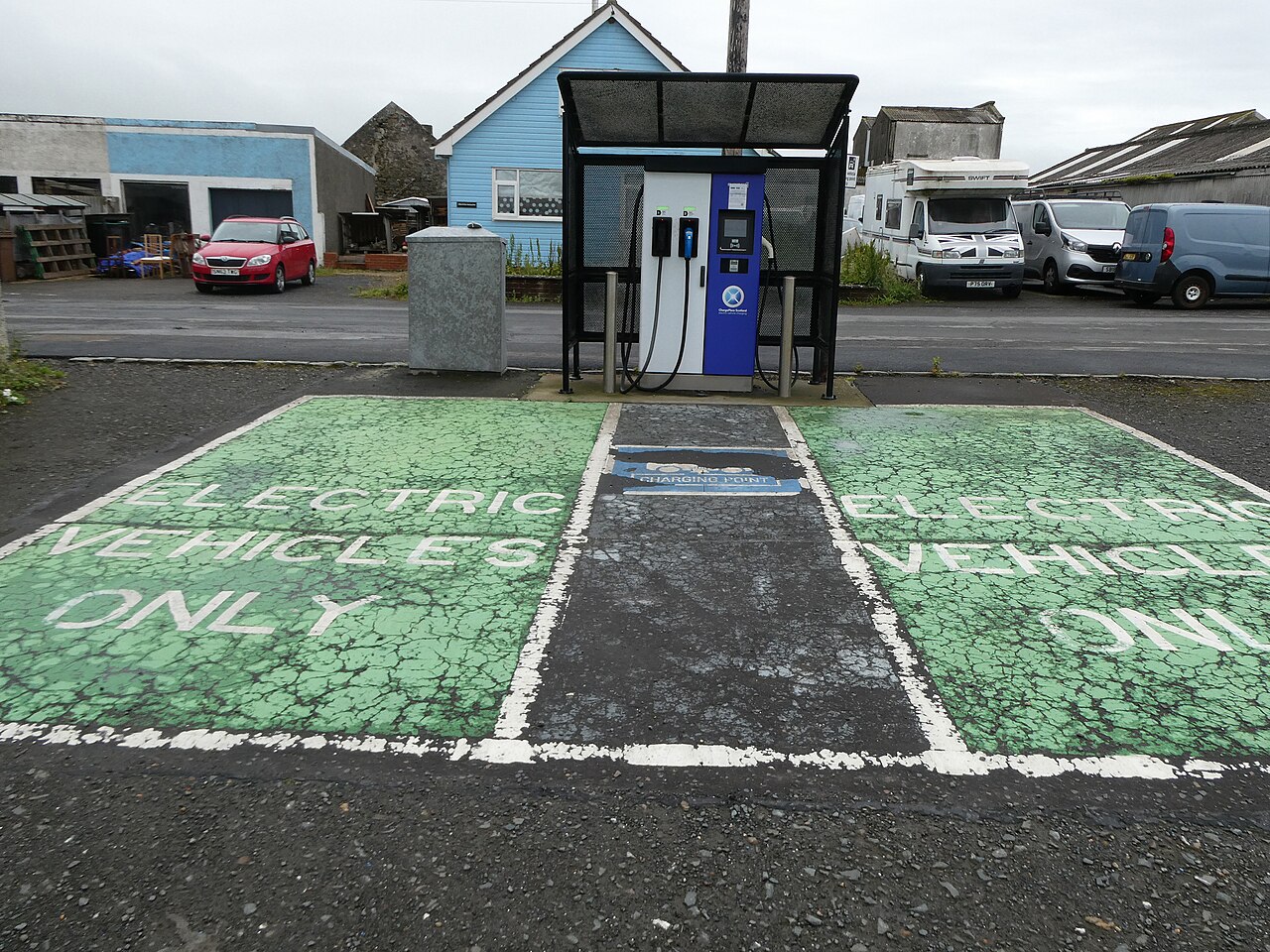
The UK government has moved to settle by legislation a tax dispute that had left the VAT rate on public EV charging uncertain. HM Treasury's Budget 2026 document, published Oct. 28, 2026, says the Finance Bill 2026-27 will clarify that electricity supplied through publicly accessible and workplace EV charging points is subject to 20% VAT. It also says that electricity is not "domestic use" for Climate Change Levy purposes. The rule takes effect on Nov. 1, 2026.
On the same day, HMRC updated its guidance, Fuel and power (VAT Notice 701/19), with a new section 3.1.1 that reflects the change. The Budget also announces a taskforce to look at letting drivers use their home electricity tariff at some public chargers. This piece explains the VAT rule and the taskforce. The separate £100 million cost-reduction funding is covered in ChargerFeed's earlier reporting.
Why the government is legislating now
The change follows a First-tier Tribunal judgment in favour of the charging operator Charge My Street Ltd. According to ICAEW's summary of the Budget's VAT measures (Oct. 28, 2026), the tribunal found that electricity from public chargepoints could qualify for the 5% reduced rate in certain circumstances. HMRC disagreed. Taxi Point reports that the ruling came in February and that HMRC applied for permission to appeal.
The new legislation does not wait for the appeal to play out. Instead it writes HMRC's position into statute. In the Budget document (para. 6.205), the measure is described as legislation "to clarify" the treatment, not as a new tax. ICAEW describes it as legislation to "confirm" that these supplies are standard-rated. HMRC's notice calls it a "longstanding policy position" that public charging does not qualify under de minimis relief.
What the new rule says, line by line
The updated Notice 701/19 states: "From 1 November 2026, the legislation provides that an electric vehicle charging supply is not for domestic use." The rest of section 3.1.1 sets out what counts:
- EV charging supply: electricity supplied through a publicly accessible charging point or a workplace charging point.
- Publicly accessible: a charge point that can be used by the general public or a section of it. HMRC says this includes charge points on public streets, and charge points available to customers of particular premises.
- Not publicly accessible: a charge point that can only be used by residents of a particular dwelling or dwellings, or of a building used for a relevant residential purpose.
- Workplace charging point: a charge point for staff use.
- Not an EV charging supply: household electricity used to charge an EV at home, even if it is separately identified or subject to a specific tariff at certain times of day.
- De minimis relief: HMRC says public charging does not qualify, and these supplies are not for domestic use regardless of the quantity supplied.
- Possible exception: relief may still apply where electricity is supplied to a charity for non-business use.
The Climate Change Levy part matters mostly to operators and site hosts, not drivers. As both the Budget document and ICAEW describe it, the same legislation confirms that electricity from public and workplace charge points is not treated as domestic use for the levy.
Does this raise prices?
Not by itself, according to Taxi Point. The announcement does not set any price increase, and operators already charging 20% VAT do not need to change their prices. In practice, the rule confirms the existing standard-rated treatment and removes the route the tribunal ruling had opened to the 5% rate. None of the sources gives a figure for how many operators, if any, had been charging the reduced rate.
Industry groups have objected. EV Powered (Oct. 28, 2026) reports that ChargeUK and Polestar UK criticised the decision to keep 20% VAT on public charging.
The gap with home charging remains. Taxi Point reports that qualifying domestic electricity in Great Britain currently carries a temporary 0% VAT rate, and HMRC's update note records an extension to that temporary zero rate. Sources differ on the end date. Taxi Point and EV Powered say July 2027, and ICAEW says 31 July 2027, while HMRC's notice states that the rate runs from 1 October 2026 to 30 June 2027. Drivers should check HMRC's notice for the current date before relying on any of these.
The tariff-porting taskforce
Alongside the VAT measure, the Budget document (para. 6.204) says the government is publishing its response to the review of the cost of public EV charging. It announces two things: a tariff-porting taskforce, and funding to reduce the cost of local, lower-powered public chargers across Great Britain.
According to para. 3.16, the government is taking immediate steps to establish a taskforce to explore letting drivers use their domestic electricity tariff at local, lower-powered public charge points, which it calls a complex proposal that will take time to consider. EV Powered reports that the taskforce will be independent and that the idea was recommended by the Cost of Public Electric Vehicle Charging Review, led by Philip New and published alongside the Budget. The Department for Transport is to set out next steps in due course.
For status: the taskforce has been announced. No membership, timetable or reporting date appears in the sources. "Tariff porting" is an idea under study, not a service drivers can use today. The related funding is funded at £100 million over two years, coming into effect from spring 2027, according to the Budget document. The policy costing line shows £50 million in each of the two years. The Treasury expects this to save the average EV driver without home charging who charges on-street about £150 a year. That is a government projection, not a measured result.
EV Powered also reports that a £38 million funding round under the Depot Charging Scheme has opened, citing industry groups responding to the Budget. This is relevant to fleet operators, but it is separate from both the VAT rule and the taskforce.
What It Means for Drivers
Charging at home: nothing changes under the new section 3.1.1. HMRC says household electricity used to charge an EV at home is not an EV charging supply, even where it is separately identified or on a time-of-day tariff. It keeps domestic VAT treatment, including the temporary zero rate for as long as that runs.
Charging on the street, at shops, hotels or car parks: from Nov. 1, 2026, this electricity is standard-rated at 20% VAT in law. HMRC's definition of "publicly accessible" covers both on-street chargers and those offered to customers of particular premises. According to Taxi Point, operators already charging 20% need not change their prices, so the posted per-kWh rate at many sites may stay the same.
Charging at work: staff-use workplace charge points are also covered by the 20% rule from the same date.
Residents-only chargers and charities: HMRC's definition of "publicly accessible" excludes charge points that only residents of particular dwellings can use, and says supplies to a charity for non-business use may still qualify for relief. Site hosts in these situations should read section 3.1.1 and paragraph 3.2.1 of Notice 701/19 in full or take professional tax advice.
Drivers without a driveway: the tariff-porting taskforce is aimed at them, but it has no delivery date yet. The £100 million funding is due to take effect from spring 2027, according to the Budget document. Until DfT publishes next steps, the sources describe no public charger that offers home-tariff charging through this programme.
Anyone planning a home charger installation should use a licensed electrician and follow the manufacturer's instructions. These tax changes do not affect installation requirements.
Sources
- Fuel and power (VAT Notice 701/19), GOV.UK / HMRC, updated Oct. 28, 2026
- Budget 2026, HM Treasury, via GOV.UK
- Budget: nine key VAT changes announced, ICAEW, Oct. 28, 2026
- Government confirms 20% public EV charging VAT despite tribunal ruling, Taxi Point
- Budget keeps 20 per cent VAT on public EV charging but adds £100m, EV Powered, Oct. 28, 2026
