
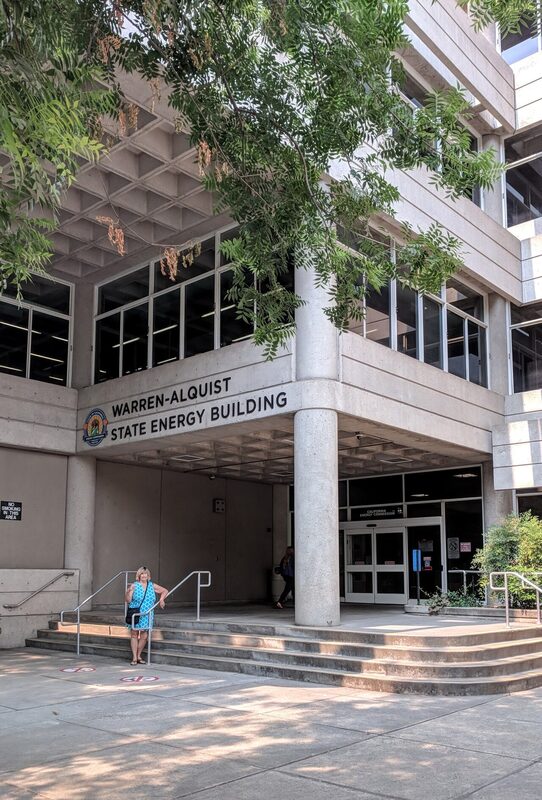
The California Energy Commission (CEC) has two remote sessions on its calendar for the first half of November. Both deal with how an EV, its charger and the home or grid it connects to talk to each other. On Wednesday, Nov. 4, a Commissioner Workshop on Interoperability will look at alignment among six communication protocols and standards. On Tuesday, Nov. 10, a webinar will cover vehicle-to-home (V2H) bidirectional charging solutions that are commercially available or upcoming. Several automakers and charging equipment providers are slated to present.
Law firm Stoel Rives listed both events in its Oct. 28, 2026 energy regulatory update. To be clear from the start: these are scheduled meetings. They are not rulemakings, funding awards or program launches, and so far neither has produced a decision, a rule or any money.
The Nov. 10 V2H Webinar
According to the CEC event notice, the "Webinar on Enabling Bidirectional EV Charging at Home (V2H)" runs from 10:00 a.m. to 2:30 p.m. on Tuesday, Nov. 10, 2026. It is remote access only, and the CEC says the end time is an estimate based on the proposed agenda. The event is listed under the CEC's Fuels and Transportation Division.
The CEC says the webinar will "present and discuss commercially available and upcoming" V2H solutions, with presentations from several automakers and charging equipment providers. The notice gives two goals:
- Share and discuss the current state of V2H deployments in California.
- Gather broad stakeholder input as the CEC considers next steps and policies to facilitate access to bidirectional charging benefits for California EV drivers.
The notice does not say which automakers or equipment makers will present, and it does not propose any specific policy. Stoel Rives reports that meeting details, including an agenda and presentation slides, will be posted prior to the webinar in Docket 22-EVI-06. The CEC's Vehicle-Grid Integration Program page links to that same docket for comments.
V2H means a vehicle's battery sends power back to the home it is plugged into, not just the other way around. The webinar is specifically about that home-facing case.
The Nov. 4 Interoperability Workshop
The earlier event is broader. The Commissioner Workshop on Interoperability runs from 9:00 a.m. to 1:00 p.m. on Wednesday, Nov. 4, 2026. It is also remote access only, and its notice links to Docket 24-FDAS-02. The CEC page shows the notice was updated Oct. 13, 2026, so it was posted ahead of Stoel's Oct. 28 roundup, which restates it.
The CEC says the workshop will gather feedback from the public, industry and regulatory stakeholders on advancing energy interoperability standards in California, focusing on alignment among six protocols and standards:
- OpenADR 3.1
- Matter
- IEEE 2030.5
- ISO 15118
- Open Charge Point Interface (OCPI)
- Open Charge Point Protocol (OCPP)
The CEC frames the purpose as supporting "scalable, privacy-preserving automation and consumer-authorized control." In plain terms, that points toward devices responding automatically to conditions, but under the customer's authorization and with attention to privacy. The notice says the CEC seeks input from standards development organizations, original equipment manufacturers, utilities, aggregators, distributed energy resource providers, consumer advocates and other interested parties. It names several areas where interoperability matters: the Market Informed Demand Automation Server (MIDAS), Demand Side Grid Support (DSGS), load flexibility, electric vehicle supply equipment (EVSE), and customer energy management systems.
Why this matters for V2H is a reasonable inference rather than something either notice states. A home bidirectional setup can involve a vehicle, a charger, and energy-management or utility systems, and the protocols above are the kind of standards used between such devices. When they do not line up, equipment can fail to work together.
Where This Fits in the CEC's Existing Work
The CEC's Vehicle-Grid Integration (VGI) Program page describes VGI as including managed charging (also called V1G or smart charging) and bidirectional charging, including V2H and vehicle-to-grid (V2G). The page, which lists Docket 22-EVI-06 as its proceeding, links related documents, including:
- "Roadmap to Unlocking the Benefits of Bidirectional Charging (2026)"
- "Recommendation for Deployment of ISO 15118-Ready Chargers"
- Solicitation GFO-21-303, "Vehicle-to-Building Technologies for Resilient Backup Power"
As of the page we read, it listed no upcoming events, so it had not yet caught up with the two November sessions. The V2H webinar notice describes the CEC as still gathering input before choosing next steps. Based on the notices, the November sessions are fact-finding and alignment work, not a new mandate.
What It Means for Drivers
Right now, nothing changes for California drivers. Neither event sets a requirement, offers a rebate, or changes which vehicles or chargers can be used at home. Here is what the sources do support:
- If you own or are shopping for a V2H-capable vehicle or charger: the Nov. 10 webinar is meant to present commercially available and upcoming V2H solutions, as presented by automakers and equipment providers. The materials, once posted to Docket 22-EVI-06, may be a useful snapshot of what is on offer. The CEC has not said which brands will take part.
- If you want to weigh in: the CEC says it wants broad stakeholder input on V2H, and the interoperability workshop likewise seeks feedback from the public and industry. Both sessions are remote access only, so you can join without traveling to Sacramento. Each event notice has Zoom and phone attendance instructions, and the dockets accept comments.
- If you use a home energy manager, smart-home hub or utility demand-response program: the Nov. 4 workshop covers interoperability for customer energy management systems, load flexibility and EV supply equipment, with an emphasis on consumer-authorized control and privacy. The workshop itself decides nothing.
- Timing: as of Nov. 1, 2026, both events are upcoming. Outcomes, if any, would come later, through the dockets and future CEC action.
If you are thinking about adding bidirectional charging at home, hardware choice is only part of it. A home installation that can send power back from a vehicle involves your electrical service and, depending on setup, your utility. Use a licensed electrician, follow the manufacturer's instructions, and check with your utility about any interconnection requirements.
What to Watch
After the sessions, the main items to look for are the presentation materials and any comments filed to Docket 22-EVI-06 (V2H and vehicle-grid integration) and Docket 24-FDAS-02 (interoperability). Those filings may show which products automakers and charger makers are presenting and which standards questions stakeholders raise. ChargerFeed will report on any outcomes once the CEC posts them.
