
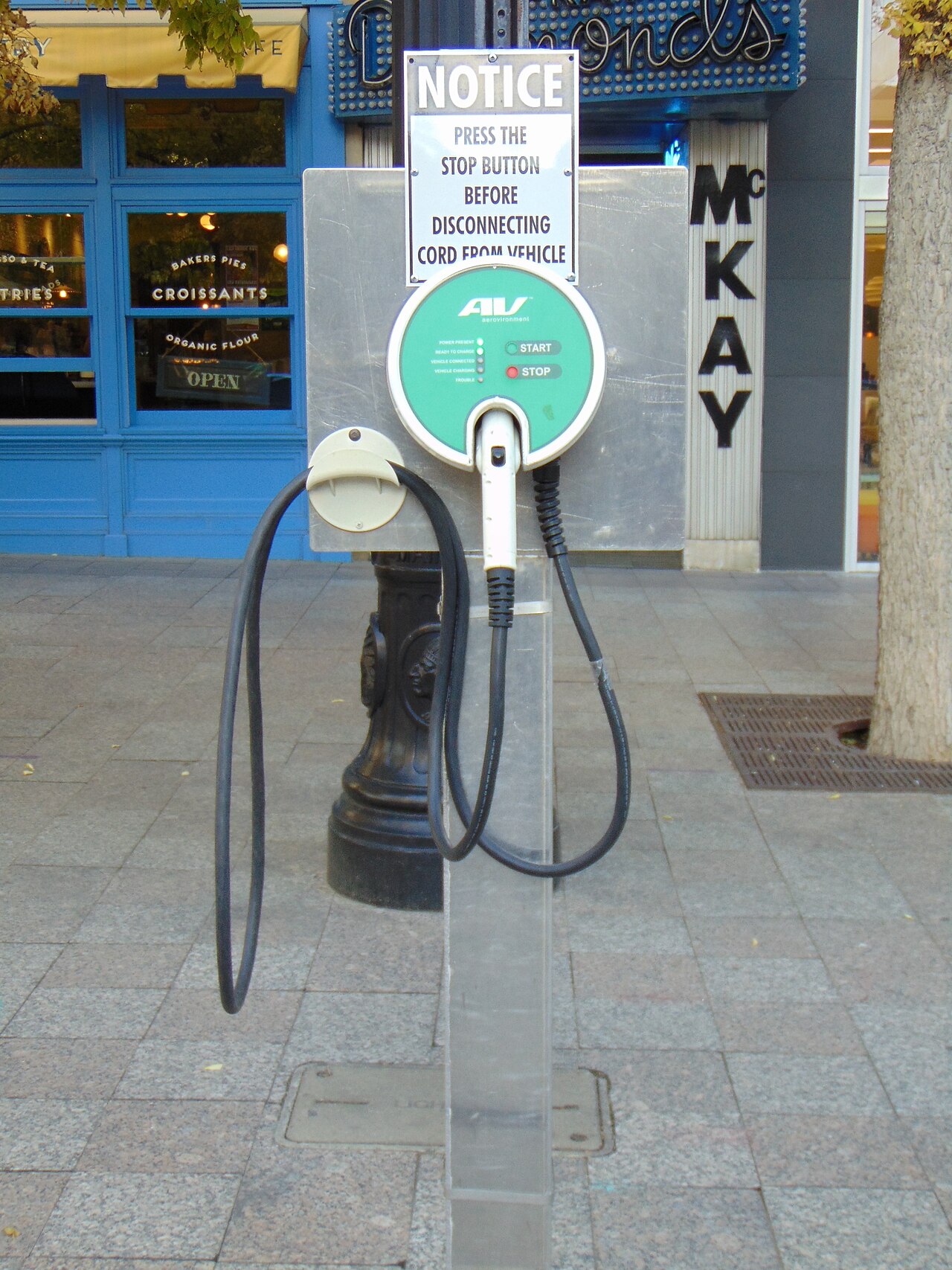
Seattle is now taking requests for public curbside chargers. Seattle City Light, the city-owned electric utility, and the Seattle Department of Transportation (SDOT) say they will install up to 200 new public Level 2 curbside charging stations. The money comes from the 2024 Seattle Transportation Levy. Residents can ask for a charger near where they live now. No new charger from this round is running yet. On the city's timeline, the first installs start in fall 2027, and all of the chargers are expected to be in service by 2030.
So the program is open for applications, and it is funded. The chargers are still planned. City Light's program page carries a project update dated October 2026, and GCN reported on the program on Oct. 15, 2026.
The timeline, step by step
City Light's program page gives this schedule:
- Fall 2026–2027: residents request a charger; the page says applications are accepted for 12 months starting in October 2026
- January 2027: location selection begins
- Spring 2027: site design and permitting begins, continuing for approximately 18 months
- Fall 2027: installation begins, over about three years, with active construction lasting about two weeks at each location
- 2028–2030: chargers up and running
- By 2030: all chargers expected to be installed and in service
The city won't pick all 200 sites at once. City Light says it will choose locations in batches of 40 to 50 at a time, on an ongoing basis. That means requests sent in after the first selection round in January 2027 could still count toward a later batch, as long as the request window is open.
The city page lists the request period as "fall 2026–2027" and describes it as 12 months starting in October 2026, which points to a close around October 2027. GCN reported that applications opened the week of its story and stay open through fall 2027. Neither source gives an exact closing date. Anyone who wants a charger on their block should apply early instead of counting on a fixed deadline, because sites are picked in rolling batches and the first selection starts in January 2027.
Where the chargers are meant to go
City Light says it will review applications and select locations that meet city environmental and equity goals and address residential EV charging gaps. Selected sites must also meet technical requirements, including access to the proper power sources. The page lists these selection criteria:
- Proximity to the nearest existing curbside charger, with priority for places not already served
- Population density, with priority for areas near multifamily housing
- Proximity to parks, grocery stores and businesses, using a "walk score" metric
- Multiple adjacent requests
- Requests from multifamily housing properties that have high barriers to providing residents with EV charging
- Overburdened communities that bear the highest pollution burden and have experienced underinvestment
SDOT frames it the same way. Its Electrification Program page says the stations are meant for residents who live in apartments or rely on street parking, who often don't have access to at-home charging.
The hardware and the price
These are Level 2 AC chargers, not DC fast chargers. City Light's page says they provide up to 9.6 kW, which it says can give a typical midsize EV up to 30 miles of range per hour of charge time. The actual rate depends on the vehicle. That makes them a fit for overnight or long-dwell parking, not quick top-ups. The page says the chargers are open to the public on a first-come, first-served basis and cannot be reserved.
City Light's program page lists the current price to charge at its Level 2 chargers as $0.21 per kWh (as listed in October 2026). The utility says a kWh gives a typical EV enough energy to travel about 3 miles. By that rough guide, a 30-mile session would use about 10 kWh, or about $2.10 at the posted rate. City Light says the fees are designed to pay for electricity, operations, maintenance and repair costs, and that the cost to charge is updated under department policy III-1102. The page doesn't say whether the new chargers will use the same rate once they open in 2027 or later, so the price could change before then.
City Light says it will own, operate and maintain the chargers itself. GCN notes that city-owned curbside charging remains uncommon among U.S. utilities, most of which rely on private operators or third-party site hosts.
Follow the money
The program is funded by the $1.55 billion, eight-year Seattle Transportation Levy, which voters approved in 2024. SDOT says the levy's Electrification Program will invest $32 million in public EV charging and new program offerings to support EV drivers. The sources ChargerFeed could read do not say how much of that $32 million is earmarked for the 200 curbside chargers.
The curbside chargers aren't the only use of the levy money. SDOT says it is also working with City Light, Seattle Parks and Recreation, and Seattle Public Libraries to site chargers at local parks, community centers and libraries. The sources don't give counts or dates for those sites.
City Light's service area reaches past the city limits. The city page says funding for chargers installed in City Light's service area outside Seattle will come from City Light's dedicated transportation electrification budget, not the Seattle levy. GCN names Burien, SeaTac, Shoreline and Tukwila as places in that service area.
What the pilot showed
The new round builds on a pilot. City Light says that in June 2025 it completed installation of 58 public Level 2 curbside chargers at 31 locations in Seattle. The city says those pilot chargers have seen high usage and positive community feedback. The sources ChargerFeed could read do not give a usage count.
The city also points to need. It says over half of all homes in Seattle are apartments or condominiums, and that these homes, along with older single-family homes and houseboats, frequently lack off-street parking. GCN reports that about 1 in 4 newly registered vehicles in the greater Seattle area is an EV. City Light ties the program to the city's goal of reducing transportation emissions 83% by 2030.
What It Means for Drivers
Right now: nothing from this round has changed at the curb. The 58 pilot chargers at 31 sites are what City Light reported installed as of June 2025. City Light lists the price at $0.21 per kWh as of October 2026.
If you don't have off-street parking: the new round is aimed at you. According to SDOT and City Light, it targets residents of apartments and other multifamily buildings, people who rely on street parking, and areas that need chargers most. You can send a request now through City Light's program page.
When you could plug in: not before fall 2027, when installs begin. The city's schedule has chargers coming online between 2028 and 2030, with all of them expected in service by 2030. Because sites are picked in batches of 40 to 50, some neighborhoods will likely get chargers before others.
What to expect at the plug: Level 2 charging up to 9.6 kW, or up to about 30 miles of range per hour for a typical midsize EV, per City Light. That suits overnight or several-hour parking. The sources don't confirm parking time limits, session rules or final pricing for the new stations.
Outside city limits: drivers in City Light's service area outside Seattle, including Burien, SeaTac, Shoreline and Tukwila per GCN, are covered by a separate funding source: City Light's transportation electrification budget.
Site hosts and property owners: City Light says requests from multifamily properties with high barriers to resident charging are a selection factor. Owners who want on-site charging for their own property, outside this curbside program, should hire a licensed electrician and follow the equipment manufacturer's instructions. They shouldn't try any electrical work themselves.
What to watch
- January 2027: the first location selection round starts
- Spring 2027: site design and permitting begins
- Fall 2027: the first installs, and the latest reported end of the request window
- 2028–2030: chargers come into service, with City Light's posted rate subject to updates before then
