
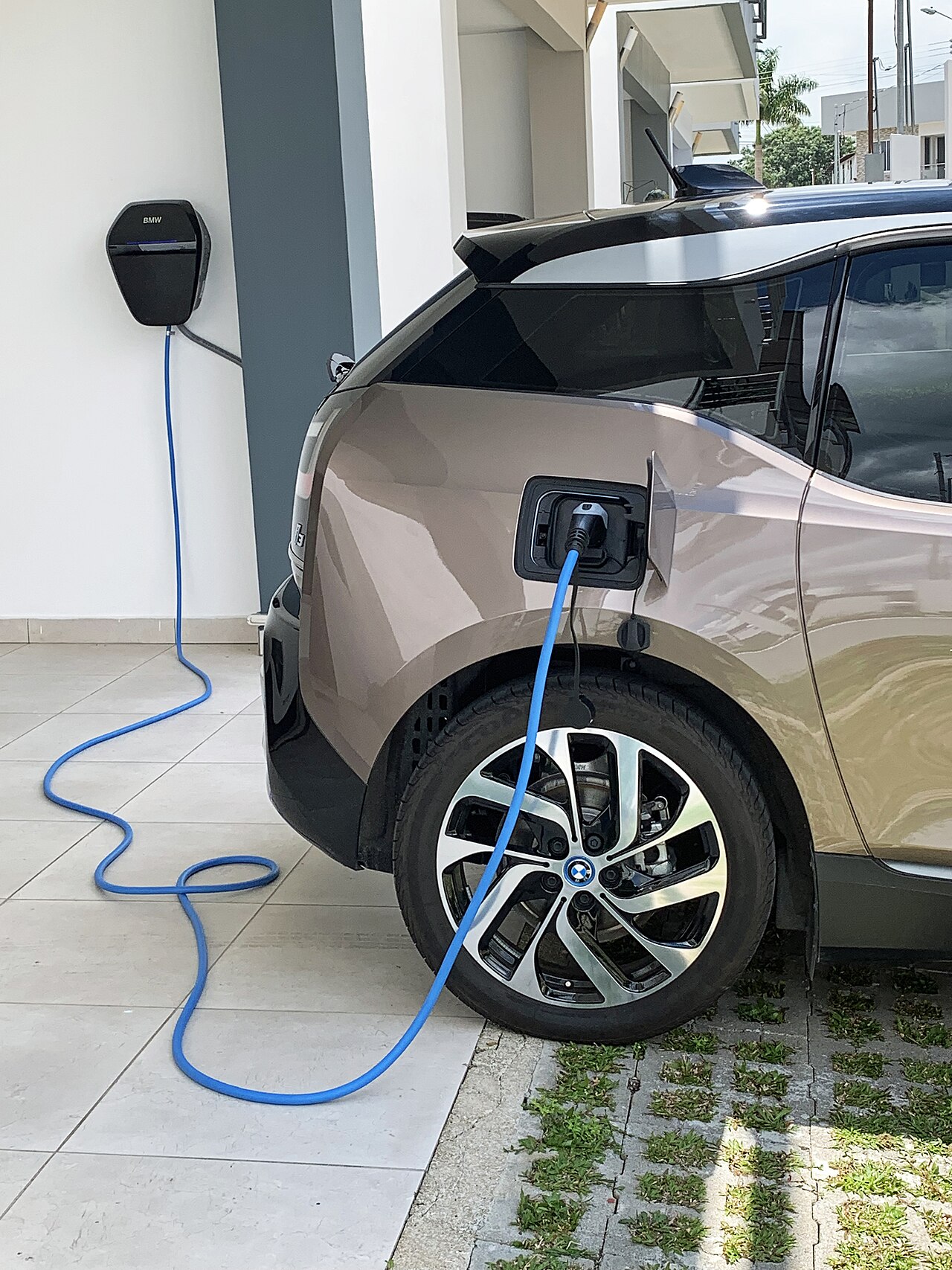
An electric car parked at E.ON's campus in Ceske Budejovice, in the Czech Republic, spent part of its trial doing something most EVs never do. It sent power back into the building. Software company ev.energy said on November 19, 2026 that its Eve platform handled charging and discharging for the bidirectional trials in V4Grid, a European project in which E.ON is a partner. In the trials, the car charged when electricity was cheaper, covered part of the building's demand during peak and high-tariff hours, and recharged overnight at lower power and lower prices.
The announcement came from ev.energy itself, as a company press release. EV Infrastructure News, a trade outlet, covered the trials on November 23. The project's own page on the Interreg Central Europe programme site gives the budget and scope. Everything below comes from those three sources. ChargerFeed read the release through a wire-service mirror.
What Was Actually Tested
According to the ev.energy release, E.ON identified the hardware and software requirements for bidirectional charging and then selected Eve to control when each vehicle charged and discharged. Eve scheduled charging and discharging against signals provided by E.ON, while making sure the vehicle would be ready for its driver. EV Infrastructure News describes the same arrangement, saying Eve Sync scheduled the sessions using data from E.ON's hardware.
The trial covered three scenarios that are often grouped together as V2X:
- Vehicle-to-home (V2H): the car supplies power to a home.
- Vehicle-to-building (V2B): the car supplies power to a larger building. At the Ceske Budejovice campus, that meant helping cover the building's demand at peak times.
- Vehicle-to-grid (V2G): the car's charging or discharging is used to support the grid itself.
The V2B case is the clearest one in the release. The car supplied energy that had been bought when prices were lower to help cover the building's demand during peak and high-tariff periods. It then recharged overnight at lower power and lower prices. The release gives no kWh figures, prices or savings, so ChargerFeed cannot say how much of the building's peak the car covered or what it was worth.
The grid case worked differently. The release says the charging station could also switch to full power, charging or discharging, to help balance deviations on the distribution network and to support E.ON's flexibility services. In other words, the charger was used for network support and was not limited to helping with the building's own peak.
The control setup was a hybrid, according to the release. Eve set the plan from the cloud, while the site's local system handled moment-to-moment balancing. EV Infrastructure News describes the same split, with scheduling dictated from the cloud and real-time attenuation managed by a local instance of the software. Neither source gives response times.
The Project Behind It: V4Grid by the Numbers
The Interreg Central Europe page describes V4Grid as an EU-programme project. As of the page ChargerFeed read on November 23, 2026, it listed:
- Budget: about EUR 2.37 million, with 80% funded by the European Regional Development Fund (ERDF).
- Footprint: 4 countries, 8 regions, 11 partners and 2 pilots.
- Scope: piloting V2X chargers in seven regions and developing policy recommendations to inform public authorities about V2X potential, across V2H, V2B and V2G use cases.
- Timeline: start 06.2024, end 11.2026, with progress shown as 99%.
Both the release and EV Infrastructure News put the partners at eleven organisations from Poland, the Czech Republic, Slovakia and Hungary, which matches the Interreg count. The sources give different timelines, though. The Interreg page shows the project running from June 2024 to November 2026. The trade article says it runs until December 2026. The ev.energy release says V4Grid ran from July 2024 to December 2026 and concludes in early 2027. ChargerFeed has not resolved the gap. Either way, the project is at or near its end.
The status needs to be stated precisely. This is a funded pilot, not an operating commercial service. Neither ev.energy nor E.ON announced a product, tariff or rollout for customers. The money is programme funding for trials and policy work.
Functional, But Early
E.ON's statement in the release is two-sided. Jakub Kott, Head of E-Mobility Solutions at E.ON, said the project confirmed that bidirectional charging technologies "are already functional today," and also said "the technology remains at an early stage of development, and its wider adoption will depend on vehicle availability, standardization, and the regulatory framework." EV Infrastructure News quotes the same early-stage remark.
According to the trade article, much of the complexity lies in standardisation of the two-way data flow between the vehicle, the charging unit and the grid. EV Infrastructure News notes a split between markets. In the UK, V2G has been widely deployed through CHAdeMO-compatible DC charging systems. In mainland Europe, CCS is the majority charging standard, and bidirectional charging is enabled through communication protocols such as ISO 15118-20. The article says effective V2G operation still requires integration with grid-management systems and distribution network operators (DSOs).
The release makes a similar point about scale: taking it further will rely on more vehicles that support bidirectional charging, common communication standards and simpler grid connections. A single campus pilot shows the control loop working from end to end: utility signal, scheduling platform, charger, vehicle and building. The trade article also quotes comments made a year earlier by Akshat Gupta of The Mobility House, UK manager, on deploying V2X in different regions.
According to the Interreg page, the V4Grid policy recommendations are meant to inform public authorities about V2X potential. The sources do not say what those recommendations contain or when they will be published.
What It Means for Drivers
For now, nothing changes for drivers. The sources describe trials at E.ON's own campus in Ceske Budejovice and V2X chargers piloted in project regions in Poland, the Czech Republic, Slovakia and Hungary. None of them describes a public bidirectional charging service, a consumer tariff or a date when drivers could sign up.
The trial does show the use cases a driver might eventually see:
- Charging when power is cheaper and using it when it costs more. In the V2B scenario, the car supplied energy bought at lower prices during peak and high-tariff times. The release gives no prices or savings, so none can be quoted here.
- Overnight recharge at lower power. After supporting the building, the car recharged overnight at lower power and lower prices, and Eve ensured the vehicle would be ready for its driver.
- Grid support. The charger could switch to full power to help balance the distribution network, as part of E.ON's flexibility services.
The trade coverage also gives a compatibility point. In mainland Europe, CCS is the majority charging standard, with bidirectional charging enabled through protocols such as ISO 15118-20, which still needs to be integrated with grid systems and DSOs for effective V2G operation. Whether a particular car or charger can discharge depends on its manufacturer, its software and the local utility. None of the sources gives a list of compatible models.
Drivers or site hosts thinking about bidirectional equipment at home or at work should know that it affects the building's electrical system and its connection to the grid. Any installation should be handled by a licensed electrician, following the manufacturer's instructions and the local utility's or DSO's requirements.
What to Watch
The Interreg page shows V4Grid at 99% progress, with an end date of November 2026, while EV Infrastructure News says December 2026 and the release says early 2027. The next things to watch are the project's policy recommendations and whether E.ON or ev.energy turn the trial into a commercial offer. The release says the project's close opens up further opportunities for the two companies to bring smart charging and V2X to more consumers in the Czech Republic and across Europe, but neither company has announced an offer. Until they do, the Ceske Budejovice campus result is a working demonstration and not a service.
Sources
- E.ON tests bidirectional EV charging in the Czech Republic with ev.energy's Eve platform (ev.energy press release, Nov 19, 2026, via EIN Presswire mirror)
- E.ON and ev.energy-led V2X trials in Eastern Europe to help assess future standards (EV Infrastructure News, Nov 23, 2026)
- V4Grid: Turning cars into power banks (Interreg Central Europe project page)
