
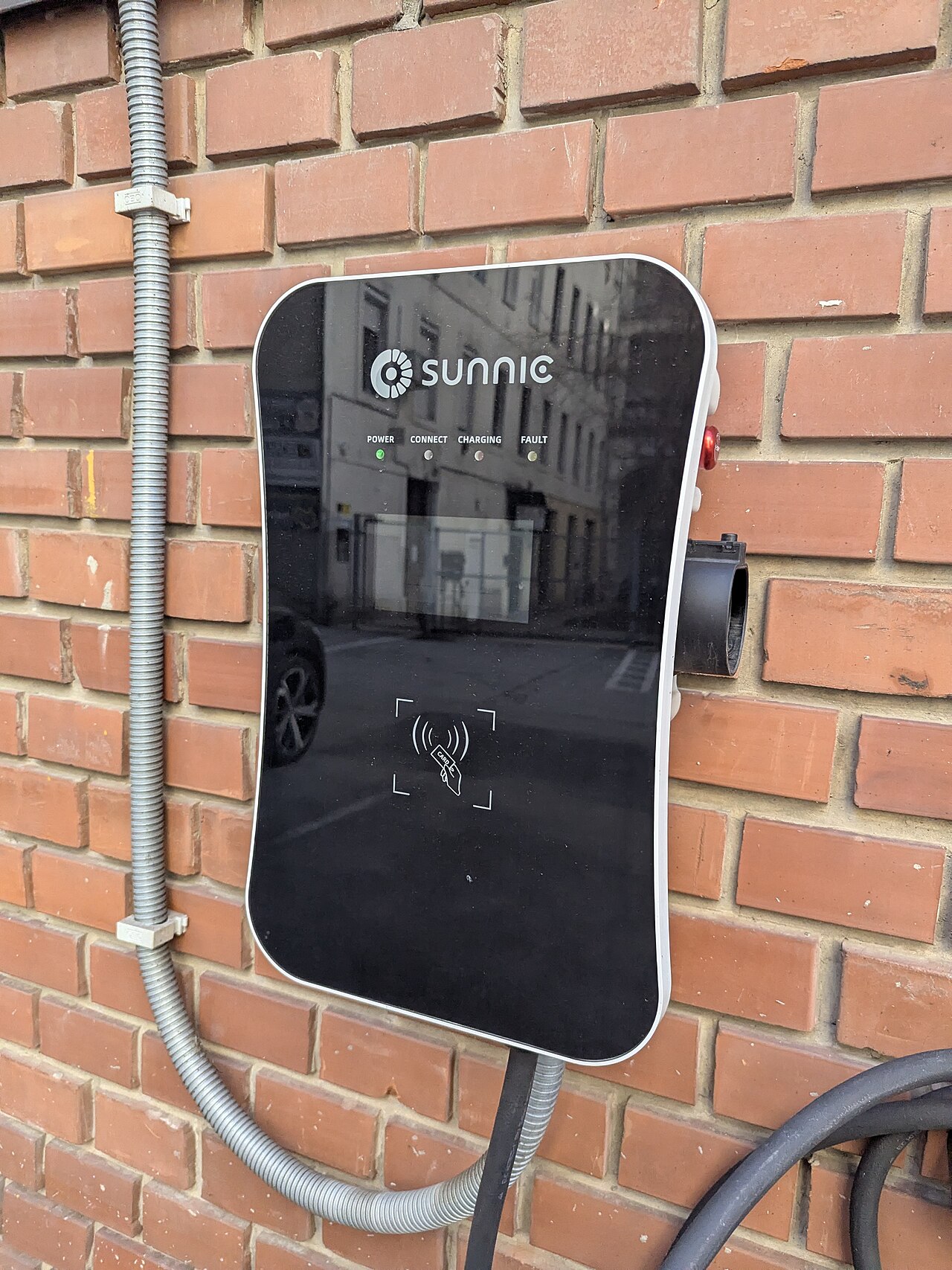
China counted 25.391 million electric-vehicle charging connectors at the end of October 2026, up 36.2% from a year earlier, according to data the National Energy Administration (NEA) published on November 20. Most of that growth is not public charging. Private connectors, the units installed at homes, apartment parking spaces and other non-public sites, rose 42.5% to 20.108 million. Public connectors rose 16.5% to 5.283 million.
So the network is growing fast, and most of the growth is in private charging. Below is what the figures measure, what they leave out, and how they compare with the most recent US count.
The Headline Numbers
The NEA figures come from its national charging-infrastructure platform and are as of the end of October 2026. The release is in Chinese. EV Infrastructure News reports it was also distributed through the NEA's WeChat account.
- Total connectors: 25.391 million, +36.2% year over year
- Public connectors: 5.283 million, +16.5%, with total rated power of 271 million kW, or about 51.37 kW per connector on average
- Private connectors: 20.108 million, +42.5%, with 171 million kVA of contracted (reported) installation capacity
A report carried by Bastille Post rounded the same data to 25.3 million connectors, up 36%, with more than 5.2 million public and 20.1 million private units.
One point matters for any comparison: the NEA counts connectors (charging guns), not stations or sites. A highway plaza with 40 guns counts 40 times. A home wallbox counts once.
Where the Growth Is Coming From
Private units make up about 79% of the total, as EV Infrastructure News notes. Working backward from the NEA's growth rates (ChargerFeed's arithmetic, not an NEA figure), the network stood at roughly 18.6 million connectors at end-October 2025. That means about 6.7 million connectors were added in twelve months. Roughly 6 million of them were private and about 750,000 were public.
The month-to-month picture looks similar. ChinaEVHome compared the end-October total with the prior month's figures and estimated about 614,000 net additions in October, 10.8% more than in September. By its count, 538,000 of those were private (87.6% of the increase) and 76,000 were public. The NEA release does not state these monthly additions. They are ChinaEVHome's secondary calculation.
The vehicle side is the backdrop. ChinaEVHome, citing the China Passenger Car Association (CPCA), reports new-energy vehicle (NEV) retail sales of 1.109 million in October, a 67.5% share of the passenger car retail market, and ties the charging build-out to continued NEV market growth.
Growth Is Still Fast, but Slowing
A 36.2% annual growth rate is high, but it is lower than earlier in the year. EV Infrastructure News points out that the NEA's March 2026 figure was 21.481 million connectors, up 46.9% year over year. The network has added close to 3.9 million connectors since then (ChargerFeed calculation from the two NEA totals), while the year-over-year rate has dropped by about 10.7 percentage points. A larger base partly explains this: the same number of new installations is a smaller percentage of a bigger total.
What 51 kW Average Means
The NEA puts total rated power on the public network at 271 million kW, an average of about 51.37 kW per public connector. That average blends lower-power AC posts with high-power DC units, so it does not describe a typical charging session. The NEA release does not give a split by power level.
Some operators advertise far higher figures. Among operator figures cited by ChinaEVHome:
- Geely Smart Charging: 3,003 stations and 13,800 connectors as of end-October, including 1,766 ultra-fast stations, with a stated peak of 2.2 MW per gun.
- BYD Flash Charging: 12,165 stations as of October 20, with a plan to reach 20,000 by the end of 2026. The 20,000 figure is a plan, not an operating count.
- NIO: 9,877 charging and battery-swap stations as of November 20, including 5,603 charging stations with 32,761 connectors.
These are the companies' own counts, and they use different units (stations vs. connectors). They cannot be added together or set directly against the NEA totals.
On the private side, 171 million kVA of contracted capacity spread over 20.108 million connectors works out to roughly 8.5 kVA per connector (ChargerFeed calculation). That is a rough average of reported contracted capacity, and the NEA does not break the private figure down by power level.
More Energy Through the Network
A separate NEA data release on November 23, reported by ChinaEVHome, puts electricity used by the charging and battery-swap service industry at 18.6 billion kWh in October, up 59.4% year over year. For January through October the figure was 150 billion kWh, up 55.9%. In the same release, national electricity use was 870.9 billion kWh, up 1.6%.
Charging electricity use (+59.4%) grew faster than connector count (+36.2%) over the year. That could mean more energy is flowing per connector on average, though the electricity figure includes battery-swap stations and the sources do not split public from private use.
How It Compares With the US
EV Infrastructure News cites the US Department of Energy's Alternative Fuels Data Center (AFDC) count of 264,484 public charging ports at 84,225 locations as of November 20, including 80,408 DC fast ports. On that basis China's 5.283 million public connectors are roughly 20 times the US public port count.
That ratio should be read with care. The two countries count differently. The NEA counts connectors on its platform, while the AFDC counts public ports. Neither total is adjusted for power level, uptime or how many vehicles share each unit. Private home charging, which makes up most of China's total, is not part of the AFDC public count.
What It Means for Drivers
In China: the figures show the network growing fastest in private charging. Most new connectors are private rather than public. Public charging is also growing, by about 750,000 connectors over the year by ChargerFeed's estimate and 76,000 in October by ChinaEVHome's. The NEA release gives national totals only. It does not say which provinces, cities or highway corridors got the new public units, and it gives no information on prices, reliability or wait times. Drivers should check coverage on their usual routes in operator apps rather than rely on national totals.
The high-power networks are still a small share of the total. BYD's 20,000-station goal is a plan for year-end 2026. Its operating count was 12,165 as of October 20. Peak ratings such as Geely's 2.2 MW per gun describe equipment capability. The power a car actually draws depends on the vehicle and its battery.
For drivers outside China: nothing in these releases changes access to charging elsewhere. The numbers are mainly useful as a benchmark. They show how a market with roughly two-thirds NEV share of new retail sales in October has ended up with about four private connectors for every public one. Drivers planning a home charger anywhere should have a licensed electrician assess and install it, following the manufacturer's instructions.
For site hosts and operators: public connectors grew 16.5% against 42.5% for private units. The NEA does not publish utilization rates, and none of the sources say where public growth is concentrated, so these figures alone do not show how demand for public charging is changing.
Sources
- National Energy Administration: October 2026 national EV charging facility data (Chinese, Nov 20, 2026)
- ChinaEVHome: China's EV Charging Infrastructure Reaches 25.39 Million Units by End-October
- EV Infrastructure News: China EV charging network hits 25.4 million connectors
- Bastille Post: China's EV charging infrastructure exceeds 25 million units as of Oct
- ChinaEVHome: China's EV charging and battery-swap electricity use surges 59.4% in October
