
The Megawatt Charging System (MCS) defines how a single heavy truck connects to a single high-power charger. It does not settle how to build a site where many trucks charge at megawatt levels at once. On November 12, 2026, the charging standards association CharIN announced that it has published a document meant to answer that question for European pilot sites.
The document is Deliverable D4.1 of MACBETH, a project funded under the EU's Horizon Europe research program. Its title is Specification and architectural design of multipoint MCS. CharIN led the specification work, and the deliverable was authored by CharIN with VTT. CharIN describes it as a shared reference framework for site layouts, power architectures and technical requirements. It will guide the project's pilots in Belgium and Sweden. Rather than prescribing one target design, it is a reference that later project work will build on, not a mandated design that every operator must follow.
The numbers behind MCS
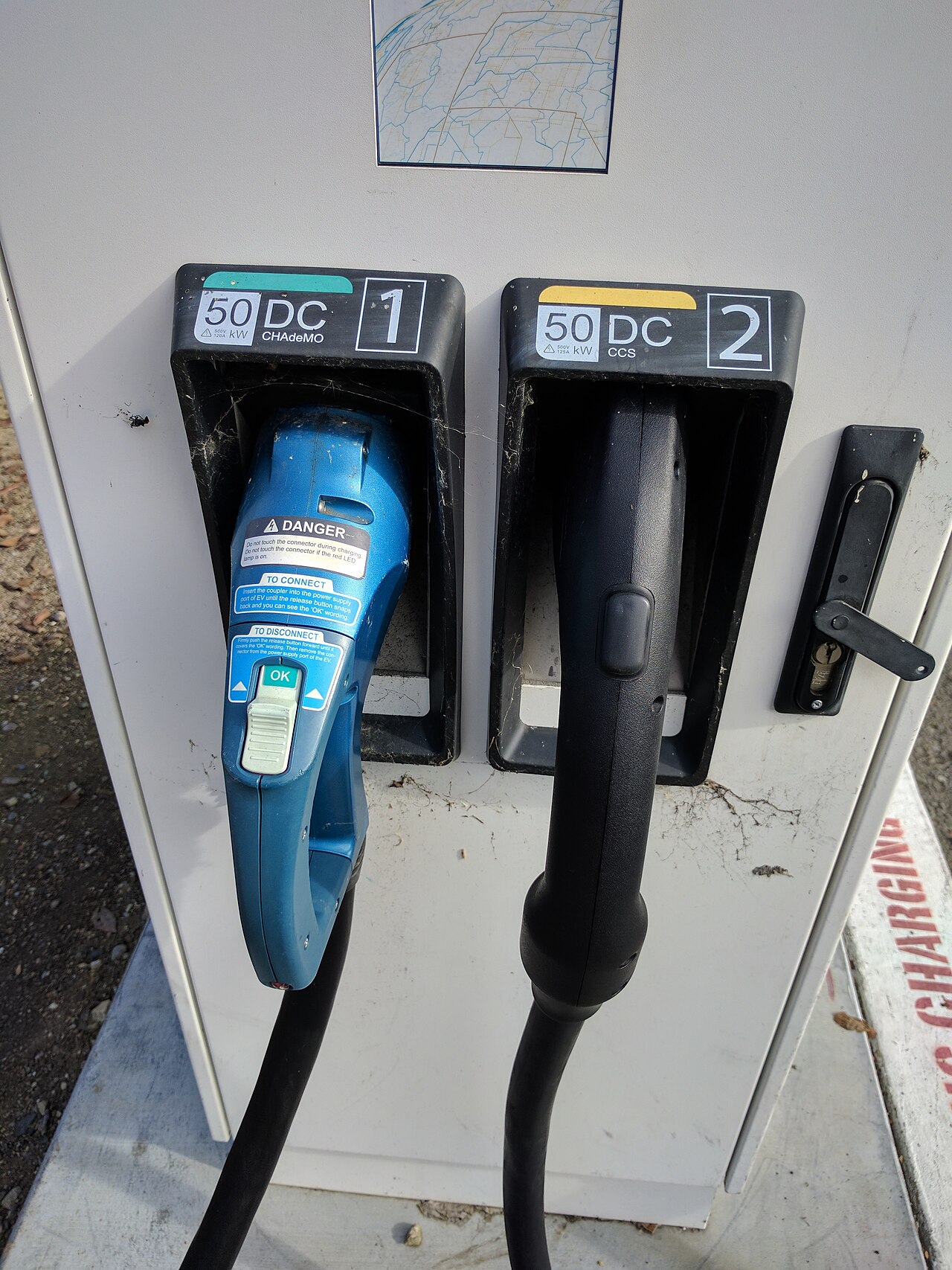
CharIN's announcement puts the scale of the problem in figures. The MCS standard is specified for charging capacities of up to 3.75 MW per connection, at up to 1,250 volts and 3,000 amps. Multiplying those two limits gives exactly 3.75 MW. By CharIN's comparison, the Combined Charging System (CCS) as used for passenger cars typically delivers up to 350 kW, which CharIN says is not enough to recharge a long-haul truck within a driver's break. The MCS ceiling is more than ten times higher than that CCS figure.
CharIN also notes that most trucks will not need the full ceiling. According to the announcement, a peak power of around 1 MW is likely to be sufficient to recharge a truck fully within the statutory break. CharIN explains that under EU driving-time rules, a driver may drive for a maximum of 4.5 hours before taking a break of at least 45 minutes. As simple arithmetic, a charger holding 1 MW for 45 minutes would deliver 750 kWh. Real sessions deliver less, because charging power tapers and plugging in and out takes time. Still, the figure shows why the break, not the charger's maximum rating, sets the practical target.
Multiply that by several trucks at once and the grid connection, power electronics and parking layout become the hard part. That is the territory D4.1 covers.
What D4.1 actually specifies
CharIN says the deliverable describes two reference site layouts and two power architectures.
- Drive-through layout. Trucks enter, charge and leave in a forward-only flow without reversing, much like a fuel station. CharIN says this suits busy motorway and corridor locations.
- Waiting-area layout. A dedicated waiting area adds a buffer zone where vehicles queue safely until a charger is free. CharIN says this improves traffic management at high utilization and prepares sites for features such as reservations and prioritization.
- Shared-cabinet power architecture. One central conversion system distributes power dynamically across several charge points based on vehicle demand, priorities and grid limits. CharIN says this makes the most of a constrained grid connection.
- Modular multi-cabinet power architecture. Capacity grows by adding independent cabinets. CharIN says this offers redundancy and step-by-step scalability for smaller or early-stage sites.
CharIN also says both architectures are designed to be ready for automated connection devices, meaning equipment that reduces manual handling of heavy MCS cables. The announcement describes this as readiness for that equipment. It does not say any automated device will be installed at the pilot sites. VTT's June 2025 announcement said a robotised charging arm was among the technologies the project would study.
Beyond layouts, CharIN says D4.1 covers communication, cybersecurity and monitoring requirements, and that it maps the hub concepts against more than 40 relevant ISO, IEC and EN standards. It identifies four areas where standards do not yet fully cover multipoint hubs, including power sharing between several simultaneous MCS sessions and guidance for mixed CCS and MCS sites. CharIN says none of these gaps blocks pilot deployment.
The European Commission's CORDIS database lists the deliverable under the same title. CORDIS says it covers specifications for interoperable and flexible multipoint MCS and preliminary architectural designs for the pilot sites. CORDIS also lists a separate report on best practice for MCS hub designs, with an initial version published and updates planned during the project.
Why a "multipoint" specification matters
A single-charger standard can guarantee that a truck from one maker will physically and electrically connect to a charger from another. A hub adds questions that standard does not answer:
- How should one grid connection's power be split when several trucks arrive together?
- How should vehicles queue and move through a site when chargers are busy?
- How can an operator start small and expand without rebuilding the site?
D4.1 offers reference answers to those questions for MACBETH's own pilots. Because it is a reference framework, operators elsewhere can borrow from it but are not bound by it. CharIN says hubs need to work across vendors, and frames the work as support for interoperable megawatt charging.
The project: budget, timeline, partners
| Item | Detail | Source |
|---|---|---|
| Program | Horizon Europe | CORDIS |
| Grant agreement | 101192466 | CharIN, CORDIS |
| Duration | 1 Feb 2025 to 31 Jan 2029 | CORDIS |
| Total budget | EUR 10,238,095.25 (about EUR 10.2 million) | CORDIS; CharIN, Nov 12, 2026 |
| EU contribution | EUR 8,390,483.76 (about EUR 8.4 million) | CORDIS; CharIN |
| Coordinator | VTT (VTT Technical Research Centre of Finland) | VTT, CharIN, CORDIS |
| Pilot locations | Belgium and Sweden | CharIN |
Based on those figures, EU funding covers roughly 82% of the project's total budget.
VTT coordinates the project. When VTT announced MACBETH on June 9, 2025, it said the project features real-life demonstrations of charging hubs, with two large-scale demonstration pilots, and that the aim is to establish a comprehensive European charging network for electric trucks by 2030. That 2030 goal is the project's stated aim. It is not a deployment commitment from any operator. VTT's announcement lists 19 partner organisations, including Kempower, Rocsys, PostNord Denmark and CharIN Academy. CharIN's November announcement also includes a statement from VTT's Yancho Todorov, the project coordinator, about the project's work.
Where things stand: published, planned, not yet operating
The status of each part of the project, as of November 12, 2026:
- Published: Deliverable D4.1, the multipoint MCS specification and architecture design.
- Funded: The MACBETH project as a whole, through its Horizon Europe grant.
- Planned: Pilot MCS hubs in Belgium and Sweden. CharIN describes the project as moving toward real-world demonstrations there. Neither the CharIN announcement nor CORDIS reports either site as operating, and neither gives an opening date.
- Ambition: A European truck charging network by 2030, as VTT described it in June 2025.
D4.1 is an early design document in a four-year project. The project runs to January 2029, so the pilots will most likely be built and tested later in that period. The sources do not give a construction schedule.
What It Means for Drivers
For truck drivers and fleet operators, D4.1 changes nothing on the road today. It does not open new chargers and it does not set prices. The sources do not say any public MCS hub described in it is open now. The pilot hubs in Belgium and Sweden are planned demonstrations. The sources do not say who will be able to use them or when they will open.
Over the longer term, the document shows what European megawatt truck stops may look like. Some sites may let trucks drive through in a forward-only flow without reversing. Others may add a waiting area where trucks queue until a charger is free. CharIN says a peak power of around 1 MW is likely to be sufficient for a full recharge within the statutory 45-minute break. Some sites may eventually use automated connectors. The designs are described as ready for them, but deployment has not been announced.
For site hosts and depot operators, D4.1 offers reference layouts and power architectures to compare against their own plans. It is a framework, not a regulation or a code requirement. Any MCS installation still has to meet local grid and electrical rules. It must be designed and installed by qualified professionals, such as licensed electricians and utility engineers, following the equipment manufacturer's instructions.
Owners of electric cars are not directly affected. CCS remains the relevant standard for passenger vehicles. MCS and this hub framework are aimed at heavy-duty trucks.
Sources
- CharIN: MACBETH Project, CharIN helps shape interoperable Megawatt Charging Systems for electric trucks (Nov 12, 2026)
- CORDIS (European Commission): MACBETH project results, grant 101192466
- VTT: Research and Innovation project prepares megawatt charging solutions for EU-wide heavy-duty transport (June 9, 2025)
