
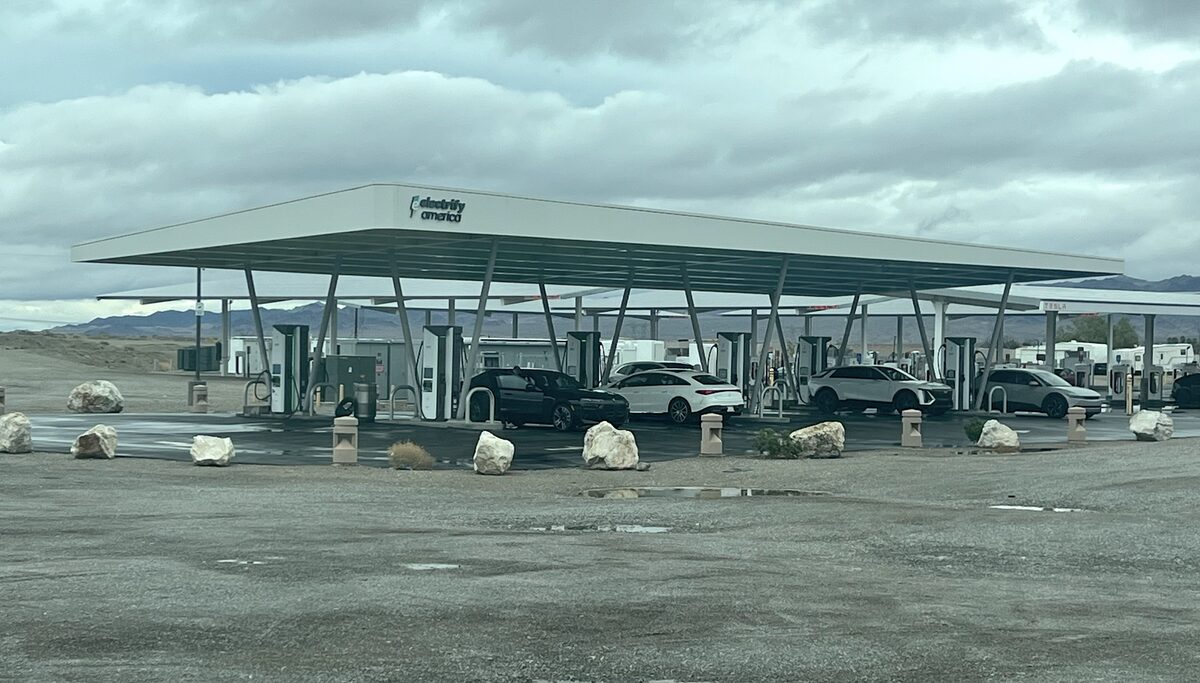
The California Energy Commission (CEC) on Oct. 7, 2026 opened a new application round of the Fast Charge California Project (FCCP), making at least $28 million available for publicly accessible DC fast chargers. The first application window closes Jan. 14, 2027, 86 days from Oct. 20. A second window opens Feb. 24, 2027.
FCCP is part of CALeVIP, the state's charger incentive program, which the Center for Sustainable Energy (CSE) has administered since 2017. According to the CEC announcement, the money comes from the Clean Transportation Program and the Greenhouse Gas Reduction Fund, and incentives can cover up to 100% of eligible costs, capped at $100,000 per charging port.
How much per port, and when
The per-port cap depends on the window and, in the first window, on the port's guaranteed power output. Electrek reports two tiers for the window now open; eligible costs include chargers, installation, planning and engineering, with the per-port caps still applying.
| Window | Application dates | Guaranteed power output per port | Maximum incentive per port |
|---|---|---|---|
| First (open) | Oct. 7, 2026 to Jan. 14, 2027 | 150 kW to just under 275 kW | Up to $55,000 |
| First (open) | Oct. 7, 2026 to Jan. 14, 2027 | At least 275 kW | Up to $100,000 |
| Second (upcoming) | Feb. 24 to May 27, 2027 | — | Up to $55,000 |
In the second window the top cap drops from $100,000 to $55,000 per port, as electrive noted. After the first window closes, funds are reserved in the order eligible applications were received, with priority for projects in disadvantaged, low-income and tribal communities.
Who can apply and what qualifies
Eligible applicants are businesses, nonprofits, public agencies and eligible California tribes, and every funded charger must be open to the public. Projects must be ready to build. The CEC defines that as having an issued permit and a final utility service design; Electrek reports that a letter from the utility confirming no new or upgraded service is needed can stand in for the service design.
Electrek also reports two site rules. At least half of the connectors at each funded site must be CCS. And charging hubs, hotels and business districts are no longer eligible site types in this round.
CSE frames the ready-to-build requirement around site preparation. "Successful charging projects start with thoughtful site planning and early coordination," Scott Shepard, CSE's senior director of transportation programs, said in the CEC announcement. In remarks quoted by Electrek, Shepard said "the fastest way to get chargers in the ground is to fund projects that are truly ready to build."
Spencer Reeder, director of the CEC's Fuels and Transportation Division, said in the announcement: "California needs reliable fast charging in communities across the state."
How this round compares
The previous FCCP round, in spring 2026, awarded $56.9 million for more than 1,266 ready-to-build DC fast-charging ports in projects across 58 counties, with more than 67% of chargers installed or planned in disadvantaged, low-income or tribal communities, according to the CEC. An earlier 2025 round of $55 million offered the same 100% cost coverage, with its $100,000 per-port cap applying to chargers rated above 275 kW, electrive reported.
The new round sits alongside other state charging spending. In August 2026 the CEC approved $95.2 million in Clean Transportation Program funding, including $48 million for light-duty EV charging and $30.2 million for medium- and heavy-duty zero-emission vehicle infrastructure, electrive reported. The CEC says CALeVIP has supported 10,200 charger installations in California, where more than 2.2 million light-duty EVs are on the road.
What happens next
Applicants have until Jan. 14, 2027 to file in the first window. The second window runs Feb. 24 to May 27, 2027. Money in both windows is reserved for eligible projects, not yet awarded, and ports that receive reservations still have to be built and commissioned before drivers can use them. Full program rules are posted on the CALeVIP website.
What It Means for Drivers
No new chargers open because of this announcement. It sets the terms for public fast-charging sites that California businesses, nonprofits, agencies and tribes can build with state money.
- Connector access: Sites funded in this round must devote at least half of their connectors to CCS, so drivers of CCS-equipped vehicles will find that plug type at these locations once they are built.
- Who can charge: Funded chargers must be open to the public rather than reserved for a business's own fleet or customers.
- Where sites will go: Projects in disadvantaged, low-income and tribal communities get priority, while charging hubs, hotels and business districts are excluded as site types this round.
- Timing: A funded location is a reservation on CALeVIP's books until it is built and operating; it is not a place to charge yet.
