
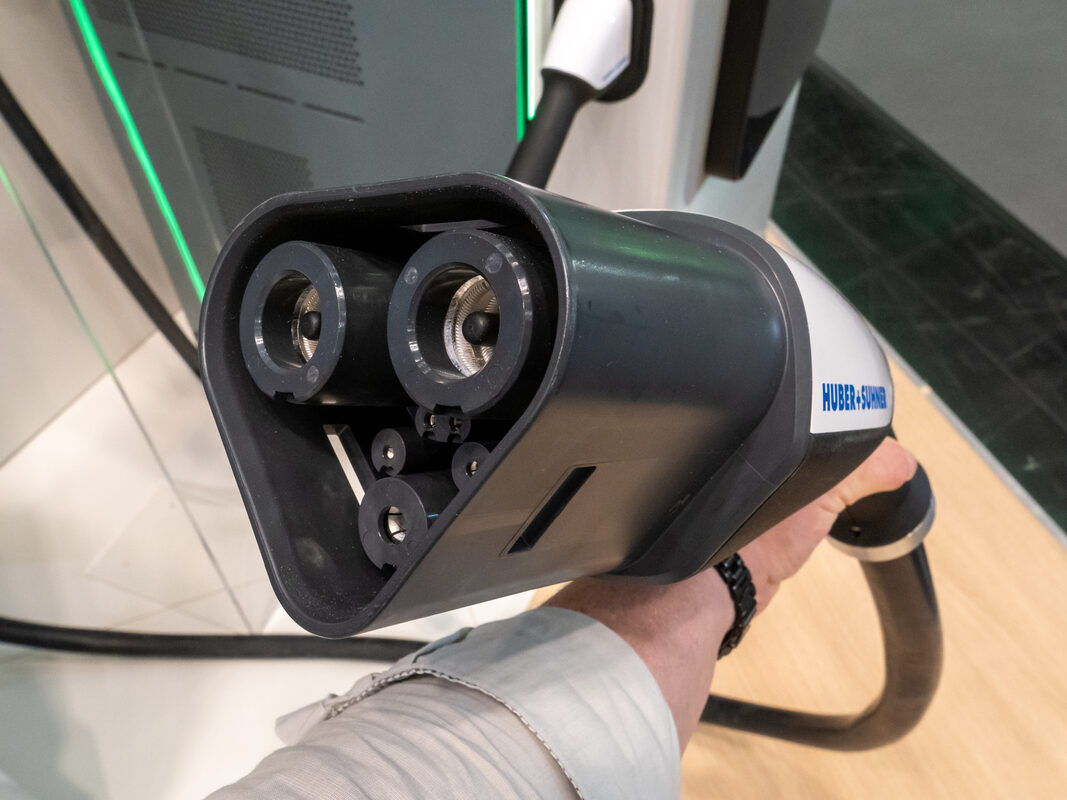
The California Energy Commission (CEC) has proposed exempting publicly funded public chargers that use Megawatt Charging System (MCS) connectors from the state's EV charger reliability and reporting requirements. The exemption is part of a set of proposed amendments to the commission's EV charger data and reliability standards. The commission held a public hearing on the package over Zoom on Sept. 24, 2026, from 10 a.m. to 1 p.m. Pacific time. The amendments are still a proposal. The CEC has not adopted them, so the current rules apply until it does.
The rulemaking is filed under docket 22-EVI-04. It would amend eight sections in Article 2 of Title 20 of the California Code of Regulations: 3121, 3122, 3123, 3125, 3127, 3128, 3131 and 3132. The CEC published its Notice of Proposed Action on Aug. 7, 2026. The written comment period ran from Aug. 7 through 5 p.m. on Sept. 22, 2026, and has closed.
What the amendments would change
The notice lists five changes:
- MCS exemption. Publicly funded public chargers with MCS connectors would be exempt from the reliability requirements. The notice states the objective this way: "Support the nascent MCS charging segment by exempting these chargers from existing state reliability and reporting requirements." The amendments would incorporate by reference the Society of Automotive Engineers' Megawatt Charging System standard, SAE J3271, dated March 4, 2025.
- More time for OCPP certification. Charging network providers (CNPs) would get additional time for Open Charge Point Protocol certification.
- Notice to CNPs. New language would make sure CNPs are notified of their reporting obligations.
- Agent designation. The rules on designating a recordkeeping and recording (R&R) agent would be clarified.
- Data dictionaries. The data dictionaries used for reporting would get minor updates.
The existing rules rest on two state laws. AB 2061 (2022), which added Public Resources Code Section 25231.5, directed the CEC to develop charging port uptime recordkeeping standards and gave it authority to require uptime recordkeeping and reporting for publicly or ratepayer-funded ports. AB 126 (2023) directed the commission to adopt tools to increase charging station uptime, including uptime and operation-and-maintenance requirements. The notice says the state's reliability and reporting requirements are similar to the federal National EV Infrastructure (NEVI) Formula Program rule at 23 CFR 680.104. CEC staff considered leaving Article 2 unchanged, which would have required MCS chargers to meet the reliability requirements immediately, and rejected that option because it would have increased the burden on the industry.
ABB backs the truck-charger exemption
Charger manufacturer ABB E-mobility supported the exemption in a letter dated Sept. 25, 2026, signed by Matthew E. Chen, External Affairs Manager, North America. "We commend the proposal to exempt publicly funded, publicly available chargers with Megawatt Charging System (MCS)/SAE J3271 connectors from the state's reliability requirements for electric vehicle charging infrastructure," the company wrote. ABB said SAE identifies MCS as a separate technology from CCS1 and J3400, with its own communications protocol, J3271.
ABB also described where the truck market stands. It cited the California Air Resources Board as reporting that nearly 23% of all new Class 2b–8 vehicle sales in California are zero-emission. It said charging network operators have announced ambitious plans, but only a few megawatt-charging-capable stations for heavy-duty trucks have been deployed at scale along U.S. travel corridors. ABB says it has approximately 1,400 employees globally, has sold more than 74,000 high-power chargers and has helped electrify over 10,500 charging sites worldwide.
Chargie asks for more time and different thresholds
Chargie LLC, which says it operates over 18,000 networked charging stations with a significant concentration in California multifamily communities, filed comments docketed Sept. 24, 2026. The company said that under the proposal, AC Level 2 chargers are excluded from the uptime reporting requirements and from the additional OCPP and API requirements that apply to networked publicly or ratepayer-funded chargers. It noted that Level 2 chargers would still face semiannual inventory reporting.
The proposal keeps Sept. 28, 2026 as the implementation date for networked chargers that are publicly or ratepayer funded. For chargers installed on or after that date, it sets requirements involving:
- enrolled charging network providers,
- OCPP 2.0.1 certification, and
- API-based reporting.
Chargie asked the commission to replace that trigger with a date at least 180 days after the final regulations take effect, and to grandfather equipment already purchased, contracted, permitted or under construction before the compliance date. Sept. 28 has passed without the amendments being adopted. Chargie said it appreciates the proposal's "Certification Pending" pathway, which provides for OCPP certification within 180 days after the regulation's effective date.
Chargie also asked for three other changes:
- Revocation threshold. Under Section 3131(e)(2), a provider could face revocation if it fails to transmit accurate and complete data within 60 minutes on 22 or more occasions in a calendar month, or 132 or more in a calendar year. Chargie wants a percentage-based materiality standard instead, and a cure process before formal revocation.
- Communications outages. Section 3124(d)(6) lets downtime from a cellular or internet outage be excluded only if chargers default to a free-charge state. Chargie asked that documented third-party telecommunications outages outside the operator's reasonable control qualify regardless of free charging.
- Vandalism and theft. The rules generally limit excluded downtime from vandalism or theft to 10 days per event. Chargie asked the CEC to add a reasonable-diligence standard so documented delays outside an operator's control can still be excluded.
More broadly, Chargie asked for a single standardized reporting framework across California's state and ratepayer-funded charging programs, with the objective of "report once, use many times."
What It Means for Drivers
For truck operators, the practical change would come at publicly funded MCS sites: if the CEC adopts the exemption, those chargers would not have to meet the state's uptime and reporting requirements. Light-duty drivers using publicly funded CCS1 or J3400 fast chargers would see no change from this exemption, and the existing Article 2 requirements stay in force until the commission adopts a final text.
Drivers who rely on Level 2 chargers at apartment complexes can follow the outcome in docket 22-EVI-04 on the CEC's e-filing system, which holds the hearing presentation (TN 272922) and the filed comments. If the commission changes the proposed text, the notice says a full copy will be available for review at least 15 days before the CEC adopts the regulations.
Sources
- California Energy Commission: Notice of Proposed Action, Rulemaking to Amend Electric Vehicle Charger Reliability Standards (docket 22-EVI-04, TN 271850)
- California Energy Commission: Public Hearing event page, Sept. 24, 2026
- ABB E-mobility comments, docket 22-EVI-04 (TN 272941)
- Chargie LLC comments, docket 22-EVI-04 (TN 272913)
