
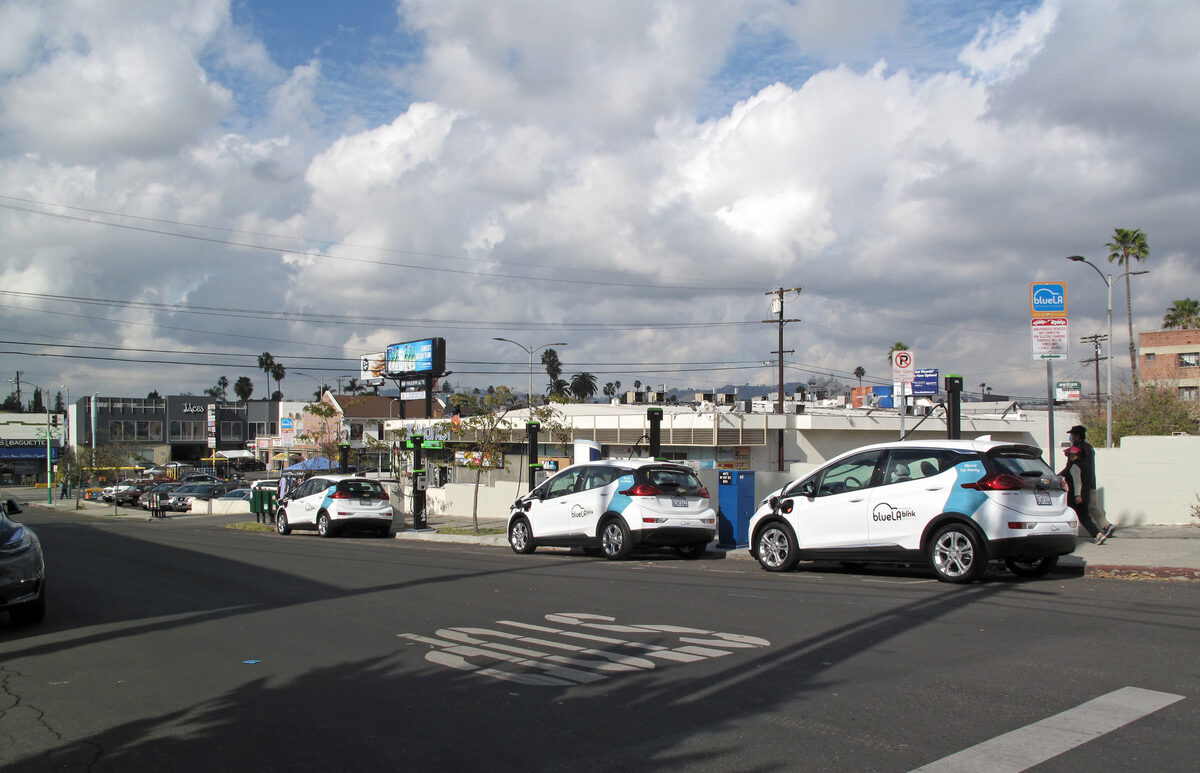
California had 224,438 electric vehicle charging ports at public and limited-access sites as of June 30, 2026, the California Energy Commission said in an October 16 release. The commission set that figure against a new state estimate that 478,000 ports will be needed by 2030, and concluded that "the state is almost halfway to its estimated 2030 charging need."
The 478,000 figure comes from the third Electric Vehicle Charging Infrastructure Assessment, which the CEC released the same day and which state law AB 2127 requires the commission to prepare. The new assessment expects 6.8 million EVs on California roads in 2030 and says supporting them will take 478,000 charging ports "at publicly accessible locations and locations like workplaces and multifamily housing."
What the count includes
The 224,438 figure combines two categories the CEC tracks: public ports and limited-access ports. The commission's Zero Emission Vehicle and Infrastructure Statistics dashboard, updated October 16, defines a public charger as one "available to, and accessible by, the public for any period of time." Limited Access covers chargers that are neither public nor residential, typically at workplaces, multifamily housing of five or more units, fleet yards and hotels. The release describes the mix as fully public locations such as grocery stores, shopping centers, gas stations and community centers, plus sites with some limits on access such as doctor's offices, workplaces and multifamily residences.
The dashboard separates AC Level 2 from DC fast charging (DCFC), and the underlying spreadsheet is in the CEC's data download. The counts are compiled from CEC voluntary surveys, grant recipient reports, the U.S. Department of Energy's Alternative Fuels Data Center and PlugShare, and the CEC labels its shared private charger counts as estimates.
Since the CEC began tracking charging ports in 2021, the combined public and limited-access total has grown 186%, and DCFC ports have grown 221%, the commission said. It also reported that "about 23,000, of publicly accessible chargers are DCFCs." That figure counts chargers rather than ports and covers only publicly accessible sites.
Home charging sits outside the total. The CEC estimates that 1,179,497 EV chargers are installed in residential homes of one to four units, in addition to the public and limited-access network.
A revised 2030 estimate, in different units
The third assessment follows the second AB 2127 assessment, a Commission Report the CEC published on March 6, 2024, under Docket 19-AB-2127. According to the CEC's AB 2127 program page, that edition estimated California would need about 1.01 million public and shared private chargers to serve 7.1 million passenger plug-in EVs in 2030, and about 2.11 million chargers for 15.2 million vehicles in 2035. It also estimated an additional 114,500 chargers for 157,000 medium- and heavy-duty vehicles in 2030.
| Assessment | 2030 light-duty vehicles | 2030 charging need | Unit |
|---|---|---|---|
| Second (published March 6, 2024) | 7.1 million passenger plug-in EVs | about 1.01 million | public and shared private chargers |
| Third (released Oct. 16, 2026) | 6.8 million EVs | 478,000 | ports at publicly accessible locations and sites such as workplaces and multifamily housing |
The two headline numbers use different units: the 2024 edition counts chargers, while the 2026 assessment counts ports, and the vehicle forecast underneath dropped from 7.1 million to 6.8 million. The CEC attributed the revised 2030 projections to gains in EV range and battery capacity, the growth of available DC fast chargers, and chargers installed at homes.
The baselines differ in the same way. The 2024 assessment started from more than 91,000 public and shared chargers, including nearly 10,000 DC fast chargers, in mid-2023. The "almost halfway" comparison in the new release is made in ports.
The sales picture around the count
The charging figures were part of a broader quarterly release. Zero-emission vehicles made up 19.1% of new car sales in California in the third quarter of 2026: 80,392 vehicles, of which 68,811 were battery-electric, 11,494 were plug-in hybrids and 87 were hydrogen fuel-cell vehicles. The CEC said California's new EV purchases mirrored the second quarter's performance, while increased interest rates and low consumer confidence tempered new light-duty vehicle sales nationwide.
The release also covered MyFirstEV, an incentive administered by the California Air Resources Board (CARB) and open to any Californian buying their first EV. Per the CEC's October 16 release, it offers $3,500 off a new EV with an MSRP up to $50,000 and $1,750 off a used EV sold for up to $25,000. The program launched in August 2026 and has helped put 12,000 new clean cars on the road, the CEC said; the state's $135.5 million is matched dollar-for-dollar by 13 automakers, for a combined $270 million.
Gov. Gavin Newsom tied the program to fuel costs. "Twelve thousand Californians bought their first electric car and said goodbye to the gas pump," he said in the release, adding that those drivers "no longer pay the price of Donald Trump’s reckless Iran war every time they fill up." CEC Commissioner Nancy Skinner, who referred to "the Trump administration's continued attack on clean vehicles," said MyFirstEV lets drivers "take advantage of California’s extensive network of publicly accessible EV charging infrastructure." CARB Chair Lauren Sanchez said "the early success of MyFirstEV is supercharging that progress."
What It Means for Drivers
The 224,438 total includes ports at workplaces, multifamily buildings, fleet yards and similar sites with limited access, so not every port in it is open to a visiting driver. The dashboard's Public category, which covers chargers accessible by the public for any period of time, is the closer measure of where anyone can plug in, and the CEC's data download breaks the counts out by category and by Level 2 versus DC fast charging.
For a quick top-up on a trip, the relevant subset is the publicly accessible DC fast chargers, which the CEC says "can deliver almost a full charge in 15 to 45 minutes, depending on the car and charger."
The CEC said its continuing light-duty charging investments focus on fast charging and on at-home or near-home charging, especially at multifamily properties. Anyone adding a charger at home should have a licensed electrician do the work according to the manufacturer's instructions and local code.
Sources
- California Energy Commission: California ZEV Sales Maintain Strong Performance in Q3 as 12,000 Drivers Benefit from New State Incentive (Oct. 16, 2026)
- California Energy Commission: Electric Vehicle Charging Infrastructure Assessment – AB 2127
- California Energy Commission: Zero Emission Vehicle and Infrastructure Statistics – Electric Vehicle Chargers
- California Energy Commission: ZEV and Infrastructure Stats Data download
