
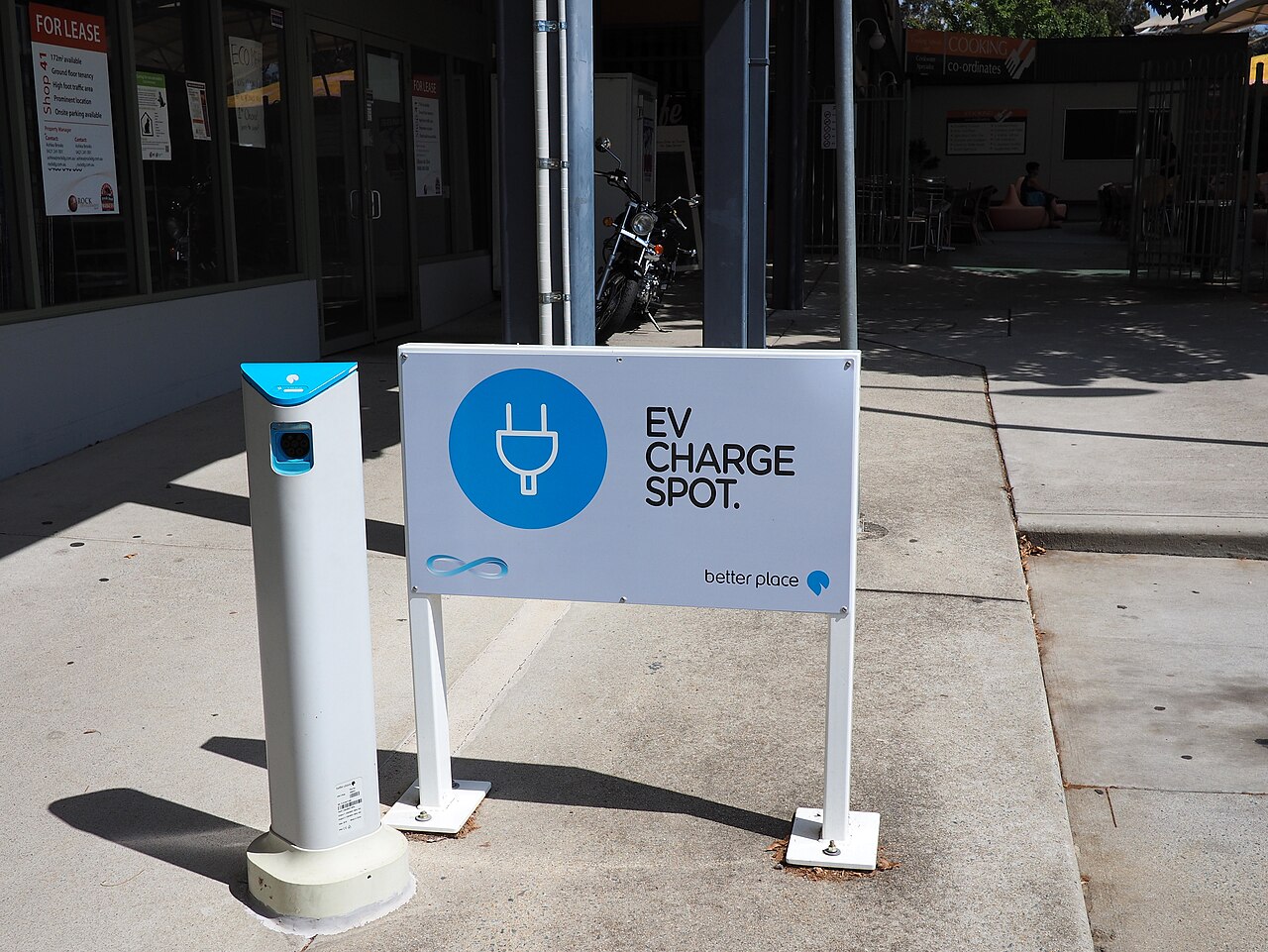
On 21 October 2026 the Australian Renewable Energy Agency (ARENA) announced funding for a fleet vehicle-to-grid (V2G) project in the Australian Capital Territory that its own project page calls Australia's largest fleet V2G demonstration to date. The project, REVS2: Commercialising Fleet V2G, is led by charging company JET Charge. It plans to deploy and operate up to 130 bidirectional chargers serving up to 130 battery-electric vehicles across ACT Government and Australian National University (ANU) sites.
The project is funded, not operating. Nothing in the sources says any of the new chargers are installed yet. The figure of 130 is a ceiling stated as of the 21 October announcement. It is not a count of hardware in the ground.
The Money: Three Figures, Different Scopes
The sources give different dollar figures, and they are not all measuring the same thing.
- ARENA's project page (last updated 21 October 2026) lists $4.1 million funded by ARENA and a $6.4 million total project cost.
- EV Infrastructure News reports that ARENA committed AU$4 million (about US$2.8 million) to JET Charge. It adds that ARENA had not disclosed the total project cost or the delivery timeline, which the ARENA page now does state.
- The Canberra Times, carrying an AAP report updated 21 October, describes a $5.35 million, three-year trial involving JET Charge, ActewAGL and the ACT government. It says ARENA will invest $4.1 million and JET Charge will contribute $1.25 million. Those two amounts add up to $5.35 million.
The AU$4 million figure appears to be the AU$4.1 million figure rounded, though neither outlet says so. The gap between AAP's $5.35 million and ARENA's $6.4 million total project cost is about $1.05 million. The sources do not explain it, so ChargerFeed does not attribute it to any contributor. ARENA's own page is the authoritative source for its contribution and the total project cost.
On timing, ARENA's page gives a start date of 17 September 2026 and an end date of 30 June 2029. AAP quotes ARENA's transport general manager, Alex Grant, as saying the trial would operate until 2029.
How the Trial Is Built
According to ARENA's project page, the V2G solution is deployed in three phases structured around tariff models. Each one is meant to test how fleet vehicles behave, and what they earn or save, under a different price signal.
- Baseline: a flat tariff model to commence the project and deliver basic V2G charging functionality while the supporting software and commercial model are built.
- Phase 1: a peak/off-peak tariff structure and control capability.
- Phase 2: a dynamic tariff structure through ActewAGL's virtual power plant (VPP), described by ARENA as an optimisation pathway for the financial benefit of V2G.
JET Charge will enhance its fleet charging management system with V2G functionality. ARENA says the system orchestrates charging within constraints that include fleet operational requirements, market prices, site load limits, and network and retailer needs. ARENA's page does not give per-kWh rates for any of the three tariffs, and neither news report does either. ChargerFeed has no tariff pricing to report as of this writing.
ANU will deliver three streams: co-design and implementation support, a fleet V2G research and knowledge-sharing hub, and the project's core knowledge-sharing activities, including collating data on fleet total cost of ownership. ARENA lists Kristian Handberg, General Manager - Future Business at JET Charge, as the project contact.
The vehicles matter for the design. AAP quotes Handberg as saying many of the ACT government vehicles in the trial are used to deliver in-home health services, and that they sit in ACT government buildings from the end of the business day, so they can be connected to the grid at night. That gives a predictable window to charge and to discharge.
What REVS2 Builds On
The "2" refers to an earlier ARENA-funded project. ARENA's page says the original Realising Electric Vehicle-to-Grid Services (REVS) project was delivered from 2020 to 2025, primarily demonstrated technical feasibility, and also involved JET Charge, ACT Government, ANU and ActewAGL. EV Infrastructure News reports that ARENA backed REVS in 2020 with AU$2.4 million and that it used 51 Nissan Leaf vehicles. The outlet also reports, citing the ACT government, that in February 2024 16 of those vehicles fed power back into the grid during a blackout caused by storms in Melbourne.
Going by the stated ceilings, REVS2 would be roughly two and a half times the size of the REVS fleet (130 versus 51). Where REVS focused on technical feasibility, ARENA says REVS2 will trial market signals to incentivise fleet charging behaviour, share V2G revenue, and show how V2G can improve fleet total cost of ownership.
The Wider V2G Picture in Australia
Two other data points in the sources help place the announcement.
The national roadmap estimate. EV Infrastructure News cites Australia's 2025 national bidirectional charging roadmap. The roadmap estimates that if 10% of a projected 1.5 million EVs on the road by 2030 used V2G, they could meet 37% of the National Electricity Market's storage needs. That is a modelled scenario, not a forecast that it will happen.
Residential V2G. EV Infrastructure News reports that in May ARENA provided AU$13.6 million to Amber Electric to expand its residential V2G trial from 50 to 1,000 homes, bringing total government funding for that programme to AU$16.8 million. AAP describes the REVS2 announcement as coming one month after Amber Electric expanded its residential test to another 1,000 homes. The two reports date the Amber news differently: May for the funding, and about September (one month before) for the expansion. They may be describing different milestones of the same program.
Taken together, ARENA is now backing both residential V2G through Amber and a fleet deployment through JET Charge. A fleet case with vehicles that return to base each evening is, in principle, easier to schedule against a grid signal than household driving patterns, though the trial exists precisely to test whether that holds in practice.
What It Means for Drivers
For the general public, nothing changes. REVS2 is a fleet trial. The chargers are planned for ACT Government and ANU sites to serve a fleet of vehicles in the project. None of the sources describe public access to the bidirectional chargers, and none mention new public charging locations.
For ACT Government and ANU fleet drivers, the sources suggest the main change is where and how vehicles get plugged in. Vehicles used for in-home health services are expected to be connected at night, according to AAP, while the charging management system coordinates charging around fleet operational requirements and market prices. The sources do not say how drivers' state of charge will be protected, or what minimum charge vehicles will keep for the next shift. Fleet staff should get those operating rules from their own organisation.
Timing. As of 21 October 2026 the project is funded and announced, not running. ARENA lists a project start date of 17 September 2026 and an end date of 30 June 2029. The sources give no date for the first charger installs or the start of the baseline phase.
For fleet and depot operators elsewhere, the useful output will be the data: how much value a fleet gets under flat, peak/off-peak and VPP tariffs. ANU's knowledge-sharing program is the stated channel for those results, and Alex Grant told AAP ARENA would like people to engage with the project along the way. No results have been published yet.
For home V2G. Anyone thinking about bidirectional charging at home should note that the hardware and grid connection requirements are not covered by this announcement. Installation of any charger, and especially a bidirectional one, should be done by a licensed electrician following the manufacturer's instructions and local network rules.
What We Still Don't Know
- Why AAP's $5.35 million total differs from the $6.4 million total project cost on ARENA's page, and who funds the difference.
- Which bidirectional charger hardware and which vehicle models will be used.
- When installation begins and how many sites are involved.
- Tariff rates for each phase and how VPP revenue is shared between ActewAGL, JET Charge and fleet owners.
ChargerFeed will update this story when ARENA or the project partners publish those details.
